
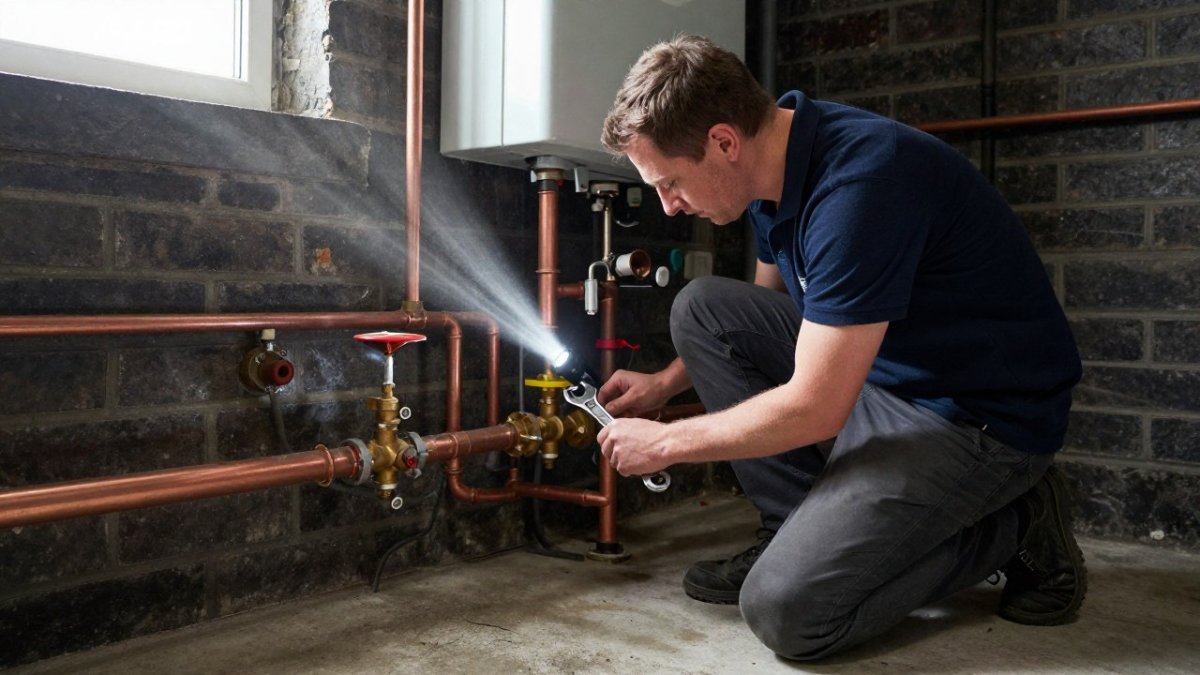
Last Updated: November 27, 2026
Quick Summary
Most boilers need a professional service once a year, ideally in late summer or early autumn before the heating season starts. Between visits, homeowners can check the pressure gauge, look for leaks, bleed radiators and keep the area around the boiler clear. Boiler maintenance involving gas, the burner or the flue must be carried out by a Gas Safe registered engineer.
- Book a full annual service with a Gas Safe registered engineer, ideally before the heating season begins.
- Read the boiler pressure gauge when the system is cold and check it sits within the range in your manual.
- Keep the flue terminal outside clear of leaves, nests and debris, and never reach into or cover it.
- Test your carbon monoxide alarm using its test button and check its expiry date against manufacturer guidance.
- Keep the engineer’s service record and gas safety documentation, as they support warranty conditions.
Table of Contents
- How Often Should a Boiler Be Serviced?
- The Annual Boiler Service Checklist for Homeowners
- Checking Boiler Pressure Safely
- Radiators, Controls and Ventilation Checks You Can Do Yourself
- Where Homeowner Checks End and Gas Safe Engineer Work Begins
- A Month-by-Month Plan for Pre-Winter Boiler Checks
- Booking Your Next Boiler Service with Major Heat
- Frequently Asked Questions
How Often Should a Boiler Be Serviced?
Most boilers benefit from a professional service once a year. Booking that service before the cold months arrive keeps your heating reliable when you need it most. Think of it as a yearly health check rather than an optional extra.
Many homeowners ask whether the timing matters. It does. A service in late summer or early autumn gives an engineer time to fix small faults before the heating runs every day.
Between professional visits, you can run quick checks yourself. These include:
- Pressure: Look at the boiler gauge every month.
- Leaks: Check beneath the boiler and around pipe joints.
- Warning lights: Note any fault codes shown on the display.
- Noises: Listen for banging, gurgling or whistling.
Waiting for a breakdown before booking a service is a common mistake, as a service can catch problems early. Ask your engineer to note the findings, so you have a record for warranty and future reference.
The Annual Boiler Service Checklist for Homeowners
Use this checklist once a year, and keep a copy with your service records. Each item is a visual or low-risk check you can carry out yourself. Where a task depends on your model, the instruction below points you to your boiler manual rather than assuming one setting fits every appliance.
- Pressure gauge: Read the gauge when the system is cold and confirm the needle sits within the range printed in your boiler manual. Pressure ranges vary by model, so do not assume a single figure applies to yours.
- Visible leaks: Look for drips, water stains or corrosion around the boiler casing, pipe joints and nearby pipework. A damp patch that reappears after wiping is worth reporting.
- Flue terminal outside: Confirm the outside flue terminal is clear of leaves, nests and debris. Do not reach into or cover the terminal.
- Clearance and ventilation: Check that the area around the boiler is clear of boxes, laundry and cleaning products, and that air vents and the flue outlet are not blocked.
- Noises, smells and fault codes: Note any banging, gurgling or whistling, any unusual smell, and any fault code shown on the display. Record the code exactly as it appears.
- Radiators: Bleed any radiator that is cold at the top while warm at the bottom, and check that thermostatic radiator valves turn freely.
- Carbon monoxide alarm: Test the alarm using its test button and check the expiry date against the manufacturer’s guidance. Confirm the alarm is sited correctly for your home.
- Service booking: Book a Gas Safe registered engineer for the full annual service, ideally before the heating season begins.
Keep a simple log with the date of each check and what you found. Over time, this log helps you spot slow changes that a single visit might miss, and your engineer will appreciate having it.
What to do in an emergency. If you smell gas, leave the property, do not use switches or flames, and call the National Gas Emergency Service immediately (If you smell gas). If your carbon monoxide alarm sounds, open windows and doors, turn off the appliance if you can do so safely, leave the property and call the emergency services. Do not re-enter until you are told it is safe.
What to keep after the service. Retain the engineer’s service record, any gas safety documentation and the receipt. These records support warranty conditions and give you a clear history if you sell the property or need to claim for a repair.
The checklist covers eight visual checks, and each one points to a clear action or a limit set in your boiler manual.
| Check | What to look for | Action |
|---|---|---|
| Pressure gauge | Needle within the range in your manual | Read when the system is cold |
| Visible leaks | Drips, water stains or corrosion | Report a damp patch that reappears |
| Flue terminal outside | Leaves, nests or debris | Confirm it is clear; do not reach in |
| Clearance and ventilation | Boxes, laundry or blocked vents | Keep the area around the boiler clear |
| Noises, smells and fault codes | Banging, gurgling, whistling or unusual smell | Record any code exactly as shown |
| Radiators | Cold at the top, warm at the bottom | Bleed the radiator |
| Carbon monoxide alarm | Test button and expiry date | Test the alarm and check its expiry |
| Service booking | Full annual service | Book a Gas Safe engineer before the heating season |
Checking Boiler Pressure Safely
Boiler pressure is one of the simplest checks a homeowner can make. Most gauges have a green or normal band, and the needle should sit inside it when the system is cold.
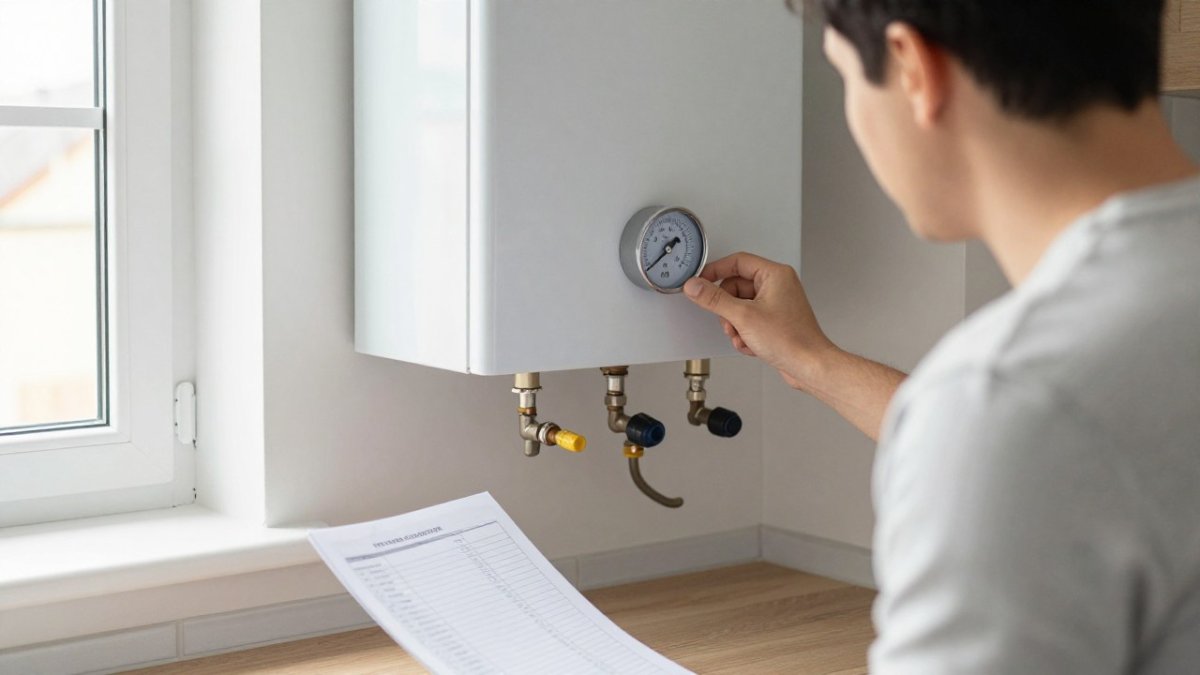
If the pressure drops below the normal band, the system may have a leak or may need topping up. Your boiler manual will show how to repressurise the system. If you are unsure, call a professional rather than guessing.
Pressure that climbs too high is also a concern. Watch for a pressure reading that keeps rising, and seek advice before it reaches the top of the band. Do not open or adjust any safety valves yourself.
Watch out: Repeated pressure loss usually means a leak somewhere in the system. Topping up again and again hides the fault rather than fixing it.
Radiators, Controls and Ventilation Checks You Can Do Yourself
Simple checks around the house can help your heating run well. Start with the radiators. If the top of a radiator stays cold while the bottom is warm, air may be trapped inside. Bleeding the radiator releases that air and restores heat output.
Next, look at your heating controls. Make sure the thermostat and timer settings match how you actually use the house. Check that thermostatic radiator valves turn freely and are not stuck in one position.
Ventilation matters too. Keep the space around the boiler clear of boxes, laundry and cleaning products. Never block air vents or the flue outlet. Good airflow helps the boiler burn fuel safely and efficiently.
Plenty of homeowners carry out these checks without any tools beyond a radiator key. Still, if a radiator will not bleed or a valve feels stiff, call an engineer rather than forcing it.
Where Homeowner Checks End and Gas Safe Engineer Work Begins
Knowing where your responsibility stops is just as important as knowing what you can check. Homeowner checks are visual and low-risk. They cover reading the pressure gauge, looking for visible leaks, bleeding radiators, checking controls and keeping the area around the boiler clear.
Anything involving gas, the burner, the heat exchanger, the flue or electrical components belongs to a Gas Safe registered engineer who handles boiler maintenance work. Never open the boiler casing, adjust gas components or attempt to clear a flue yourself. These tasks require training and equipment that homeowners do not have, and getting them wrong can be dangerous.
Here is a simple way to decide:
- Do it yourself: Reading the pressure gauge, bleeding a radiator, checking for visible leaks, testing your carbon monoxide alarm, keeping vents and the flue terminal clear from outside.
- Call an engineer: Gas smells, soot marks, fault codes you cannot clear, flue problems, electrical faults, repeated pressure loss, or any noise or smell that worries you.
Model-specific guidance matters here. Pressure ranges, control layouts and maintenance instructions vary between boilers, so always check your manual before adjusting anything. If the manual is unclear, treat the task as engineer-only work.
To check that an engineer is qualified, ask to see their Gas Safe registration card. You can also verify their registration on the Gas Safe Register website. Only Gas Safe registered engineers may legally carry out most gas work in the UK (Gas safety for employers). For a full explanation, see the official guidance from the Health and Safety Executive at HSE guidance on gas safety for homeowners.
If you smell gas, leave the property, do not use switches or flames, and call the National Gas Emergency Service immediately. If your carbon monoxide alarm sounds, open windows and doors, leave the property and call the emergency services. Do not re-enter until you are told it is safe.
A Month-by-Month Plan for Pre-Winter Boiler Checks
Spreading your checks across the year makes them easy to remember. This plan works well for most households.
Spring (March to May): Book your annual service for late summer or early autumn. Bleed any cold radiators and note the pressure reading.
Summer (June to August): Check the flue outlet is clear and the boiler area is ventilated. Confirm your carbon monoxide alarm works.
Early autumn (September to October): Complete your Gas Safe service. Review the engineer’s notes and fix any flagged issues.
Late autumn (November): Run the heating for a short test. Listen for noises and check for leaks. Top up pressure only if the manual says it is safe.
Winter (December to February): Watch the pressure gauge weekly. Report any cold spots, warning lights or gas smells straight away.
Set calendar reminders for each month so the checks happen automatically. A little regular effort prevents most winter breakdowns.
Booking Your Next Boiler Service with Major Heat
Once you have completed the checklist, the next step is a professional service. Major Heat provides boiler servicing, repairs and installations, with Gas Safe registered engineers carrying out the work.
A service visit is the best way to confirm your boiler is running safely before winter. Booking early also gives you more choice of appointment times. For current availability and details of what a service includes, visit the book a boiler service page on the Major Heat website.
If you have questions about your boiler, get in touch with Major Heat for guidance and current details.
Frequently Asked Questions
What should be included in an annual boiler maintenance checklist?
A sound annual checklist covers visual checks of the boiler casing, pipework and flue terminal for damage or staining, a look at the pressure gauge, bleeding radiators to clear cold spots, checking the thermostat and heating controls, confirming the area around the boiler stays ventilated, and listening for unusual noises. Keep a written record of each visit, as it supports warranty claims and helps any future engineer see the history.
Can homeowners carry out boiler maintenance themselves?
Homeowners can safely carry out visual checks, pressure monitoring, radiator bleeding and control checks. Work involving the gas supply, the burner, the flue or any internal component must be carried out by a Gas Safe registered engineer. Any gas work by an unregistered person is illegal and unsafe. Always check the manufacturer’s instructions for your model before attempting any task yourself.
How often should a boiler be serviced?
Booking a professional service once a year is a sensible habit, and many homeowners book one before the autumn heating season begins. Between services, check the boiler pressure monthly and look for visible leaks.
How do I know whether my boiler needs servicing?
Warning signs include a pressure gauge that keeps dropping, radiators that stay cold at the bottom, gurgling or banging noises, a yellow or irregular flame, sooty staining around the boiler, a burning smell, or a heating system that takes longer than usual to warm the house. If you notice a gas smell, turn off the gas at the meter, open windows and call the National Gas Emergency Service on 0800 111 999 straight away.
