
Table of Contents
- Why Heating Costs Keep Rising (And What You Can Control)
- 1. Book an Annual Boiler Service to Lower Heating Bills
- 2. Install a Smart Thermostat for Real Energy Savings
- 3. Bleed Your Radiators: A 10-Minute Fix That Cuts Costs
- 4. Seal Draughts and Stop Heat Escaping
- 5. Use Radiator Reflectors to Keep Warmth in the Room
- 6. Top Up Loft Insulation for Long-Term Savings
- 7. Change How You Use Your Heating Day to Day
- Frequently Asked Questions
Last Updated: September 5, 2026
Heating your home is likely one of the largest energy expenses you face each year, and with prices remaining volatile, finding effective ways to lower heating bills in 2026 has become a priority for households across Kent. The good news is that you don’t need a full home renovation to make a meaningful difference. Most of the savings come from a mix of routine maintenance, small upgrades, and smarter daily habits. Our Gas Safe registered engineers have seen firsthand how a few targeted actions can improve efficiency and reduce waste. Below, we break down seven practical methods that deliver results without requiring you to compromise on comfort during the colder months.
Why Heating Costs Keep Rising (And What You Can Control)
Energy prices are influenced by global markets, network charges, and policy decisions that are entirely outside your control. However, the efficiency of your home’s heating system is something you can directly influence. An older or poorly maintained boiler has to work harder to reach the same temperature, which burns more fuel and drives up your bills.
The key is to focus on the controllable factors: the condition of your boiler, how heat is distributed around your home, and how much warmth escapes through draughts and poor insulation. Even small inefficiencies compound over a full heating season. Taking a systematic approach to these seven areas will help you lower heating bills without sacrificing warmth.
1. Book an Annual Boiler Service to Lower Heating Bills
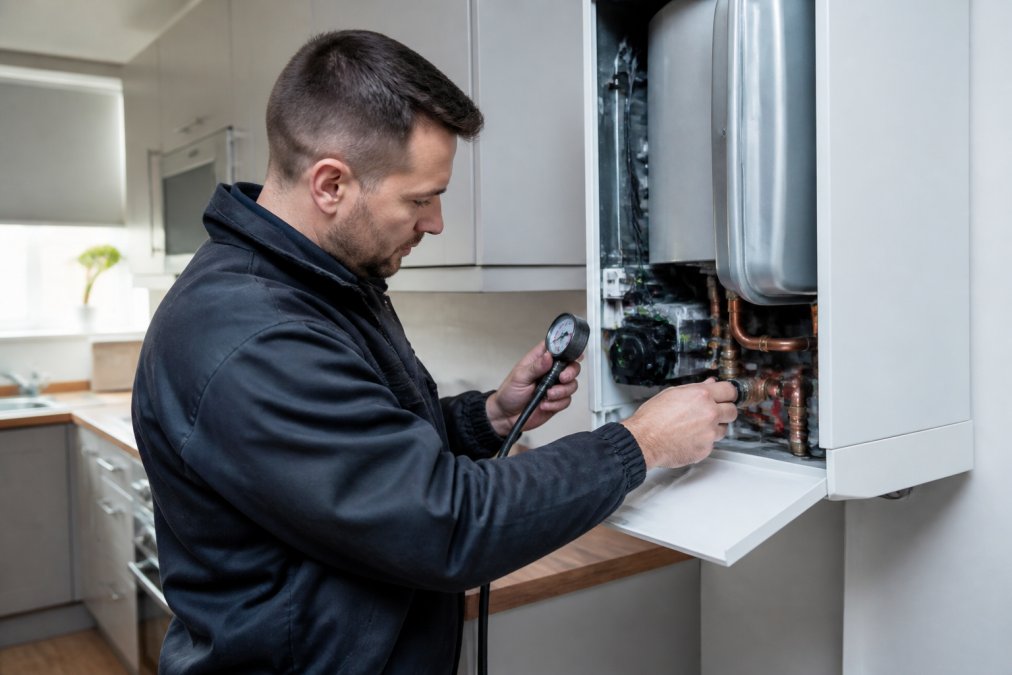
A regular boiler service is the single most effective way to keep your heating system running efficiently. During a service, an engineer cleans key components, checks pressure levels, and identifies minor faults before they become expensive breakdowns. A boiler that runs cleanly uses less fuel to heat your home to the same temperature.
The benefits extend beyond efficiency. A well-maintained boiler is also safer, reducing the risk of carbon monoxide leaks or other hazards. For homeowners in Gillingham, Maidstone, Sittingbourne, Ashford, and Canterbury, Major Heat offers comprehensive boiler servicing conducted by Gas Safe registered engineers. The service helps ensure optimal fuel usage, which directly contributes to keeping your heating costs down throughout the year.
Skipping an annual service can void your boiler’s manufacturer warranty. If a fault develops and you can’t prove regular maintenance, you could face the full cost of a replacement boiler.
2. Install a Smart Thermostat for Real Energy Savings
Smart thermostats are one of the most talked-about upgrades in home heating, and for good reason. These devices learn your routine and adjust heating automatically, so you’re not warming an empty house while you’re at work. Remote control via a smartphone app means you can turn the heating down from the sofa or switch it off entirely if you forget before leaving.
The Energy Saving Trust guidance on heating controls highlights that better heating controls give you more flexibility to heat only what you need, when you need it. Options range from various models that offer automation features to reduce energy waste through precise scheduling. For homes wanting room-by-room control, smart radiator thermostats allow you to lower heating bills by turning off radiators in unused rooms.
| Smart Thermostat | Starting Price | Key Feature | Best For |
|---|---|---|---|
| Hive Thermostat Mini | £129.00 | Remote control via app | Households wanting simple scheduling |
| Nest Learning Thermostat | £219.00 | Auto-Schedule learns routine | Set-and-forget automation |
| Tado Smart Radiator Thermostat | £79.99 per valve | Room-by-room control | Homes with unused rooms |
3. Bleed Your Radiators: A 10-Minute Fix That Cuts Costs
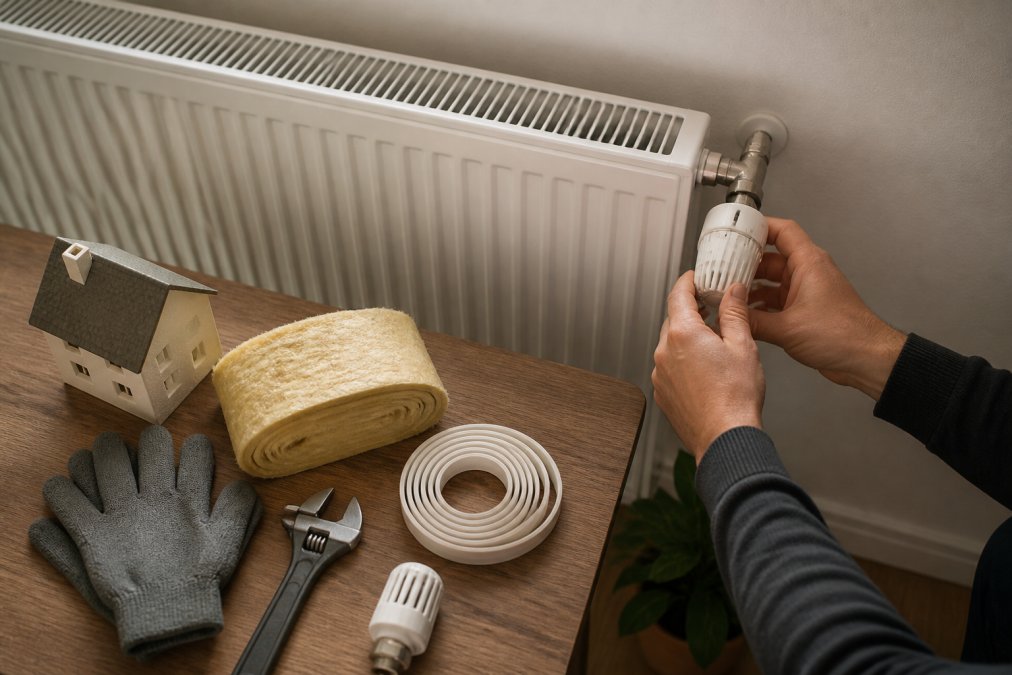
If your radiators have cold spots at the top but feel warm at the bottom, trapped air is preventing them from heating fully. Bleeding radiators releases this air, allowing hot water to circulate properly and heat the whole surface. It’s a simple task that takes about ten minutes per radiator and requires only a radiator key and a cloth to catch any drips.
The process is straightforward: turn off your heating and let the system cool, then insert the key into the bleed valve and turn it anti-clockwise until you hear a hiss. Once water starts to escape steadily, close the valve. Checking your boiler pressure afterwards is important, as bleeding can reduce it below the recommended level. This regular maintenance helps you lower heating bills by ensuring every radiator operates at full capacity rather than wasting energy on partially heated units.
4. Seal Draughts and Stop Heat Escaping
Draughts around doors, windows, and floorboards let warm air escape and cold air in, forcing your boiler to work harder than necessary. Sealing these gaps is one of the most cost-effective improvements you can make. Self-adhesive foam strips are easy to apply and provide an immediate barrier against heat loss.
Check the gaps around your front door, letterbox, and window frames. Draught excluder tape comes in various thicknesses, so measure your gaps before buying. For larger openings, consider a brush strip for the bottom of doors or keyhole covers for older locks. These low-cost fixes work silently in the background, meaning your heating system maintains a comfortable temperature with less effort and lower energy consumption.
5. Use Radiator Reflectors to Keep Warmth in the Room
Radiators mounted on external walls lose a significant amount of heat through the wall itself. Radiator reflector foil bounces heat back into the room instead of letting it escape outside. The foil is easy to cut to size and fits discreetly behind the radiator.
For the best results, clean the wall surface before applying the foil and ensure the reflective side faces into the room. This is a particularly effective measure for older homes with solid walls that lack cavity insulation. While the savings from a single reflector are modest, fitting them behind every external-wall radiator adds up over a heating season. It’s a classic example of how small, inexpensive changes contribute to your overall goal to lower heating bills.
6. Top Up Loft Insulation for Long-Term Savings
Heat rises, and if your loft insulation is thin or patchy, a large proportion of your home’s warmth escapes through the roof. The GOV.UK energy efficiency guidance recommends a minimum of 270mm of insulation for lofts. Many older homes fall short of this standard, making a top-up one of the most impactful long-term investments available.
Mineral wool rolls can be laid between and over the joists by a competent DIYer. The material is non-combustible and provides excellent thermal performance. If your loft already has insulation but it’s compressed or damp, replacing it will restore effectiveness. This is a larger project than the other fixes on this list, but the reduction in heat loss delivers benefits every single day of the heating season.
7. Change How You Use Your Heating Day to Day
Sometimes the biggest savings come from adjusting your habits rather than upgrading your equipment. Setting your thermostat one degree lower can make a noticeable difference over a month, and most people barely register the change in comfort. Using thermostatic radiator valves to reduce heat in rooms you rarely use, like spare bedrooms, directs warmth where you actually spend time.
Timing also matters. Heating your home for a shorter period before you wake up and again in the evening, rather than running it constantly at a low level, often proves more efficient. The Energy Saving Trust heating advice suggests that heating controls set to match your routine prevent energy from being wasted on an empty house. Combine these behavioural changes with the physical improvements above, and you create a comprehensive strategy to effectively lower heating bills in 2026.
Reducing your heating costs doesn’t require drastic measures or significant upfront spending. Start with the quick wins like bleeding radiators and sealing draughts, then plan for larger improvements like loft insulation and smart controls. An annual boiler service ties everything together, ensuring your system runs safely and efficiently. Major Heat provides expert boiler servicing, installations, and repairs across Kent, backed by Gas Safe registered engineers and transparent pricing with free quotes. Get started with Major Heat and make this winter your most energy-efficient one yet.
Frequently Asked Questions
Does an annual boiler service help lower energy bills?
Yes. A serviced boiler burns fuel more cleanly and efficiently, which means it uses less gas to heat your home to the same temperature. During a service, engineers also catch minor faults before they turn into major breakdowns that force a full system replacement. Major Heat’s Gas Safe registered engineers check efficiency as part of the service, helping you keep consumption in check. Most manufacturers also require an annual service to keep your warranty valid, protecting you from costly repair bills.
How much can I save by installing a smart thermostat?
Smart thermostats save money by heating your home only when you need it. Models with geolocation can detect when you are out and lower the temperature automatically. You can also set schedules from your phone, so you never heat an empty house. Savings vary based on your home and habits, but households often report noticeable reductions in their gas usage. The upfront cost of a smart thermostat is often recovered within a couple of heating seasons.
Is it cheaper to leave the heating on low or turn it off?
It is cheaper to turn the heating off when you do not need it. The idea that a boiler works harder to reheat a cold house is a myth. Your heating system uses more energy to maintain a constant temperature all day than it does to warm up a cool house for a short period. Use a timer or smart thermostat to heat rooms only when you are in them. You will use less gas overall and lower your heating bills.
How do I know if my radiators need bleeding?
Cold spots at the top of a radiator while the bottom feels warm are the clearest sign. This happens when trapped air stops hot water from circulating fully. You may also hear gurgling noises from the system. To bleed a radiator, turn off your heating, use a radiator key on the bleed valve, and hold a cloth underneath to catch drips. Close the valve when water starts to escape steadily. Doing this once a year keeps your system running efficiently.