Table of Contents
- What Counts as a High Efficiency Boiler in the UK?
- The Financial Benefits of Upgrading to a High Efficiency Boiler
- Boiler Installation Cost: What to Budget For
- Average Lifespan of a Gas Boiler vs. New Models
- How to Choose the Right Boiler Size for Your Home
- Environmental Impact and Reducing Your Carbon Footprint
- Key Factors to Consider Before You Upgrade
- Conclusion
- Frequently Asked Questions
Last Updated: September 6, 2026
What Counts as a High Efficiency Boiler in the UK?
A high efficiency boiler is a condensing boiler that captures heat from flue gases that older non-condensing models simply release into the atmosphere. This design difference means modern condensing boilers convert a far greater share of the fuel they burn into usable heat, which is the core reason the benefits of upgrading to a high efficiency boiler are so significant. Most older boilers in UK homes operate at efficiency levels well below what current standards demand.
The official rating system to look for is the ErP energy label, which grades boilers from A+++ down to G. A modern condensing boiler typically achieves an A-rated efficiency of 90% or higher, meaning only a small fraction of the gas you pay for is wasted. By comparison, a non-condensing boiler from the 1990s or early 2000s might operate at 70% to 75% efficiency. According to guidance from the Energy Saving Trust on boiler efficiency, upgrading from an older model to a new condensing boiler is one of the most effective single measures a homeowner can take to cut heating costs.
The legal backdrop matters too. Building regulations in the UK have required new gas boiler installations to be condensing models for years, and the Future Homes Standard documentation from GOV.UK signals a continued push toward cleaner home heating. If your current boiler predates these rules, you are almost certainly losing money with every heating cycle.
The Financial Benefits of Upgrading to a High Efficiency Boiler
The financial argument for replacing an old boiler is straightforward: you spend less on gas for the same amount of warmth. Because a high efficiency boiler extracts more heat from each unit of fuel, your annual consumption drops noticeably, often offsetting a meaningful portion of the installation cost over the boiler’s working life.
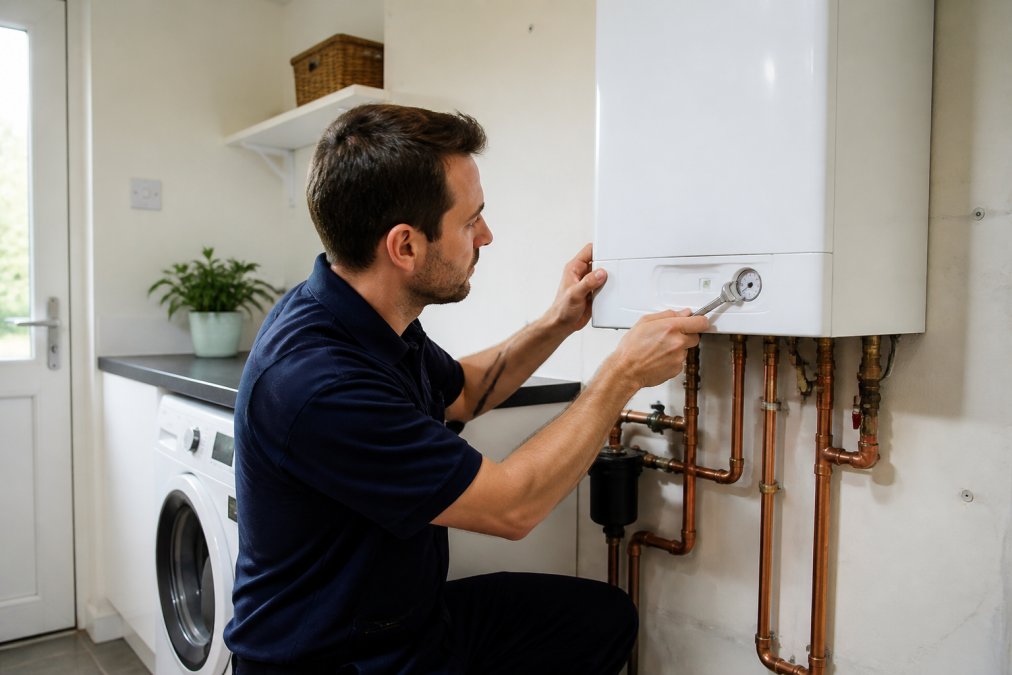
The exact savings depend on how inefficient your current system is, the size of your home, and your usage patterns. A household switching from a very old non-condensing unit to a modern A-rated model will see a larger reduction than someone replacing a relatively recent boiler that has simply failed. The key point is that the gap in efficiency, not the boiler itself, drives the payback period.
Potential Savings on Annual Energy Bills
Estimating precise savings is difficult because energy prices fluctuate, but the efficiency gain itself is measurable. If your current boiler runs at 75% efficiency and you replace it with one running at 92%, you are using roughly 18% less gas to produce the same heat output. Over a typical year of heating and hot water, that reduction translates directly into lower bills.
A common mistake is assuming a new boiler saves money only in winter. Modern condensing boilers also heat your hot water more efficiently year-round, so the savings apply every month you use hot water, not just during the heating season. When you factor in the rising cost of gas, the case for upgrading strengthens further.
Boiler Installation Cost: What to Budget For
Boiler installation cost is the figure most homeowners focus on, and it varies widely depending on the boiler type, the complexity of the job, and your location. A straightforward swap of a like-for-like combi boiler in an easy-to-access position will cost less than a full system conversion that requires new pipework and a hot water cylinder.
Pricing also depends on the brand and output rating you choose. Rather than fixating on the cheapest quote, consider what is included: does the price cover removing the old boiler, disposing of it correctly, fitting a magnetic filter, and registering the installation with Gas Safe? Transparent pricing matters because a low quote that excludes these essentials rarely ends up cheaper.
At Major Heat, we provide free, no-obligation quotes so you know the full boiler installation cost before any work begins. Our Gas Safe registered engineers handle everything from the initial survey to the final commissioning, giving you a single point of accountability. Always compare like-for-like quotes and confirm exactly what the price includes before you commit.
Average Lifespan of a Gas Boiler vs. New Models
The average lifespan of a gas boiler is typically 10 to 15 years, though this depends heavily on how well it has been maintained. A boiler that has been serviced annually by a Gas Safe registered engineer will generally last longer and run more efficiently than one that has been neglected. If your boiler is approaching the 12-year mark, you are entering the zone where repair costs start to mount.
Newer condensing models are built to similar tolerances, but they operate under different conditions. Because they run at lower water temperatures and extract more heat, they can be more sensitive to sludge and debris in the system. Fitting a magnetic filter at installation and having an annual service helps protect your new boiler and keeps it running at peak efficiency.
The decision point is often economic. When a repair costs a significant portion of a new installation and your boiler is past its expected lifespan, replacing it is usually the wiser choice. Spending several hundred pounds on a failing 12-year-old boiler is often throwing good money after bad, especially when the benefits of upgrading to a high efficiency boiler include lower running costs from day one.
How to Choose the Right Boiler Size for Your Home
Choosing the right boiler size is about matching the heat output to your home’s demand, not buying the largest model available. An oversized boiler will short-cycle, meaning it fires up and switches off frequently, wasting energy and wearing out components faster. An undersized boiler will struggle to heat your home on cold days and run constantly, driving up your bills.
Boiler output is measured in kilowatts, and the right figure depends on the number of radiators, the number of bathrooms, and the level of insulation in your property. A small flat with a single bathroom might need only a 24kW combi boiler, while a larger detached house with two bathrooms could require 30kW to 35kW. A proper heat loss calculation, not a guess based on property size, is the professional way to determine the correct output.
This is where an expert survey earns its keep. A good installer will assess your home and recommend a boiler that matches your usage, not one that simply fits the space. Getting this wrong undermines the benefits of upgrading to a high efficiency boiler, so it is worth choosing an engineer who takes the time to do the calculation properly.
Environmental Impact and Reducing Your Carbon Footprint
A high efficiency boiler burns less gas to produce the same heat, which means it emits less carbon dioxide. For homeowners concerned about their environmental impact, this is a meaningful step toward reducing household emissions, even if you are not yet ready to switch to a heat pump or other low-carbon technology.
Gas boilers remain the dominant heating source in UK homes, and the government’s own pathway to net zero acknowledges that making existing systems as efficient as possible is part of the transition. According to the Climate Change Committee’s advice on home heating, improving the efficiency of the current housing stock is essential while low-carbon alternatives scale up.
There is also a practical benefit beyond carbon. A more efficient boiler produces fewer waste emissions and runs more cleanly, which reduces the strain on the internal components. That translates into greater reliability and fewer breakdowns over the boiler’s lifetime, a benefit that pairs well with the lower running costs.
Key Factors to Consider Before You Upgrade
Before you commit to an upgrade, think about the condition of your wider heating system. If your radiators have cold spots or your pipework is old and corroded, a new boiler alone will not fix those issues. A system flush and the installation of a magnetic filter are often recommended alongside a new boiler to protect your investment.
Timing is another factor. Replacing a boiler during summer, when demand for installers is lower, may give you more choice of dates and potentially better availability. Waiting until your boiler fails in December is the worst possible position to be in, as you will be facing an emergency callout and limited options.
Finally, verify the credentials of your installer. All gas work in UK homes must be carried out by a Gas Safe registered engineer, and you can check an engineer’s registration on the official Gas Safe Register website before work begins. Choosing a reputable local company with transparent pricing and a clear warranty gives you protection long after the installation day has passed.
Conclusion
The benefits of upgrading to a high efficiency boiler extend beyond lower energy bills to include reduced carbon emissions, improved reliability, and peace of mind. The main barrier for most homeowners is the upfront boiler installation cost, but when weighed against the average lifespan of a gas boiler and the rising price of energy, the long-term case is compelling.
Frequently Asked Questions
How much can I save on energy bills by upgrading to a high efficiency boiler?
A modern A-rated condensing boiler can be significantly more efficient than an older G-rated model, potentially saving you a notable amount on your energy bills, depending on your home’s size and usage. The exact figure depends on your current boiler’s efficiency and your heating habits. For a precise estimate tailored to your property, a Gas Safe registered engineer can assess your current system and project potential savings based on your home’s specific insulation and heating needs.
What is the average lifespan of a gas boiler before it needs replacing?
The average lifespan of a gas boiler is typically between 10 and 15 years. After this point, parts become harder to source and the risk of breakdowns increases. Even if your boiler still runs, its efficiency will have dropped, meaning higher running costs. If your boiler is approaching this age, upgrading to a new high efficiency model can offer better reliability, lower energy consumption, and often comes with a longer manufacturer warranty for added peace of mind.
What factors affect the boiler installation cost for a new high efficiency boiler?
The boiler installation cost is not fixed and depends on several factors. These include the type and size of the boiler you need, the complexity of the installation, and the work involved in removing your old system. For example, moving the boiler to a new location will increase the price. The best way to get an accurate figure is to have an engineer survey your property. We offer free, no-obligation quotes to provide a transparent, fixed price for the work required.
Do high efficiency boilers require different maintenance than older models?
All gas boilers, including high efficiency condensing models, should be serviced annually by a Gas Safe registered engineer to ensure they run safely and efficiently. Maintenance is largely similar, but there are a few specific checks for condensing boilers, such as ensuring the condensate drain is clear. Regular servicing helps maintain your boiler’s efficiency, prevents costly breakdowns, and is often a requirement to keep the manufacturer’s warranty valid.
If your current boiler is old, inefficient, or showing signs of failure, the team at Major Heat can help you make an informed decision. Our Gas Safe registered engineers provide free quotes, expert installation, and ongoing servicing across the region, so you can upgrade with confidence. Get started with Major Heat and enjoy a warmer, more efficient home this year.