Table of Contents
- Quick Comparison: Alternative Heating Options at a Glance
- 1. Air Source Heat Pumps: The Mainstream Alternative
- 2. tepeo Zero Emission Boiler: A Drop-In Replacement
- 3. Electric Boilers: For Homes Without a Gas Supply
- 4. Smart Electric Radiators: Room-by-Room Control
- 5. Is Infrared Heating Worth It for Your Home?
- 6. Boiler Upgrade Scheme Eligibility and How to Apply
- 7. Air Source Heat Pump Installation Costs Explained
- Where Major Heat Comes In
- Frequently Asked Questions
Last Updated: October 4, 2026
Quick Comparison: Alternative Heating Options at a Glance
If you are weighing up alternatives to traditional gas central heating, the honest starting point is that no single option wins everywhere. This guide from Major Heat compares six realistic routes, from heat pumps to thermal batteries, so you can match the technology to your property rather than to the marketing. Alternative heating is any method of warming a home and its water without burning gas on site, and the practical differences between the options come down to three things: how much space you have, how well your home retains heat, and how you pay for energy.
Below, we break down running costs, installation implications and eligibility for support, then show you exactly how to check what you qualify for.
The cheapest system to run is rarely the cheapest to install. Decide first whether you are optimising for upfront cost, long-term bills, or carbon, because that single choice eliminates half the options on this page.
| Option | Best For | Key Drawback | Support Available |
|---|---|---|---|
| Air source heat pump | Well-insulated homes, long-term savings | Needs good insulation and radiator sizing | Yes, grant scheme |
| tepeo ZEB | Keeping existing radiators, off-peak charging | Needs space for the thermal battery | Check current scheme rules |
| Electric boiler | Homes with no gas supply | Higher running costs per unit of heat | Limited |
| Smart electric radiators | Room-by-room heating, extensions | Costly as a whole-house source | No |
| Infrared heating | Zoned, fast-response warmth | Suits spot heating, not full homes | No |
| Hybrid approach | Older properties, staged upgrades | More complex to plan | Varies |
1. Air Source Heat Pumps: The Mainstream Alternative
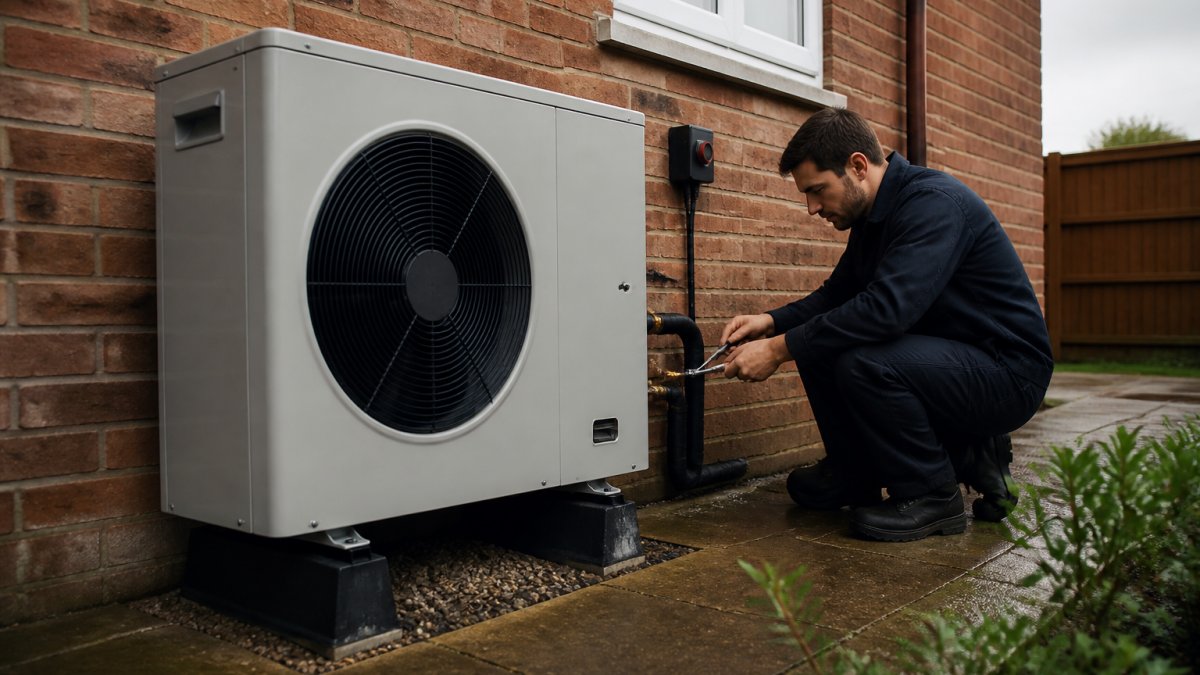
An air source heat pump is the most established replacement for a gas boiler. It draws heat from the outside air and moves it indoors at a higher temperature, which is why it can produce several units of heat for every unit of electricity it consumes (Heat pumps explained: experts answer your questions). In a well-insulated home, that efficiency translates into lower running costs than a gas boiler over time.
The catch is that heat pumps work best at lower flow temperatures, so your radiators and insulation need to be up to the job. A survey should confirm this before you commit.
Pros and Cons of Air Source Heat Pumps
Pros:
- Far lower carbon emissions than burning gas
- Eligible for government grant support
- Works with wet radiator systems when correctly sized
Cons:
- Upfront cost is higher than a like-for-like boiler swap
- Efficiency drops if the home is poorly insulated
- Needs an outdoor unit with adequate clearance
2. tepeo Zero Emission Boiler: A Drop-In Replacement
The tepeo Zero Emission Boiler is a smart heat battery that stores thermal energy during off-peak hours and releases it to heat your radiators and hot water. It is designed for homeowners who want to move away from gas without ripping out their existing radiator network, which makes it one of the least disruptive alternatives on this list.
Because it charges when electricity is cheaper, running costs depend heavily on the tariff you choose. If you are on a standard flat-rate tariff, the savings case is weaker.
Pros and Cons of the tepeo ZEB
Pros:
- Keeps your existing radiators and pipework
- Charges on cheaper off-peak electricity
- No direct emissions at the point of use
Cons:
- Requires floor space for the thermal battery unit
- Best value only on a time-of-use tariff
Before choosing any storage-based system, check whether your electricity supplier offers a genuine off-peak rate. The whole savings case for a heat battery rests on charging when power is cheapest, and not every tariff delivers that.
3. Electric Boilers: For Homes Without a Gas Supply
An electric boiler heats water for a wet central heating system, just like a gas boiler, but without a flue or gas connection. That makes it a practical choice for properties off the gas grid or flats where running a flue is impossible. Installation is often simpler and the units are compact and quiet.
The trade-off is running cost. Electricity typically costs more per unit of heat than gas, so an electric boiler suits smaller homes or well-insulated properties where demand is modest.
Pros and Cons of Electric Boilers
Pros:
- No flue or ventilation requirements
- Compact and silent in operation
- Lower installation cost than a heat pump
Cons:
- Higher running costs per unit of heat
- Less suited to large, high-demand homes
4. Smart Electric Radiators: Room-by-Room Control
Smart electric radiators heat individual rooms rather than a whole property through a central boiler. Each unit has its own thermostat and timer, so you heat only the rooms you are using. For extensions, converted lofts or homes where a full central heating system is impractical, that flexibility is genuinely useful.
Used as a whole-house primary heat source, however, they can become expensive to run. They work best as a targeted supplement.
Pros and Cons of Smart Electric Radiators
Pros:
- No annual gas safety check required
- Precise per-room scheduling
- Simple installation on a standard circuit
Cons:
- Expensive if relied on for the whole house
- Adds up quickly across many rooms
5. Is Infrared Heating Worth It for Your Home?
Infrared heating warms objects and people directly rather than the air around them, so it feels warm almost immediately. That makes it well suited to spot heating: a home office, a bathroom, or a room you use for short bursts. It is not a like-for-like replacement for a whole-house central heating system.
If you want fast, zoned warmth in specific rooms, infrared panels can be a sensible addition. If you want to heat an entire home through winter, expect a heat pump or boiler-based system to serve you better. As with any electric option, running costs depend on your tariff and how long the panels are on.
6. Boiler Upgrade Scheme Eligibility and How to Apply
The Boiler Upgrade Scheme is a government grant that reduces the upfront cost of installing certain low-carbon heating systems, such as air source heat pumps (Apply for the Boiler Upgrade Scheme: Overview). Eligibility rules, grant amounts and application steps are set by the government and can change, so always check the current details on the official Boiler Upgrade Scheme guidance before you plan a purchase.
In practice, the process usually works like this:
- Confirm your property and installer meet the current scheme rules
- Get a quote from an installer registered for the scheme
- The installer applies for the grant on your behalf
- The grant is deducted from your installation cost
- Keep your paperwork for your records
Because scheme rules and grant values are updated periodically, we would never quote a figure from memory. Check the official source, then ask your installer to confirm what you qualify for.
7. Air Source Heat Pump Installation Costs Explained
Air source heat pump installation costs vary widely because the price depends on your property, not just the unit. A straightforward swap onto an existing wet system costs far less than a project that also needs new radiators, pipework or insulation upgrades. Rather than guess at a figure, it is worth understanding what drives the number up or down.
The main cost factors are:
- Property size and heat loss: larger or poorly insulated homes need a bigger, more expensive system
- Radiator and pipework changes: undersized radiators often need replacing
- Hot water cylinder: many homes need one fitted if they do not already have it
- Electrical upgrades: older wiring may need work to support the unit
- Grant offset: the Boiler Upgrade Scheme can reduce the net cost
For accurate figures, get a survey and a written quote. Major Heat provides free quotes and can advise on whether a heat pump, a thermal battery or another alternative suits your home.
Do not accept a heat pump quote that skips a room-by-room heat loss survey. Sizing a system on floor area alone is the most common cause of a heat pump that runs inefficiently and leaves rooms cold.
Where Major Heat Comes In
Moving off gas is a planning problem before it is a purchasing one, and the wrong choice is expensive to undo. Major Heat’s Gas Safe registered engineers provide expert boiler installations, servicing and repairs, plus reliable emergency plumbing support, backed by transparent pricing and free quotes. If you are weighing up alternatives to traditional gas central heating, we would rather survey your home and tell you honestly which option fits.
Get started with Major Heat and book a free quote to find the right heating solution for your property.
Frequently Asked Questions
What is the most cost-effective alternative to gas central heating?
For most homes, an air source heat pump offers the lowest running costs over time because it delivers more heat per unit of electricity than direct electric systems. However, the upfront cost is higher, so the Boiler Upgrade Scheme grant can improve the payback period. Electric boilers and radiators cost less to install but run on standard electricity rates, which are typically higher per kWh than gas. The best choice depends on your insulation, existing radiators, and how long you plan to stay in the property.
Are air source heat pumps suitable for older properties?
Heat pumps can work in older properties, but they perform best when the home is well insulated and has larger radiators or underfloor heating. In a typical Victorian or pre-1930s house, you may need to upgrade loft insulation, draught-proofing, and some radiators to run the heat pump at a lower flow temperature. A professional survey will confirm whether your property is suitable and what improvements are needed.
Do I need to upgrade my insulation before switching heating systems?
Not always, but insulation makes a significant difference to running costs. Heat pumps operate most efficiently at lower temperatures, so a well-insulated home retains that heat better and reduces demand. If your home has poor loft insulation or single-glazed windows, addressing those first will improve the performance of any alternative heating system, including electric radiators and infrared panels. Some grants require a minimum energy efficiency rating.
What are the pros and cons of electric radiators versus heat pumps?
Electric radiators are cheaper to install, require no outdoor unit, and give you room-by-room control, which suits flats or homes without a gas supply. However, they are generally more expensive to run as your main heat source because electricity costs more per kWh than gas. Heat pumps have higher upfront costs but lower running costs and a smaller carbon footprint. For a whole-house solution, a heat pump usually wins on long-term cost; for occasional or zoned heating, electric radiators can be practical.
How do government grants like the Boiler Upgrade Scheme work?
The Boiler Upgrade Scheme (BUS) provides a grant towards the cost of installing an air source or ground source heat pump in England and Wales. You apply through an installer who is registered with the scheme, and the grant is deducted from your invoice. Eligibility rules, grant amounts, and application steps can change, so check the latest guidance on GOV.UK or ask a Gas Safe registered engineer who handles BUS applications. The scheme does not cover electric boilers or infrared heating.