
Table of Contents
- Quick Comparison: 5 Heating Settings for Winter 2026
- 1. Constant 18°C: The Baseline Setting
- 2. Smart Scheduling with Hive Active Heating
- 3. Zoned Heating with Tado and Ember Smart Valves
- 4. Targeted Room Heating with Portable Heaters
- 5. How to Reduce Boiler Energy Consumption with Smart Plugs
- The Benefits of Annual Boiler Servicing for Winter Efficiency
- Conclusion
- Frequently Asked Questions
Last Updated: September 24, 2026
Quick Comparison: 5 Heating Settings for Winter 2026
The best heating settings for winter 2026 balance comfort with cost, and the right choice depends on your home, your schedule, and how much control you want. Households often heat every room to the same temperature around the clock, then wonder why the bill climbs. The five settings below cover the full range, from a simple fixed temperature to smart zoning and cheap scheduling tricks.
Here is how they compare before we look at each one in detail.
| Setting | Best For | Typical Setup Cost | Effort to Run |
|---|---|---|---|
| Constant 18°C | Simple households, consistent comfort | None | None |
| Smart scheduling | Busy homes with regular routines | Around £179 | Low |
| Zoned heating | Larger or partly occupied homes | Around £200 plus valves | Medium |
| Targeted room heating | Home offices, single rooms | From around £85 | Low |
| Smart plug scheduling | Budget upgrades to old heaters | Around £13 | Low |
If you want one recommendation, start with a fixed 18°C baseline and layer smart scheduling on top. That combination covers most homes without overcomplicating things. The rest of this guide breaks down each setting, what it costs to run, and where it falls short.
1. Constant 18°C: The Baseline Setting
A constant 18°C is the simplest heating setting for winter, and for many homes it is still the most sensible starting point. Health guidance in the UK has long pointed to 18°C as the temperature to aim for in living areas, with bedrooms slightly cooler. This is the setting to use as your reference point before you add any smart control.
The logic is straightforward. Holding one steady temperature avoids the energy spike that comes with repeatedly letting the house cool and then blasting the heating to recover. It also removes the guesswork. You set it once and forget it.
Pros:
- No equipment to buy and nothing to configure
- Steady, predictable comfort in every room
- Easy for guests, renters, or anyone unfamiliar with the system
Cons:
- Heats empty rooms when nobody is home
- No flexibility for days when your routine changes
- Can feel wasteful in larger properties
Setting the thermostat higher to “warm up faster” does not work. Boilers heat at a fixed rate, so turning it to 25°C just overshoots the target and wastes gas. Set the temperature you actually want and leave it.
2. Smart Scheduling with Hive Active Heating
Smart scheduling takes the fixed 18°C baseline and adds a timetable, so the heating runs when you need it and rests when you do not. Hive Active Heating is the clearest example: it lets you build daily schedules around your routine and control everything from your phone. The system starts at around £179 as a one-off purchase.
The real benefit is the geolocation feature. When you leave the house, the heating drops back automatically. When you head home, it starts warming up before you arrive. Holiday mode keeps a minimum frost protection temperature while you are away.
Pros:
- Precise scheduling against an 18°C to 20°C target
- Geolocation cuts waste when the house is empty
- Works with wider smart home setups
Cons:
- Professional installation is worth the money for best results
- Needs a stable broadband connection to work properly
This setting suits households with a regular weekly pattern. If your days are unpredictable, the automation has less to work with.
3. Zoned Heating with Tado and Ember Smart Valves
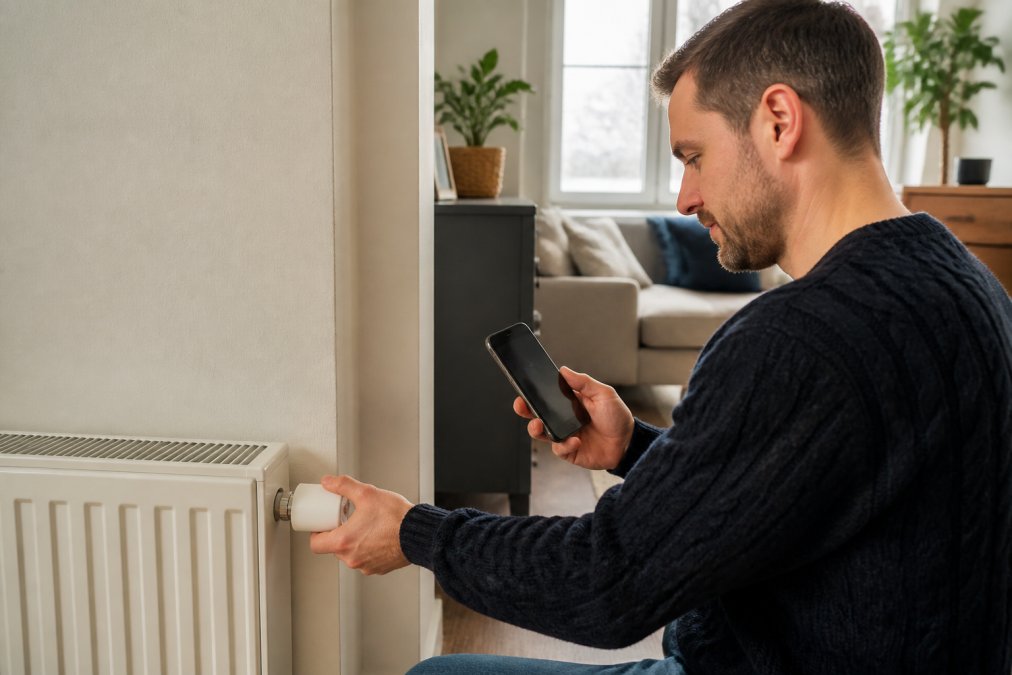
Zoned heating splits your home into separate areas, each with its own temperature, so you only heat the rooms you are using. Tado, priced from around £199.99, handles the room-by-room control through its app, while Ember Smart Radiator Valves, from around £45 each, fit onto standard radiators to give individual rooms their own schedule and boost function.
For a larger property, this is where the savings stack up. Heating a whole house to 18°C when you spend the evening in one room is pure waste. Zoning fixes that. Open window detection on the Tado system also pauses heating when a window is left open, which stops the boiler working against you.
Pros:
- Individual room temperatures stop waste in unused rooms
- Energy reports show exactly where heat is going
- Frost protection keeps unused rooms safe from damp and cold
Cons:
- Full room-by-room control needs valves on every radiator
- Ember valves need a central hub to unlock full functionality
Start zoning with the rooms you use least, such as spare bedrooms and studies. Fitting smart valves there first gives you most of the saving without buying valves for the whole house in one go.
4. Targeted Room Heating with Portable Heaters
Targeted room heating uses a portable heater to warm one space instead of firing up the whole system. The Dyson Hot+Cool AM09, from around £349.99, offers precise thermostat control and a sleep timer, while the Dimplex Oil-Free Column Heater, from around £85, warms up quickly and glides between rooms on castors.
This setting makes sense when one person is home and the rest of the house is empty. Running a single efficient heater in a home office for a few hours costs far less than heating every room. The De’Longhi Dragon 4, from around £120, holds its heat long after it switches off, which suits larger living spaces.
Pros:
- No installation and no changes to your existing system
- Ideal for home offices, spare rooms, and occasional use
- Safe options available for homes with children or pets
Cons:
- Cheaper models lack smart scheduling
- Not a substitute for a working central heating system
5. How to Reduce Boiler Energy Consumption with Smart Plugs
Learning how to reduce boiler energy consumption often starts with the cheapest upgrade available: a smart plug. The TP-Link Tapo Smart Plug costs around £12.99 and adds app-based scheduling and energy monitoring to any heater that plugs into a wall socket. You cannot control temperature with it, only power, but that is often enough.
The trick is to schedule the plug so a supplementary heater runs only during the hours you actually use the room. Energy monitoring then shows you what that heater really costs to run, which is information most households never see.
Pros:
- Very low entry price
- Simple setup with no wiring
- Energy monitoring builds a clear picture of running costs
Cons:
- Power control only, no temperature setting
- Only works with plug-in heaters, not fixed radiators
Pair a smart plug with a fixed 18°C baseline and you have a low-cost version of the smart scheduling setup. It is not as refined as a full thermostat system, but it captures much of the benefit for a fraction of the price.
The Benefits of Annual Boiler Servicing for Winter Efficiency
The benefits of annual boiler servicing come down to one thing: a boiler that runs efficiently all winter instead of failing on the coldest night of the year. A service checks combustion, pressure, and safety components, and catches small faults before they become breakdowns. Major Heat’s Gas Safe registered engineers carry out servicing, repairs, and installations, with transparent pricing and free quotes.
No heating setting will save you money if the boiler itself is struggling.
Smart heating settings multiply the value of a well-maintained boiler. Fix the system first, then optimise how you run it.
Conclusion
Getting your heating settings right for winter 2026 is only half the job. The other half is making sure the boiler behind those settings is running safely and efficiently, and that is where a professional check pays for itself. Major Heat offers Gas Safe registered engineers, expert boiler servicing, repairs, and installations, plus emergency plumbing support when something fails at the worst possible moment.
Frequently Asked Questions
What is the recommended room temperature for winter in the UK?
The recommended room temperature for winter in the UK is between 18°C and 20°C. This range balances comfort with energy efficiency. Setting your thermostat to 18°C can save you money compared to higher settings, as every degree increase adds roughly 10% to your heating bill. Using a smart thermostat like Hive or Tado can help you maintain this range automatically, ensuring you don’t overheat your home. For personalised advice, contact Major Heat for a free quote.
Should I turn my heating off when I am out of the house?
Yes, turning your heating off or lowering it when you’re out can save energy. However, in very cold weather, it’s better to maintain a low background temperature (around 12°C) to prevent frozen pipes. Smart thermostats with geolocation features, such as Tado or Google Nest, automatically adjust heating based on your presence, so you don’t have to remember. This approach is part of how to reduce boiler energy consumption effectively.
Does keeping the heating on low all day save money?
Keeping your heating on low all day is generally not cheaper than using a timer. Modern condensing boilers are most efficient when they run at higher temperatures for shorter periods. A well-programmed schedule, like 18°C in the morning and evening, and lower at night, reduces waste. The benefits of annual boiler servicing include ensuring your boiler runs efficiently, which supports this approach. Major Heat’s Gas Safe engineers can advise on the best settings for your home.
What is the most energy-efficient way to heat a home in winter?
The most energy-efficient way is to use zoned heating with smart controls. This means heating only the rooms you’re using to 18°C-20°C, while keeping others lower. Smart radiator valves like Ember allow individual room control. Combine this with a smart thermostat for scheduling, and ensure your boiler is serviced annually. Major Heat offers free quotes for system upgrades that can improve efficiency.
Do smart thermostats actually save money on heating bills?
Yes, smart thermostats like Hive Active Heating and Google Nest can save money by learning your schedule and avoiding unnecessary heating. They typically cost from £179, but savings on bills can offset this over time. For example, geofencing reduces heat when you’re away. However, savings depend on your home and usage. Major Heat can install and configure smart thermostats to maximise efficiency.