
Table of Contents
- Common Signs of a Leaking Boiler
- Boiler Losing Pressure: A Key Warning Sign
- What to Do if Your Boiler Is Leaking
- Boiler Leak Repair: When to Call a Professional
- Is a Leaking Boiler Dangerous?
- Can You Still Use a Leaking Boiler?
- Frequently Asked Questions
Last Updated: 20 October 2026
Common Signs of a Leaking Boiler
Recognising leaking boiler signs is crucial, as a leaking boiler is one of the most serious issues a homeowner can face. Water escaping from your heating system can damage your home, waste energy, and create safety hazards. We help homeowners across the region identify these problems early so they can get professional help before the damage spreads.
The first step is knowing what to look for. A leaking boiler won’t always announce itself loudly. Sometimes the signs are subtle. Other times they’re impossible to miss. Either way, spotting them quickly matters.
Visible water pooling around the boiler
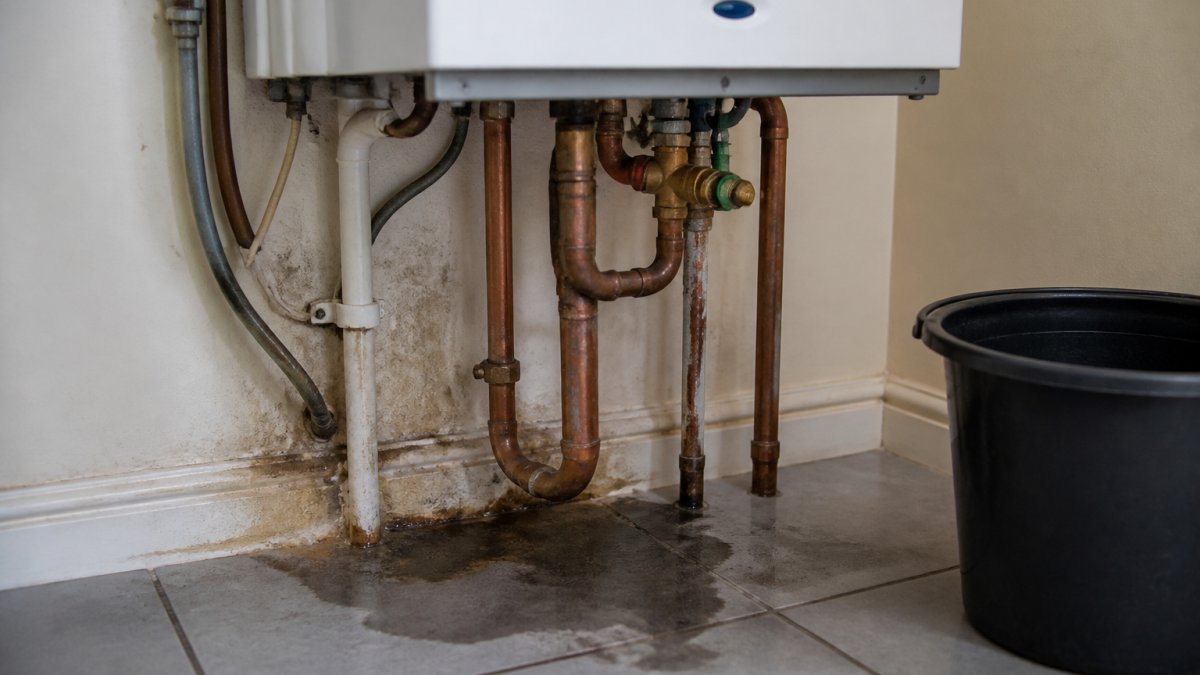
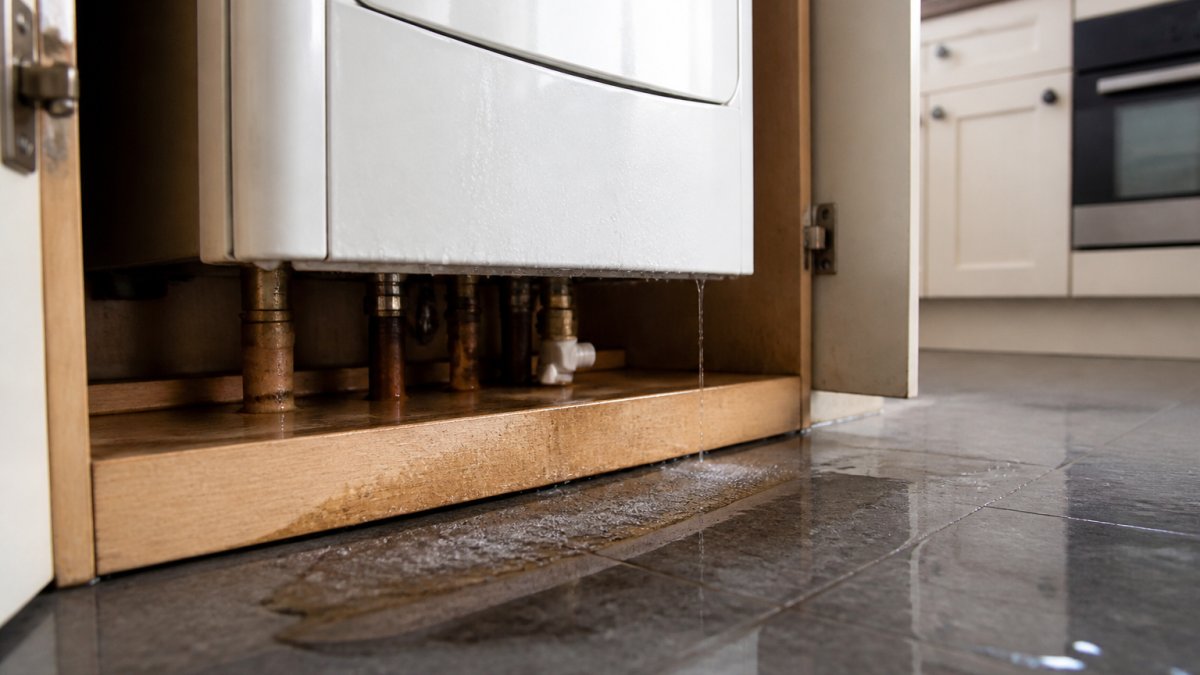
The most obvious sign of a leaking boiler is water gathering on the floor beneath it. This pooling happens when seals fail or cracks develop in the boiler casing. You might notice a small puddle that reappears after you’ve wiped it away.
Check around the base of your boiler regularly. Look for:
- Water collecting on the floor or tray beneath the unit
- Wet patches that don’t dry quickly
- Water dripping from pipes or connections
- Moisture on the surrounding walls or flooring
Even a small amount of pooling water should concern you. It means your boiler is losing water, and that loss will only get worse. Don’t wait to see if it stops on its own.
Damp patches on walls or ceilings near the boiler
Sometimes water doesn’t pool on the floor. Instead, it travels through walls or drips from above. You might notice damp patches appearing on ceilings or walls near where your boiler sits.
These patches often look discoloured or feel soft to the touch. They may have a musty smell. In some cases, you’ll see mould growth developing around the damp area.
Ceiling dampness is particularly concerning because it suggests water has been escaping for a while. The water has travelled through your home’s structure. This can weaken wooden beams, damage insulation, and create mould that spreads quickly.
Rust or corrosion on the boiler casing
Your boiler’s outer casing protects the internal components. When water leaks continuously, rust and corrosion start forming on the metal surface. You’ll see orange or brown staining, flaking paint, or rough patches where the coating has worn away.
Corrosion is a warning sign that internal damage is already happening. The rust you see outside reflects deterioration inside. This is when a leaking boiler becomes truly dangerous.
Hissing or dripping sounds from the unit
A healthy boiler runs quietly. If you hear hissing, dripping, or gurgling sounds coming from the unit, water is escaping somewhere inside.
Listen carefully when the heating is on. A steady drip-drip-drip sound from beneath the boiler is a classic sign of a leak. Hissing noises often mean water is escaping near hot components, creating steam.
These sounds are your boiler’s way of telling you something is wrong. Don’t ignore them.
Boiler Losing Pressure: A Key Warning Sign
Your boiler’s pressure gauge is one of the most important diagnostic tools available. When pressure drops suddenly or repeatedly, a leak is often the cause. Understanding how to read this gauge can help you catch problems early.
How to read your boiler’s pressure gauge
The pressure gauge is usually located on the front of your boiler. It shows a numerical reading, typically between 1 and 3 bar. Most boilers operate best at around 1.5 bar when the system is cold.
To read your gauge:
- Check it when the heating is off and the system is cool
- Normal pressure sits between 1 and 1.5 bar
- Write down the reading and check it weekly
- Contact a professional if it drops below 1 bar
If you’re unsure where your gauge is or how to read it, your boiler’s manual will show you. Many modern boilers have digital displays that make reading pressure easier.
Why pressure drops when there’s a leak
Your heating system is sealed. Water inside cannot escape under normal circumstances. When a leak develops, water leaves the system. As water volume decreases, pressure drops.
A slow leak might cause pressure to drop gradually over weeks. A larger leak can cause a noticeable pressure loss in days. If your pressure gauge shows a steady decline, a leak is almost certainly present.
Pressure loss is one of the most reliable leaking boiler signs and indicators of a leak. It’s more reliable than trying to spot water pooling, because some leaks are internal or hidden behind walls. The pressure gauge tells the truth.
What to Do if Your Boiler Is Leaking
Finding a leak is frightening. Knowing what to do next brings clarity and peace of mind. The steps you take in the first few hours matter.
Immediate steps to take
First, turn off your boiler. Don’t let it continue running while water is escaping. Locate the isolation valve (usually a lever on the pipe entering the boiler) and turn it off. This stops water flowing into the system.
Next, turn off the water supply to your home if the leak is severe and water is pooling rapidly. This is a precaution to prevent further damage while you wait for help.
Do not attempt to repair the boiler yourself. Boilers contain pressurised water and gas. Tampering with them is dangerous and illegal without proper certification.
Contact a Gas Safe registered engineer immediately. Don’t delay this step. A professional needs to inspect the leak, identify its cause, and determine whether repair or replacement is necessary.
Safety considerations while waiting for help
While you wait for an engineer to arrive, take these safety steps:
- Keep children and pets away from the boiler area
- Do not touch the boiler or any leaking water
- Open windows to improve ventilation
- Avoid using the boiler for heating or hot water
- Place towels under the leak to catch water and prevent it spreading to electrical sockets or appliances
- Take photos of the leak and any water damage for your insurance company
If you smell gas, leave your home immediately and call the emergency gas line. Do not light matches, use electrical switches, or do anything that might create a spark.
Boiler Leak Repair: When to Call a Professional
Not all leaks can be fixed. Some boilers are worth repairing. Others are past their useful life and should be replaced. A professional engineer will help you decide which path makes sense.
Why you need a Gas Safe registered engineer
Gas Safe registration is a legal requirement in the UK. Only engineers on the Gas Safe register can legally work on gas boilers. This isn’t a guideline, it’s the law.
Gas Safe engineers have completed rigorous training. They understand the dangers of pressurised systems, gas connections, and combustion. They carry insurance that protects you if something goes wrong.
Our engineers are all Gas Safe registered. This means your repair is done safely, legally, and to the highest standard. When you book with us, you’re choosing peace of mind.
What the repair process involves
An engineer will first diagnose the leak. They’ll inspect the boiler inside and out, check the pressure gauge, and test various components. This diagnosis tells them whether the leak is in a seal, a joint, a pipe, or the boiler casing itself.
Some leaks are simple fixes. A loose connection can be tightened. A worn seal can be replaced. These repairs take a couple of hours and cost far less than a new boiler.
Other leaks signal that the boiler has reached the end of its life. If the casing itself is cracked, or if multiple components are failing, repair isn’t practical. In these cases, replacement is the better choice.
Your engineer will explain both options and let you decide. They’ll give you a clear quote before starting any work.
Is a Leaking Boiler Dangerous?
Yes. A leaking boiler poses real risks to your home and family. Understanding these risks helps you understand why professional help is essential.
Risks of leaving a leak unattended
Water damage spreads silently. A small leak today becomes structural damage in weeks. Wooden beams weaken. Plaster crumbles. Mould grows and releases spores that affect breathing.
Energy bills rise as your system loses water and has to work harder to maintain temperature. You’re paying to heat water that’s escaping through a leak.
More importantly, you’re without reliable heating. In winter, a failed boiler means no hot water and no warmth. This isn’t just uncomfortable, it’s dangerous, especially for elderly people, young children, and anyone with health conditions.
Electrical and gas safety hazards
Water and electricity don’t mix. If a leak reaches electrical wiring, sockets, or appliances, electrocution becomes possible. This is why you should never touch leaking water or the area around it.
Gas safety is equally critical. A leak that allows water to contact gas connections or combustion areas creates fire and explosion risks. Gas boilers burn fuel to create heat. If water interferes with this process, dangerous carbon monoxide can build up.
Carbon monoxide is invisible and odourless (the NHS). Exposure causes headaches, dizziness, nausea, and in severe cases, death. A leaking boiler that’s still running is a carbon monoxide risk.
Can You Still Use a Leaking Boiler?
No. You should not use a leaking boiler, even if it still produces heat. Running a leaking boiler accelerates damage and increases safety risks.
Every time you turn on the heating, you’re:
- Losing more water through the leak
- Putting pressure on a failing system
- Potentially spreading water damage through your home
- Risking gas and electrical hazards
Turn off the boiler immediately when you discover a leak. Use an electric heater or stay with family if the weather is cold. This temporary inconvenience is far better than the cost and danger of continued use.
Frequently Asked Questions
How can I tell if my boiler is leaking?
Look for visible water pooling around the boiler base, damp patches on surrounding walls or ceilings, rust or corrosion on the casing, and listen for dripping or hissing sounds. Check the pressure gauge on your boiler, a steady drop in pressure often indicates a leak. If you notice any of these signs, contact a Gas Safe registered engineer promptly to prevent further damage.
What should I do first if my boiler is leaking?
Turn off your boiler immediately using the on/off switch or isolating valve. Place towels or a bucket beneath the leak to catch water and prevent damage to floors or electrical components. Do not attempt repairs yourself. Contact a Gas Safe registered engineer as soon as possible, many offer emergency call-out services. Avoid using the boiler until a professional has inspected and repaired it.
Is a leaking boiler dangerous?
Yes. Water leaks near electrical components can create electrocution hazards, and gas-related issues may pose carbon monoxide risks. Prolonged leaks cause structural damage to your home and can lead to mould growth. A leaking boiler should never be ignored. Gas Safe registered engineers are trained to identify and safely resolve these hazards. Do not delay seeking professional help.
Why is my boiler losing pressure but not leaking visibly?
Pressure loss without visible leaks can indicate a slow internal leak, a faulty pressure relief valve, or issues with the expansion vessel. These problems are not always obvious but still require professional attention. A Gas Safe registered engineer can diagnose the cause using specialist equipment and recommend the appropriate boiler leak repair to restore normal operation.
A leaking boiler demands immediate professional attention. The longer you wait, the more damage spreads and the higher your repair costs climb. Major Heat’s Gas Safe registered engineers can diagnose your leak, explain your options, and get your heating working safely again. Contact us for a free quote and emergency support when you need it most.