
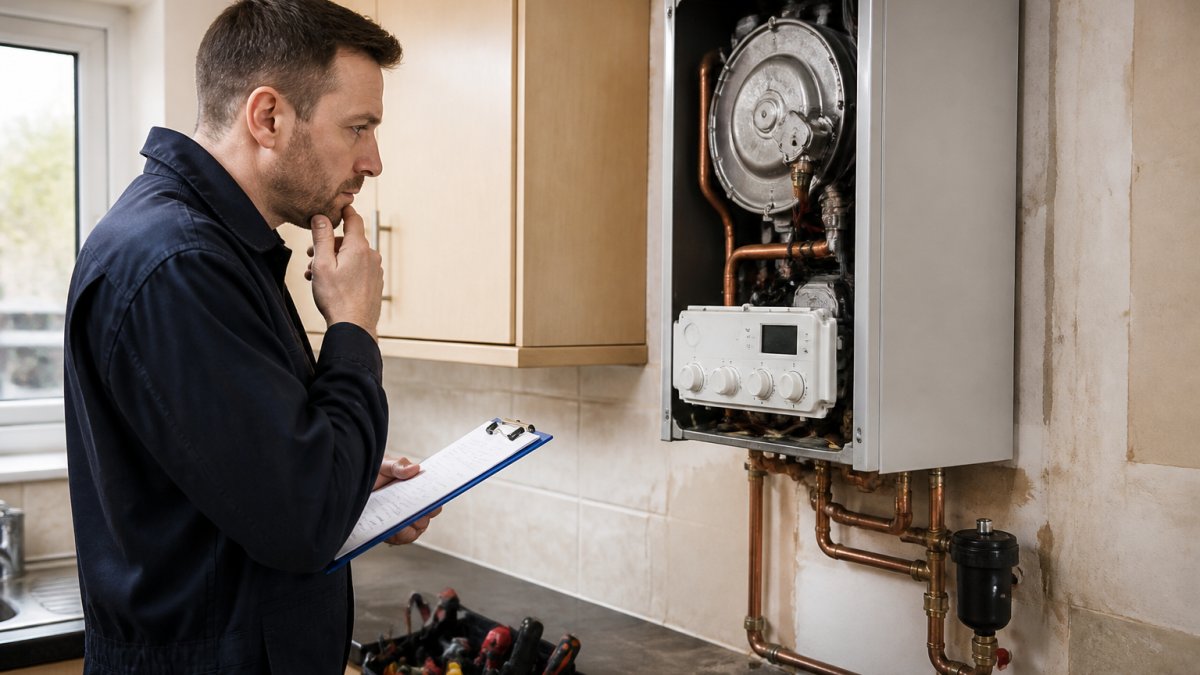
Last Updated: 31 October 2026
Quick Summary
Signs your gas boiler needs replacing include frequent breakdowns, rising energy bills, poor heating performance, leaks, yellow or orange flames, and banging, whistling or gurgling noises. Most boilers last between 10 and 15 years, and replacement usually makes sense when a repair bill approaches half the cost of a new installation.
- Most boilers last between 10 and 15 years depending on maintenance and workload.
- If a repair bill approaches half the cost of a new installation, replacement usually makes more sense.
- Yellow or orange flames suggest incomplete combustion, so leave the property and call 0800 111 999.
- Under eight years old, repair is usually the right call for a first fault.
- If two of the three decision questions point toward replacement, plan the swap rather than wait for a breakdown.
Table of Contents
- How to Tell If Your Gas Boiler Is on Its Way Out
- How Long Does a Boiler Last Before Replacement Becomes Likely?
- Your Boiler Keeps Breaking Down: When Repairs Stop Making Sense
- Rising Energy Bills and Poor Heating Performance
- Warning Signs You Should Never Ignore: Leaks, Noise and Yellow Flames
- Boiler Repair or Replacement: How to Decide
- What Affects Boiler Replacement Cost
- Book a Gas Safe Boiler Assessment with Major Heat
- Frequently Asked Questions
How to Tell If Your Gas Boiler Is on Its Way Out
A gas boiler is the sealed unit that heats water for your radiators and taps, and it rarely fails without warning. Most units give months of notice through noise, cost and performance. This guide covers the signs that a gas boiler may need attention, and how to judge when a repair stops being worth the money.
The trick is knowing which signals matter. A noisy boiler in November is annoying. A leaking boiler in January is expensive. Below, we separate the two.
According to Gas Safe Register’s guidance for homeowners, any work on a gas appliance must be carried out by a registered engineer. That matters here, because several signs on this list are ones you should never investigate yourself.
How Long Does a Boiler Last Before Replacement Becomes Likely?
Most boilers last between 10 and 15 years, depending on how well they are maintained and how hard they work.
Age alone is not a reason to replace. A well-serviced boiler at 13 years old can still run reliably. The warning lights come on when age combines with expensive repairs or rising running costs.
A common mistake is waiting for a total failure. In practice, a planned replacement is cheaper and less disruptive than an emergency swap in the middle of winter. If your boiler is past the ten-year mark, book a boiler service to establish its actual condition before you commit to anything.
Your Boiler Keeps Breaking Down: When Repairs Stop Making Sense
A common rule of thumb is that if the repair bill approaches half the cost of a new installation, replacement usually makes more sense.
Frequent breakdowns tend to point at the same underlying problem, worn components rather than one-off faults. Each repair fixes a symptom. The next one appears a few weeks later.
If your unit is already in double figures, read our guide on whether a 12 year old boiler is worth repairing before you spend money on another fix.
Rising Energy Bills and Poor Heating Performance
A boiler that is losing efficiency shows up on your bill before it shows up in the fault log. Radiators that take longer to heat, hot water that runs lukewarm, and rooms that never quite reach temperature all point the same way.
Older boilers are typically less efficient than modern condensing models, so a gradual drift upward in running costs is expected. A sudden jump is not. That usually means a component is failing, and a service will tell you which.
Uneven heating is the other clue. If the upstairs radiators are hot and the downstairs ones are not, the boiler may be struggling to circulate rather than failing outright. That is worth diagnosing before you assume the worst.
Warning Signs You Should Never Ignore: Leaks, Noise and Yellow Flames
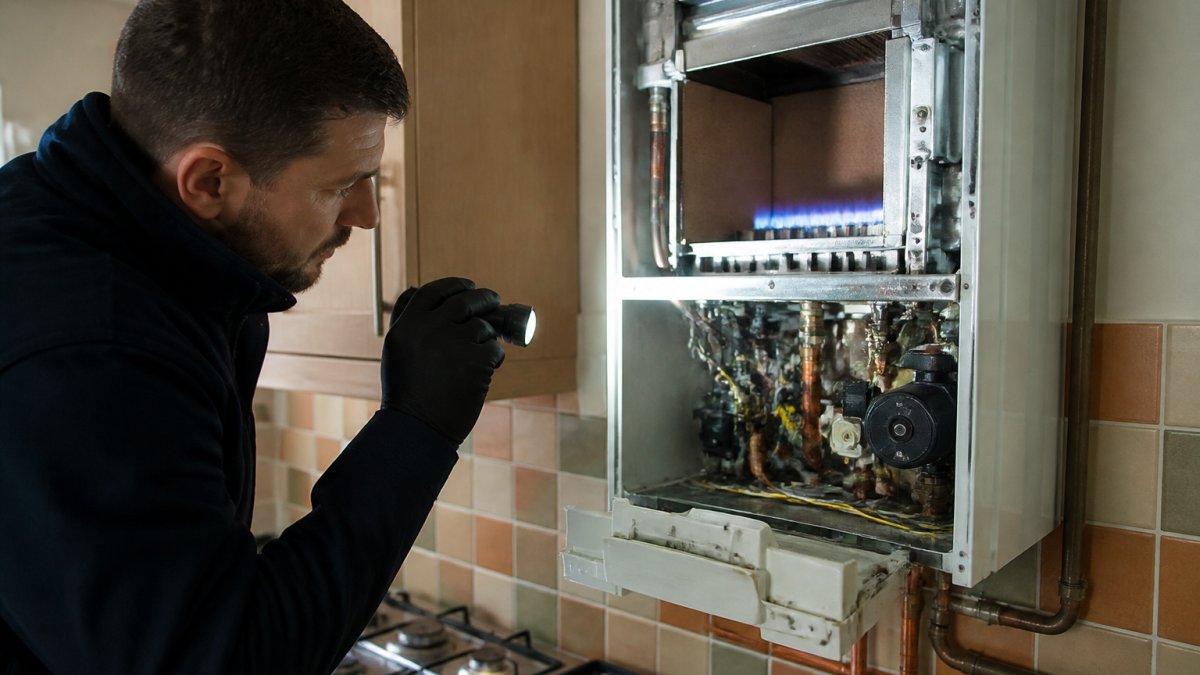
Three symptoms need action the same day, not a diary note for next month.
- Leaks. Water pooling under the unit, or staining on the casing, points to a failed seal or internal component. Switch the boiler off and call an engineer.
- Yellow or orange flames. A healthy gas flame burns blue. Yellow flames suggest incomplete combustion and possible carbon monoxide production. Open windows, leave the property, and call the National Gas Emergency Service on 0800 111 999.
- Banging, whistling or gurgling. These often trace back to limescale, trapped air or a failing pump. Not immediately dangerous, but rarely self-correcting.
For a closer look at the first of those, our guide to the signs of a leaking boiler explains what each type of leak usually means.
Boiler Repair or Replacement: How to Decide
Three questions can help you decide.
- How old is the unit? Under eight years, repair is usually the right call.
- What is the repair as a share of replacement? Below a third, repair. Above half, replace.
- How often has it failed this year? Once is bad luck. Twice is a pattern.
If two of the three point toward replacement, it is sensible to plan the swap rather than wait for a breakdown. When you are ready, Major Heat offers boiler installation fitted by Gas Safe registered engineers.
| Situation | Recommended route |
|---|---|
| Under 8 years, first fault | Repair |
| Over 12 years, second fault this winter | Replace |
| Any leak or yellow flame | Emergency engineer visit |
| Repair quote above half of replacement | Replace |
What Affects Boiler Replacement Cost
Replacement cost depends on factors such as the boiler type, the property’s existing pipework and any work required to the flue or system. Pricing for your home depends on an assessment, so contact Major Heat or visit the website for current prices or a quote.
Pricing can also vary with output rating and controls. We do not publish fixed figures because two homes on the same street can need different work. Major Heat provides free quotes.
For a full breakdown of what drives the number, see our boiler installation cost guide.
Book a Gas Safe Boiler Assessment with Major Heat
Two of the signs above, a leak and a yellow flame, are safety issues rather than cost issues. The rest are judgement calls, and judgement is easier with an engineer in the room.
At Major Heat, our Gas Safe registered engineers cover boiler installation, servicing and repairs, with emergency plumbing support. You can request free quotes.
Frequently Asked Questions
How do I know if my gas boiler needs replacing?
Look for a cluster of warning signs rather than a single one: the boiler is over 10 to 15 years old, it breaks down several times a year, energy bills creep up without extra usage, radiators heat unevenly, and you notice banging, gurgling or a yellow flame. Any smell of gas or suspected carbon monoxide means you should stop using the appliance and call the National Gas Emergency Service on 0800 111 999 immediately. A Gas Safe registered engineer can confirm whether repair or replacement is the right call.
Should I repair or replace an old boiler?
The decision usually comes down to age, reliability and the size of the repair bill. If the boiler is under 10 years old and the fault is a single component, repair is often sensible. If it is past 12 to 15 years, has had multiple repairs in the past two years, or the quote is a large share of what a new installation would cost, replacement tends to be the better long-term spend. Ask your engineer for both figures in writing before deciding.
Why does my boiler keep breaking down?
Repeated breakdowns often point to limescale build-up in hard water areas, worn pumps, failing diverter valves or a heat exchanger under strain. Skipping annual servicing accelerates all of these. If your boiler has needed two or more call-outs in a year, keep a record of each repair and its cost, then discuss with a Gas Safe registered engineer whether continued repairs are worth it or whether a new boiler would be more reliable.
Can a noisy boiler be a sign it needs replacing?
Sometimes. Banging, whistling or gurgling can come from limescale, trapped air, low water pressure or worn internal parts, and many of these are fixable. Noise alone rarely justifies replacement, but combined with age, rising bills and repeated breakdowns it adds weight to the case. Have the noise investigated first, because ignoring it can lead to bigger component failures.
If your boiler is showing any of these signs, get it checked before winter rather than during it. Get started with Major Heat and book a free quote for a Gas Safe assessment of your heating system.
