
Table of Contents
- How a Combi Boiler Works and Why It Matters
- Combi Boiler Flow Rate Explained
- Combi Boiler vs System Boiler: Key Differences
- Property Suitability Checklist
- The Average Cost of Boiler Installation
- When a Combi Boiler Is the Wrong Choice
- Frequently Asked Questions
Last Updated: September 13, 2026
How a Combi Boiler Works and Why It Matters
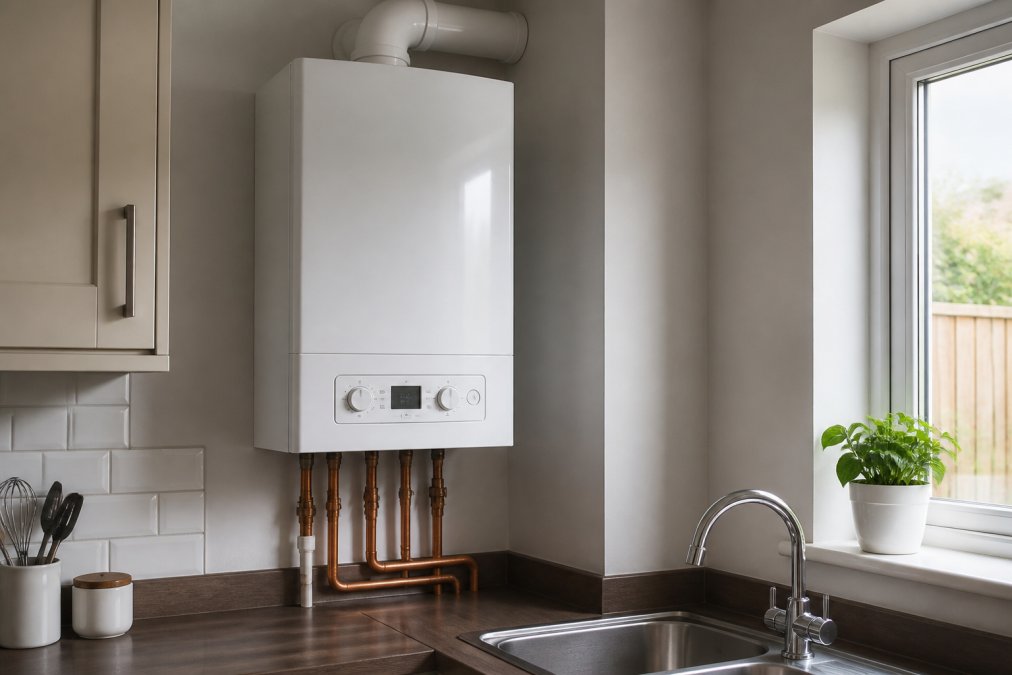
A combi boiler is a single unit that heats water directly from the mains and supplies your central heating on demand, with no separate cylinder or tank (energysavingtrust.org.uk). At Major Heat, we explain the same thing to homeowners every week: the “combi” in combi boiler is short for combination, because one appliance covers both heating and hot water. That design is why the question “is a combi boiler right for my property” usually comes down to water supply and demand rather than brand or budget.
Cold water enters straight from the mains. A diverter valve sends it either through the heating circuit or through a plate heat exchanger for hot water. There is no stored supply waiting to run out, and no loft tank refilling after a long shower. The practical upside is space and simplicity. The practical downside is that everything depends on the incoming mains.
That single dependency explains most combi complaints. When pressure and flow are good, the system is hard to beat. When they are not, no amount of servicing will fix a combi that was never suited to the property.
A common mistake is buying a combi on price alone without checking mains flow first. If your incoming flow is poor, a correctly sized combi will still deliver weak showers, and the fault will look like a boiler problem when it is a supply problem.
Combi Boiler Flow Rate Explained
Combi boiler flow rate is the volume of hot water a boiler can raise by a set temperature rise in one minute, measured in litres per minute. It is the single number that decides whether your showers feel strong or pathetic, and it matters more than the kW rating printed on the brochure.
A combi does not store hot water, so it can only heat what passes through it at any moment. A higher flow rate means more taps and showers can run at once before performance drops. A lower flow rate means the boiler will still hit the temperature you asked for, but it will reduce the volume to do so.
What Flow Rate Do You Actually Need?
The right flow rate depends on how many outlets run at the same time and how you use hot water. As a working guide:
| Outlets in use | Typical demand | What to expect |
|---|---|---|
| One shower | Moderate | Comfortable on most modern combis |
| Shower plus kitchen tap | High | Flow drops at both outlets |
| Two showers at once | Very high | Usually disappointing on a combi |
For a property with one bathroom and a household that showers in sequence rather than simultaneously, a modest flow rate is often perfectly adequate. For a household where two people shower at the same time every morning, that same boiler will feel inadequate no matter how well it is installed. This is the point most buyers miss: flow rate is a household habit question as much as a technical one.
Combi Boiler vs System Boiler: Key Differences
The core difference is storage. A combi heats water on demand with no cylinder. A system boiler heats water into a stored cylinder, so hot water is ready and waiting, and the boiler itself carries fewer components.
System boilers suit homes with higher simultaneous demand because the cylinder acts as a buffer. They also pair naturally with certain renewable setups and with homes that already have a cylinder in place. Combi boilers suit homes where space is tight and demand is predictable.
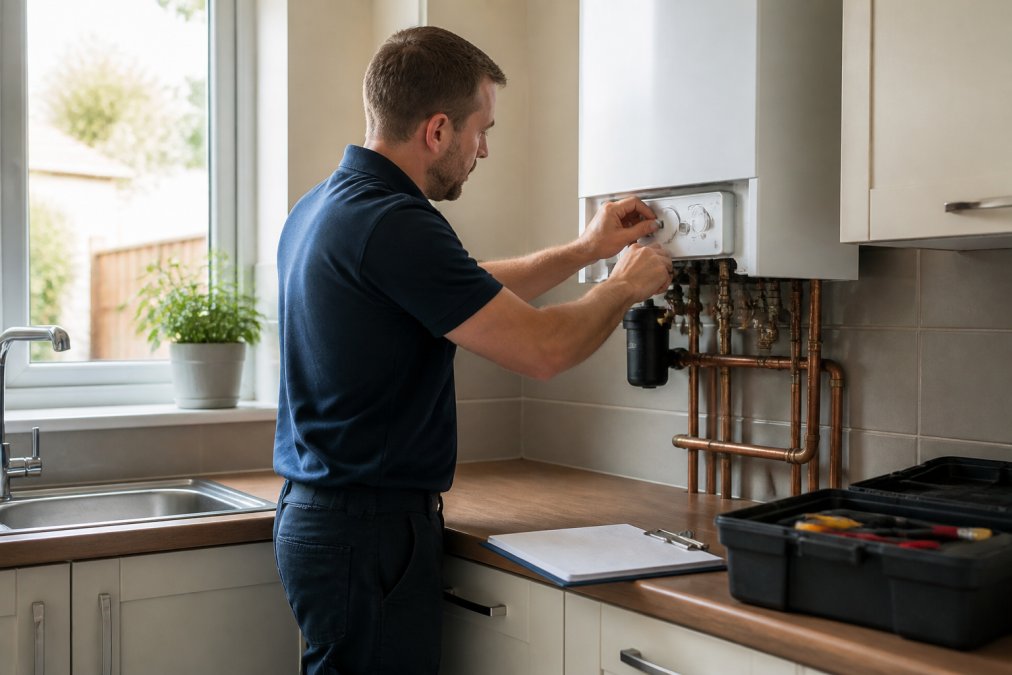
There is a third option worth knowing. A regular, or conventional, boiler uses a feed and expansion tank in the loft alongside a hot water cylinder (energysavingtrust.org.uk). It is the classic setup in older properties and still has a place where mains pressure is weak, because the tank and cylinder can compensate for a supply that a combi cannot work with.
If you are weighing combi boiler vs system boiler, the honest answer is that neither is universally better. The property decides.
Property Suitability Checklist
Run through these checks before you commit to a combi. They take minutes and save you from an expensive mistake.
- Measure your incoming mains water pressure and flow rate at a cold tap
- Count how many bathrooms, showers and hot taps you have
- Note how many people shower at the same time in your household
- Check whether you currently have a cylinder and where it sits
- Confirm the property has a mains cold water supply, not a tank-fed one
- Consider how well insulated the property is, since heat loss affects sizing
- Check available wall space and flue routing for a new unit
- Ask a Gas Safe registered engineer to confirm the right output for your home (gassaferegister.co.uk)
Water Pressure and Mains Supply
Water pressure and flow are the make-or-break factors for any combi. A combi needs a reliable mains supply with enough pressure to trigger the boiler and enough flow to serve the outlets you use. In older properties, or where the supply is tank-fed rather than mains-fed, this is often where the plan falls apart.
If your cold tap dribbles when the neighbour runs a tap, a combi will not fix it. It will simply move the problem to the hot side.
Bathrooms, Occupancy and Hot Water Demand
The number of bathrooms and the number of people using them decide your realistic hot water demand. A single-bathroom home with two occupants has very different needs from a four-bedroom property with a family of five and an en-suite.
If your household regularly runs two showers at once, a combi is usually the wrong tool. If showers happen one at a time, a combi is often ideal.
Time your own shower routine for a week before deciding. If two hot outlets overlap even twice a week, size your system for that overlap rather than for the average day, because the average day is not the day you will remember.
The Average Cost of Boiler Installation
The average cost of boiler installation varies widely, and any figure quoted without seeing your property is a guess. Pricing depends on the boiler type and output, whether the flue route is straightforward, whether pipework or radiators need changes, and whether the existing system is a like-for-like swap or a full conversion.
That is why Major Heat provides free quotes rather than phone estimates. A combi swap in the same position is a very different job from converting a tank-and-cylinder system to a combi, and the labour is where the difference lives. For current pricing, ask for a quote based on your actual property rather than a national average.
When a Combi Boiler Is the Wrong Choice
A combi is the wrong choice when demand outstrips supply. If your household needs two showers running at once, or your mains flow is weak, a system or regular boiler will serve you better despite the extra space it takes.
It is also the wrong choice where there is simply nowhere sensible to run the flue, or where the property’s pipework and radiators would need a costly overhaul to suit the higher pressure a combi brings. A conversion is not always the right answer just because combis are popular.
Where a combi does fit, it is a genuinely excellent solution: less space, fewer components, no cylinder to heat and reheat. The trick is knowing which situation you are in before you buy.
The real challenge is that suitability depends on your property, your water supply and how your household actually uses hot water, not on what is popular. Major Heat can settle that question properly with a free quote and a Gas Safe registered engineer who assesses your mains supply, outlet count and existing system before recommending anything. From expert boiler installations and servicing to emergency repairs, we give you transparent pricing and a straight answer on whether a combi is right for your home. Get started with Major Heat and get a heating system matched to your property rather than to a sales target.
Frequently Asked Questions
What are the main disadvantages of a combi boiler?
Combi boilers heat water on demand, so they struggle to supply two showers at once if the mains flow rate is low. They also depend entirely on mains water pressure, meaning no hot water during a supply interruption. There is no backup immersion heater or cylinder, so if the boiler breaks down you lose both heating and hot water until it is repaired. Installation can also be restricted by flue positioning and condensate pipe routing.
How do I know if my property is suitable for a combi boiler?
Check three things: your mains water flow rate (measured in litres per minute at the kitchen tap), the number of bathrooms and occupants, and available wall space for the unit and flue. A combi boiler suits homes with one bathroom, decent mains pressure and limited loft or airing cupboard space. Properties with multiple bathrooms or low flow rates are usually better served by a system boiler with a cylinder.
Can a combi boiler handle two showers at once?
It depends on the combi boiler flow rate. A typical combi delivers around 10 to 16 litres per minute of hot water. Two simultaneous showers need roughly 16 to 20 litres per minute combined, which exceeds most domestic combis. If two people regularly shower at the same time, a system boiler with a stored hot water cylinder is the more reliable choice.
Do I need a cold water tank for a combi boiler?
No. A combi boiler takes water directly from the mains supply and heats it on demand, so no cold water tank in the loft or hot water cylinder is required. Removing these frees up loft and cupboard space, which is one of the main reasons homeowners switch to a combi. The trade-off is that the boiler’s performance is tied entirely to your mains water pressure and flow rate.