
Quick Summary
Gas appliance repair costs in the UK vary widely, because the fault type, appliance make and model, and parts needed all affect the final price. Every repair must be carried out by a Gas Safe registered engineer, and you should request a written quote for your specific appliance before agreeing to any work.
- Repairs must be carried out by a Gas Safe registered engineer.
- Simple cleaning or adjustment work costs less than replacing a control board.
- A second visit for an ordered part may add another call-out or labour charge.
- Compare quotes by checking call-out fee, labour, parts and VAT separately.
- If a repair costs more than half a new appliance’s value, replacement often makes better sense.
Table of Contents
- What Gas Appliance Repair Typically Involves
- Gas Cooker Repair Cost by Fault Type
- Gas Appliance Engineer Call-Out Fee and Labour Charges
- Gas Appliance Repair or Replacement: How to Decide
- How Long a Gas Appliance Repair Takes
- Booking a Gas Engineer and Checking the Quote Before You Agree
- Frequently Asked Questions
What Gas Appliance Repair Typically Involves
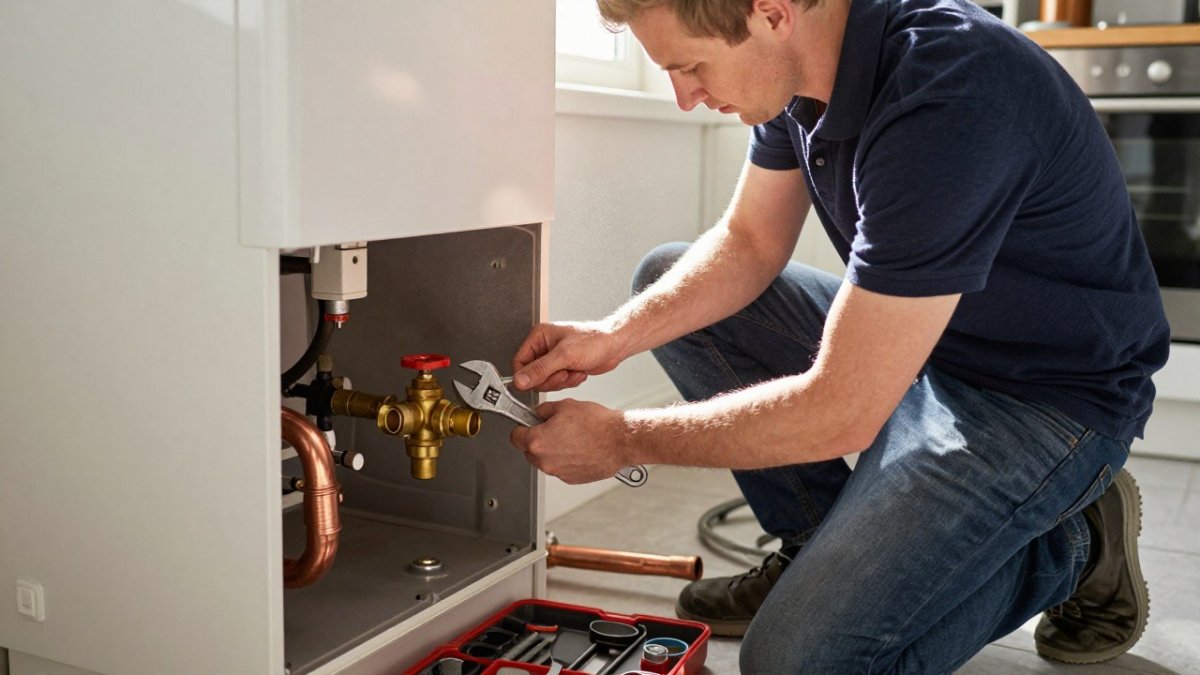
Gas appliance repair covers faults in domestic cookers, hobs, ovens and boilers that run on mains or LPG gas. Repairs in the UK must be carried out by a Gas Safe registered engineer. Before pricing any job, a qualified engineer diagnoses the fault, checks for gas leaks, and confirms the appliance is safe to run.
The diagnostic visit usually comes first. The engineer inspects burners, valves, igniters and thermocouples, then recommends whether a repair or replacement makes more sense. Many firms charge a call-out fee for this visit, which may or may not be credited against the final repair.
For broader context on the regulations that govern this work, see Gas Safe Register guidance for homeowners.
Gas Cooker Repair Cost by Fault Type
Gas cooker repair costs vary widely because the fault determines how much labour and how many parts are needed. A cleaned burner cap is a very different job from a replaced oven control board. Final pricing depends on the make, model, age and accessibility of the appliance, so request a written quote for your specific cooker. Always request a written quote for your specific cooker.
Faults generally fall into a few groups:
- Simple cleaning or adjustment work, such as blocked burners or a misaligned cap.
- Component replacement, such as igniters, thermocouples, thermostats or gas valves.
- Control board or electronic faults, which tend to be the most involved repairs.
These ranges assume a single engineer visit and a standard domestic cooker. A second visit for a part that has to be ordered will usually add another call-out or labour charge, so ask about this before agreeing to the work.
Gas Hob and Burner Faults
Most hob problems come from blocked burner ports, a faulty ignition electrode, or a worn flame failure device. A burner that will not light or keeps going out often needs the flame failure device checked first. Cleaning alone may solve the problem, but worn parts often need replacing. Ignition electrodes are usually inexpensive parts, but accessing them can take time on some hobs.
Watch out: never attempt to disconnect a gas supply or open a gas valve yourself. A small leak can become dangerous quickly, so call a Gas Safe engineer straight away.
Gas Oven Thermostat and Igniter Faults
Oven faults typically involve the thermostat, the igniter or the gas safety valve. An oven that heats unevenly often has a faulty thermostat, while one that will not light usually needs a new igniter. Replacing these parts is generally less costly than replacing a control board, though the exact cost depends on the make and model and on whether the oven has to be partially removed from its housing.
Gas Boiler and Gas Fire Faults
Gas boilers and gas fires sit outside the cooker category but are part of the same repair market, and their costs differ. A boiler fault such as a failed diverter valve, pump or pressure sensor can vary considerably in cost depending on the parts required. A gas fire that will not stay lit often needs a new thermocouple or oxygen depletion sensor. Boiler work in particular should only be carried out by an engineer registered for that type of appliance, and some engineers specialise in boilers rather than cookers, so confirm the scope of registration when booking.
Gas Appliance Engineer Call-Out Fee and Labour Charges
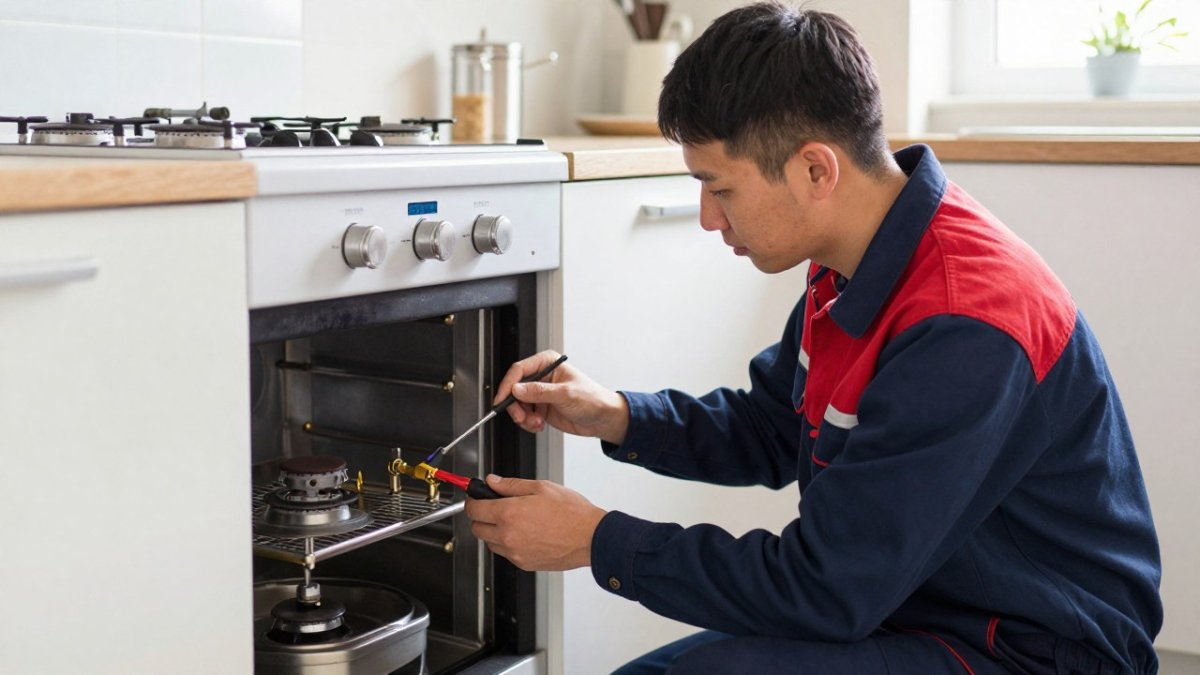
Engineers usually charge in two parts: a call-out fee to attend and diagnose, and an hourly or fixed labour charge for the repair itself. Some firms bundle these together into a fixed-price repair, which can make budgeting easier. Others charge by the hour, which means the final bill depends on how long the job takes.
Many firms credit part or all of the call-out fee against the repair if you go ahead, and Major Heat can confirm its own call-out and labour terms when you request a quote. Fixed-price repairs are often quoted per fault type rather than per hour, which is why two quotes for the same job can look very different on paper.
When comparing quotes, ask whether the call-out fee is included in the total, whether VAT is added, and whether any parts are charged separately. Those three details often explain why one quote looks cheaper than another. A quote of £80 that excludes VAT and parts is not comparable with a £120 quote that includes both.
A practical way to compare is to ask each firm for the same four lines in writing: call-out and diagnosis, labour, parts, and VAT. Then ask two follow-up questions: whether a second visit for an ordered part is chargeable, and whether the firm operates a no-fix, no-fee policy. A no-fix, no-fee arrangement means you do not pay the repair element if the fault cannot be resolved, though the diagnostic fee may still apply, check the wording rather than assuming.
Fixed-price repair plans and appliance cover products are a separate route. They can spread the cost monthly, but they usually carry excesses, exclusions for existing faults, waiting periods before you can claim, and conditions about the age or servicing history of the appliance. Compare the total annual cost and the excess against the one-off repair prices above before deciding whether cover is worth it for your appliance.
The table below sets out the points to compare when weighing up engineer quotes.
| Quote item | What to check | Why it matters |
|---|---|---|
| Call-out fee | Whether it is included in the total | May be credited against the repair |
| Labour | Fixed price or hourly rate | Hourly billing makes the final bill uncertain |
| Parts | Whether charged separately | Can explain a cheaper-looking quote |
| VAT | Whether added to the quote | Quotes without VAT are not comparable |
| Second visit | Whether chargeable for ordered parts | Can add a further call-out or labour charge |
| No-fix, no-fee | Wording of the policy | Diagnostic fee may still apply |
Gas Appliance Repair or Replacement: How to Decide
The sensible choice depends on the appliance’s age, the cost of the repair, and how often it has broken down. A common rule of thumb is to compare the repair cost against the price of a replacement. If the repair costs more than half the value of a new appliance of similar quality, replacement often makes better financial sense.
Age matters too. Ageing appliances are often replaced sooner than people expect, and the guide to typical replacement timing explains how long different appliance types usually last. An older cooker with frequent faults may cost more to keep running than to replace, while a relatively new appliance with a single failed part is usually worth fixing. Safety is the final factor. If a repair engineer flags a serious gas safety issue, the appliance should not be used until it is made safe.
Major Heat offers emergency plumbing services for urgent leaks and repairs, which can be useful if a fault needs prompt attention.
How Long a Gas Appliance Repair Takes
Many straightforward repairs, such as replacing an igniter or cleaning burners, can be completed in a single visit, often within an hour or two. More involved faults, such as control board replacements or faults that need parts ordered in, may take longer and require a second visit. Parts availability is often the main reason for delay, so ask the engineer whether the part is in stock before the visit.
Booking a Gas Engineer and Checking the Quote Before You Agree
Before you book, confirm the engineer is Gas Safe registered for the type of appliance you need repaired. You can check registration on the official Gas Safe Register website, and you should ask to see the engineer’s ID card. A written quote should list the call-out fee, labour, parts and VAT separately, so you can compare like with like.
For boiler and heating work, Major Heat provides boiler servicing and repairs from Gas Safe registered engineers. If you are a landlord who has had a gas safety check fail, it is worth reading what to do next before agreeing to any repair quote. Gas safety certificate requirements for landlords sets out the legal duties that apply.
Frequently Asked Questions
How much does it cost to repair a gas appliance?
Costs vary with the appliance, the fault and the engineer’s rates, so Major Heat does not publish fixed prices for gas appliance repairs. A quote should itemise the call-out or diagnostic fee, the labour time, any parts and whether VAT is included. Ask for the figures in writing before work starts, and compare them against the fault described, not just the total. For a current estimate for your own appliance, contact Major Heat for a free quote.
Do gas appliance engineers charge a call-out fee?
Many engineers charge a call-out or diagnostic fee to attend and identify the fault, and some credit part of it against a repair if you go ahead. Check whether the fee is included in the quoted repair price and whether it applies if you decline the work. Major Heat can confirm its own call-out terms when you request a quote, so you know what is payable before an engineer arrives.
What should I do if I smell gas from an appliance?
Turn off the appliance and the gas supply at the emergency control valve if it is safe to reach it, open windows and doors, and avoid operating electrical switches or flames. Leave the property and call the National Gas Emergency Service on 0800 111 999. Do not attempt repairs yourself. Only a Gas Safe registered engineer should inspect or repair a gas appliance once the leak has been dealt with.
How long does a gas appliance repair usually take?
Many straightforward gas appliance repairs, such as replacing an igniter or thermostat, can be completed in a single visit once the part is available. More involved faults may need the part ordered, which can add days before the repair is finished. Ask the engineer at the diagnosis stage whether the fix is likely to be same-day or needs a return visit, and confirm the expected timescale in writing.
