

Last Updated: November 7, 2026
Quick Summary
The heating controls that cut boiler energy use most reliably are a modulating room thermostat, a time programmer or boiler timer, thermostatic radiator valves on each radiator and, where supported, load or weather compensation. The hardware matters less than whether it is set up to stop the boiler firing when nobody needs heat, as controls only save energy when they reduce wasted heating in your home.
- A modulating thermostat tells the boiler to reduce flow temperature as the room nears target.
- Set heating to come on 30 minutes before you wake and go off 30 minutes before you leave.
- Fit TRVs on radiators in bedrooms and rarely used rooms and set lower numbers there.
- Leave one radiator without a TRV where a bypass is needed.
- A cheap programmer adjustment can pay back in weeks.
Table of Contents
- Which Heating Controls Actually Cut Energy Use?
- The Best Smart Thermostats for Cutting Boiler Energy Use
- Boiler Thermostat Compatibility: What Works With Your System
- Boiler Timer Settings That Stop Wasted Heating
- Thermostatic Radiator Valves: Room-by-Room Control
- Realistic Payback: Whole-Life Costs and Measured Savings
- Common Setup Mistakes and How to Avoid Them
- Book a Gas Safe Controls Check With Major Heat
- Frequently Asked Questions
Which Heating Controls Actually Cut Energy Use?
That is the uncomfortable truth about heating controls. A systematic review of domestic heating control evidence led by KJ Lomas found no universal savings figure you can bank on. Controls save energy when they reduce wasted heating in your home.
Below, we rank the control types by realistic energy-saving potential, explain boiler compatibility, and show where the money actually goes.
| Control | Saving potential | Best for | Watch out for |
|---|---|---|---|
| Modulating room thermostat | High | Most homes with a combi | Needs correct wiring and setup |
| Boiler timer / programmer | High | Every household | Wrong schedules waste heat daily |
| Smart thermostat | High | Irregular routines | Savings depend on schedule discipline |
| TRVs | Medium to high | Room-by-room control | Cheap valves stick and drift |
| Weather/load compensation | High | Compatible modern boilers | Boiler must support it |
The Best Smart Thermostats for Cutting Boiler Energy Use
Smart thermostats earn their place when your routine is unpredictable. They let you adjust heating from a mobile app, set zones, and cut the heating when the house is empty. BestHeating’s guidance on heating controls recommends pairing a smart thermostat for whole-system control with smart TRVs for individual rooms. That combination gives you the most control over heating demand.
But “best” depends on your boiler, your wiring and how you actually live. Rather than a single winner, here is a practical shortlist ranked by energy-saving potential for typical homes, with the trade-offs that matter.
1. OpenTherm-compatible modulating thermostat (highest saving potential)
If your boiler has an OpenTherm or comparable modulating connection, a modulating thermostat is the control most likely to cut gas use. Instead of switching the boiler on and off at a set room temperature, it tells the boiler to reduce flow temperature as the room approaches the target. The catch is that the boiler and wiring must support it; a modulating thermostat on an on/off connection behaves like any other on/off stat.
2. Smart thermostat with smart TRVs (best for zoned homes)
A smart thermostat paired with smart TRVs gives room-by-room control from one app. This suits homes with rooms that are used at different times, such as a home office or spare bedroom. Watch out: smart TRVs need a compatible hub and, in some systems, a bypass radiator, so check the installation requirements before buying.
3. Smart thermostat on a combi with on/off wiring (good, not best)
A smart thermostat on an on/off combi still improves on a basic dial stat because it adds schedules, geofencing and app control. It will not modulate the boiler, so the saving is smaller than with an OpenTherm connection. It is still a sensible upgrade where rewiring is impractical, particularly if the existing programmer is on factory settings.
4. Programmable thermostat or programmer (lowest cost, solid saving)
A simple programmable thermostat or a boiler timer with a room thermostat can capture most of the schedule-based saving at a fraction of the cost of a smart system. It lacks app control and zoning, but if your routine is regular, it does the core job: heating the house when you are in it and not when you are out.
What to check before you buy
- Boiler compatibility: check whether your boiler supports OpenTherm or a modulating connection. On/off wiring limits what any thermostat can do.
- Heating system type: combi, system and heat-only boilers need different wiring, and some system boilers need a separate zone valve for hot water.
- Offline operation: confirm the thermostat still runs a schedule if the broadband drops, and that manual overrides work without the app.
- Accessibility: check app usability and any physical controls for less tech-comfortable household members.
- Whole-life cost: add the thermostat, any hub, smart TRVs and installation, then compare that total with the likely annual saving on your own meter readings rather than a quoted headline percentage.
For a deeper buying guide, see our article on how to choose the best smart thermostat.
Boiler Thermostat Compatibility: What Works With Your System
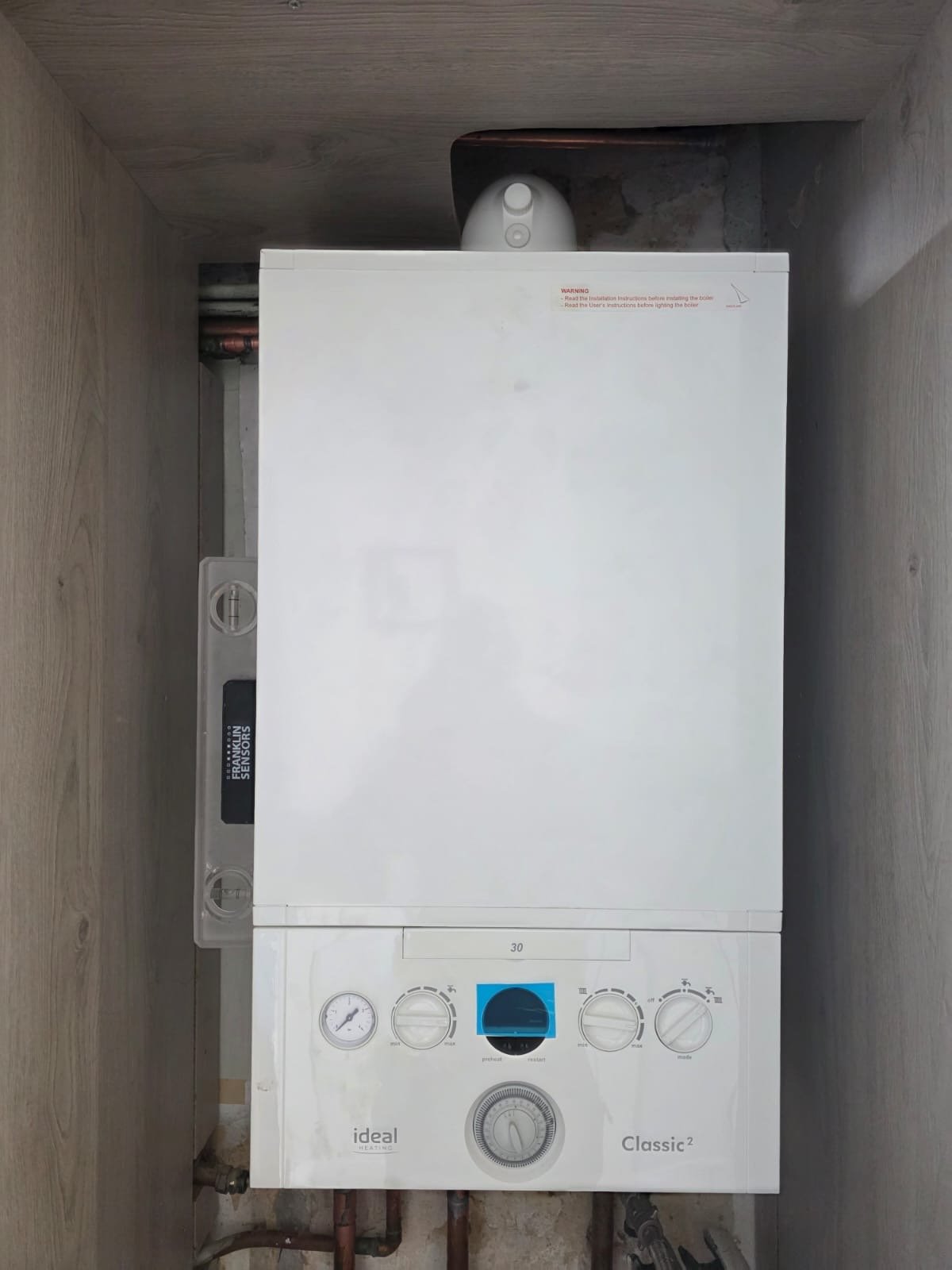
Boiler thermostat compatibility comes down to two questions: can your boiler accept a modulating signal, and does your wiring support it? A basic on/off thermostat simply switches the boiler on and off at a set room temperature. A modulating thermostat tells the boiler to reduce output as the room approaches the target, which cuts cycling and fuel consumption.
Ideal Heating’s guidance on wireless thermostats describes modern wireless thermostats as an easier way to control home temperature, and they suit homes where running new cable is awkward. The catch is that wireless does not automatically mean modulating. Check the boiler’s installation manual or ask a Gas Safe registered engineer before buying.
Boiler Timer Settings That Stop Wasted Heating
Boiler timer settings do more for your bills than most hardware upgrades. The principle is simple: heat the house for when you are in it, not for when you are out.
- Set the heating to come on 30 minutes before you wake and go off 30 minutes before you leave.
- Add a second block for the evening, ending before bedtime.
- Set hot water control to match actual use, not a full tank around the clock.
- Keep a manual override for cold snaps and guests.
A common mistake is leaving a programmer on factory settings that heat an empty house every morning. Ten minutes spent adjusting the heating schedule is free and immediate.
Thermostatic Radiator Valves: Room-by-Room Control
Thermostatic radiator valves, usually called TRVs, control each radiator individually. Fit them on radiators in bedrooms and rarely used rooms, and set lower numbers there to cut heating demand in spaces you do not occupy.
Watch out: cheap TRVs stick open or closed after a few seasons, so the radiator either never heats or never stops.
Realistic Payback: Whole-Life Costs and Measured Savings
Payback depends on what you already have, how much heat you waste now and what you pay for gas. Rather than quote a headline percentage, work through the calculation on your own numbers. The method is: total installed cost of the controls, divided by the annual reduction in fuel use, measured against your actual bills.
Whole-life cost, not just purchase price
Add up everything that goes into the job, not just the box on the shelf:
- The control itself (thermostat, programmer or smart TRV set).
- Any hub, receiver or wiring centre needed to make it work.
- Installation by a Gas Safe registered engineer, including any new cable runs.
- Ongoing costs such as batteries, replacement TRV heads or a subscription if the app relies on one.
A basic programmable thermostat is the cheapest route and can capture most of the schedule-based saving. A smart thermostat with smart TRVs costs more and is more likely to pay back if you use the zoning and scheduling it offers. Generally, the controls with the shortest payback are the ones that fix an existing fault, such as a programmer left on factory settings or a room thermostat in the wrong place.
Measured savings with transparent assumptions
Any percentage-saving claim rests on assumptions about your baseline. To check it honestly:
- Take a baseline winter period on your current controls and record meter readings weekly.
- Note the weather and your routine for that period, because a mild fortnight flatters any control.
- Change one thing at a time, such as the schedule or the thermostat setpoint, and record again.
- Compare like with like: same weeks, similar outdoor temperatures, same occupancy.
A common pattern is that schedule and setpoint changes deliver the first and largest saving, while hardware upgrades add smaller increments on top. Treat any quoted percentage as a claim to test, not a guarantee, and ask for a before-and-after comparison on your own meter readings.
What payback looks like in practice
Because gas prices, boiler efficiency and home heat loss vary, payback periods range widely. A cheap programmer adjustment can pay back in weeks. A smart thermostat with TRVs typically pays back over several heating seasons, not months, and only if the household uses the scheduling and zoning features. Our guide to ways to lower heating bills covers the wider measures that work alongside new controls.
Common Setup Mistakes and How to Avoid Them
Setup faults can quietly cancel out any efficiency gain. Common ones include:
- Thermostat sited in a cold hallway or beside a heat source, so it reads the wrong room temperature.
- TRVs fighting the room thermostat, with both trying to control the same space.
- Schedules left on default, heating the house when it is empty.
- No manual override explained to the household, so people turn the boiler off at the wall instead.
- Boiler flow temperature set too high for condensing mode to do its job.
For a fuller list, read our guide to smart thermostat installation faults and how to fix them. If you want to know whether smart controls genuinely deliver savings before investing, our article on whether smart heating controls are worth it breaks down the evidence.
Book a Gas Safe Controls Check With Major Heat
Getting controls right is part safety, part setup. Gas Safe registered engineers can check boiler compatibility and advise on heating controls. Major Heat offers free quotes and works with homeowners across the region, including emergency call-outs.
You can book boiler servicing with us to keep the whole system running safely and efficiently.
Most homes are losing heat to controls that were never set up properly, not to old boilers. If your thermostat, timer and TRVs are not working together, the savings stay theoretical.
Frequently Asked Questions
What are the best heating controls for saving energy?
There is no single best control for every home. A room thermostat, a programmer or timer, and thermostatic radiator valves form the core set, and smart thermostats add app control and zoning. Research on domestic heating controls has found the evidence on energy savings should be assessed critically rather than assuming any control delivers a fixed saving. Match the controls to your boiler type and routine, and have a Gas Safe registered engineer check compatibility before buying.
Are smart thermostats compatible with every boiler?
No. Boiler thermostat compatibility depends on your boiler and wiring. Many modern combi and system boilers support OpenTherm or low-voltage connections that allow modulating control, while older boilers may only accept simple on/off switching. Some smart thermostats need a separate relay or a professional install. Check your boiler manual or ask a Gas Safe registered engineer to confirm before you buy, because the wrong unit can limit the savings you were hoping for.
Can thermostatic radiator valves save energy?
Thermostatic radiator valves let you set different temperatures room by room, so you can keep bedrooms cooler and living areas warmer instead of heating every room equally. That reduces heating demand in rooms you rarely use. They work best alongside a room thermostat and a sensible boiler timer setting. The exact saving depends on your home’s heat loss, insulation and how you use each room, so treat any single percentage figure with caution.
What temperature should I set my thermostat to?
A common starting point is around 20°C for living areas, with bedrooms a degree or two cooler. Turning the setting down by one degree can reduce fuel consumption, though the exact effect varies by home. Set a heating schedule that matches your daily routine rather than leaving the heating running all day, and use thermostatic radiator valves to fine-tune individual rooms. If your boiler has weather compensation, let it adjust flow temperature to match outdoor conditions.
