
Quick Summary
Smart heating controls can reduce energy use by heating your home only when it is needed. Reducing a room thermostat setting by 1°C can cut energy consumption by approximately 7%, and the savings mainly come from scheduling, occupancy sensing and remote control.
- Reducing a room thermostat setting by 1°C can cut energy consumption by approximately 7%.
- Smart heating controls save energy through scheduling, occupancy sensing and remote control.
- Savings depend on how the controls are programmed, not just on installing them.
- Smart thermostats suit most homes, radiator valves suit rarely used rooms, and hub systems offer the most control.
- Check boiler compatibility and service the boiler before adding controls.
Table of Contents
- How Smart Heating Controls Cut Energy Use
- Types of Smart Heating Controls Available in the UK
- Comparing Features and Benefits Across Smart Thermostats
- Smart Heating Installation Cost and Payback Period
- How to Programme a Smart Thermostat for Maximum Efficiency
- The Benefits of Multi-Zone Heating Control
- Booking a Smart Controls Assessment for Your Boiler
- Frequently Asked Questions
How Smart Heating Controls Cut Energy Use
Last Updated: November 5, 2026
Smart heating controls are a practical way to stop paying for heat nobody is using. Reducing a room thermostat setting by 1°C can reduce energy consumption by approximately 7% (Energy Saving Trust guidance on heating controls). At Major Heat, we see the same pattern in Kent homes: the savings come less from the device itself and more from the heating running only when it is needed.
Scheduling, Occupancy Sensing and Remote Control
Smart heating controls for energy reduction work through three mechanisms: scheduling, occupancy sensing and remote control. Research comparing these features against baseline algorithms attributes savings to exactly these three functions (University of the West of England study on heating controls).
Scheduling stops the boiler firing for an empty house during working hours. Occupancy sensing goes a step further and responds to whether anyone is actually in the room. Remote control lets you cancel a heating programme when plans change, which is where many households quietly waste fuel.
Be realistic about the gains. Outcomes depend on how the controls are programmed, not just installed.
Types of Smart Heating Controls Available in the UK
Smart heating controls fall into three broad groups: smart thermostats that replace a standard room thermostat, smart radiator valves that control individual rooms, and hub-based systems that combine both with the boiler’s timer. The right choice depends on how many zones your home has and whether your boiler is compatible.
Smart thermostats are generally the simplest upgrade. Radiator valves suit homes where some rooms are rarely used. Hub systems offer the most control but generally cost more to install.
Comparing Features and Benefits Across Smart Thermostats
When comparing smart thermostats, focus on compatibility with your boiler, learning features, and app quality rather than headline claims. Industry forecasts suggest smart thermostats could deliver consumption reductions of 10-30% (Controlium forecast on energy-saving technologies), but those figures are projections, not guarantees for your home.
Some models also need a common wire or a compatible boiler interface. Check this before you buy, because a model that cannot be wired correctly will not work as intended. For a fuller breakdown, see our guide on choosing the best smart thermostat in 2026.
Smart Heating Installation Cost and Payback Period
Installation cost depends on your boiler type, the number of zones and whether new wiring is needed. For a current quote, contact Major Heat directly.
Payback depends on your existing bills and how much control you add. A simple thermostat swap in a small flat will pay back differently from a multi-zone install in a large house. Ask for a quote that shows the cost of each option so you can compare them against your expected savings. If you are weighing local costs, our Maidstone upgrade guide explains what a smart thermostat installation involves.
How to Programme a Smart Thermostat for Maximum Efficiency
Start by setting heating times to match when you are actually home, not when you think you should be. Then lower the target temperature in rooms that are rarely used, and use the away mode for working days. Small, consistent changes do more than one large adjustment.
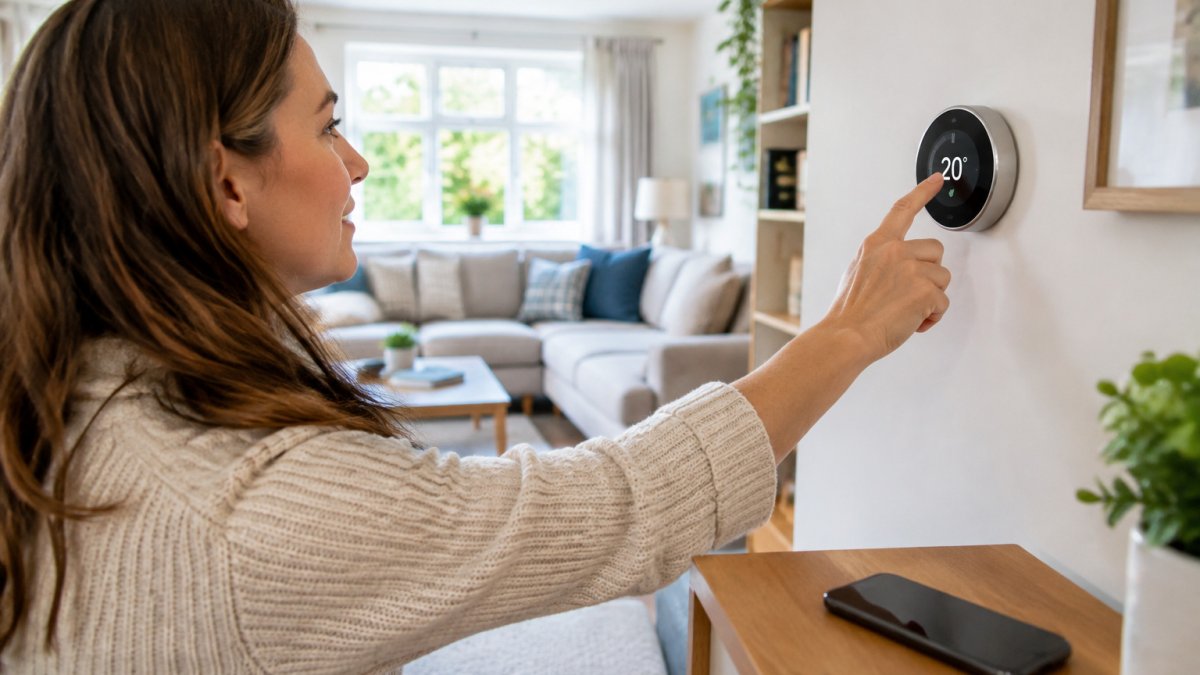
Review the schedule after a few weeks. Most smart thermostats show usage history, which makes it easy to spot periods of unnecessary heating. For wider ideas beyond scheduling, read our tips for lowering heating bills in 2026.
The article’s programming advice can be summarised as a short sequence of steps:
| Step | What to do | Time or frequency |
|---|---|---|
| Set heating times | Match them to when you are actually home | Initially |
| Lower rarely used rooms | Reduce the target temperature | Ongoing |
| Use away mode | Apply it on working days | Each working day |
| Review the schedule | Check the usage history | After a few weeks |
The Benefits of Multi-Zone Heating Control
Multi-zone control lets you heat different parts of the home to different temperatures at different times. Its main benefit is avoiding the common problem of heating an entire house for one or two occupied rooms.
Multi-zone systems are not always necessary. A small home with one main living area may gain little. Larger homes with rooms used at different times tend to see the clearest benefit.
Booking a Smart Controls Assessment for Your Boiler
Before adding smart controls, check that your boiler is in good working order. Controls cannot save energy from a boiler that is running inefficiently or has a fault. A routine service can identify problems first, and our team can advise whether boiler servicing should come before any controls upgrade. If your boiler is near the end of its life, it may be worth reviewing boiler installation options alongside the controls.
Major Heat is Gas Safe registered.
Frequently Asked Questions
Do smart heating controls actually save money on energy bills?
They can. Smart thermostats manage when and how heat is delivered, which can reduce wasted energy. Savings come mainly from scheduling, occupancy sensing and remote control rather than from making the boiler itself more efficient. The realistic outcome depends on how the controls are set up and how much the household was wasting before.
How do smart thermostats work with existing boiler systems?
Most smart thermostats connect to an existing boiler through its wiring, usually replacing the standard room thermostat or programmer while the boiler stays in place. They learn occupancy patterns or follow a schedule and send heating commands to the boiler. Compatibility depends on the boiler and wiring, so a Gas Safe registered engineer should confirm the setup before installation.
Can I install smart heating controls myself or do I need a Gas Safe engineer?
Some smart thermostats are designed for homeowner installation, but any work involving the boiler, gas connections or its controls should be carried out by a Gas Safe registered engineer. Gas work carried out by an unregistered person is illegal in the UK and can invalidate your insurance. Checking that the engineer is on the Gas Safe Register before work starts is a simple safeguard.
Next step: Book a smart controls assessment with Major Heat to find out which setup suits your home and boiler.
