
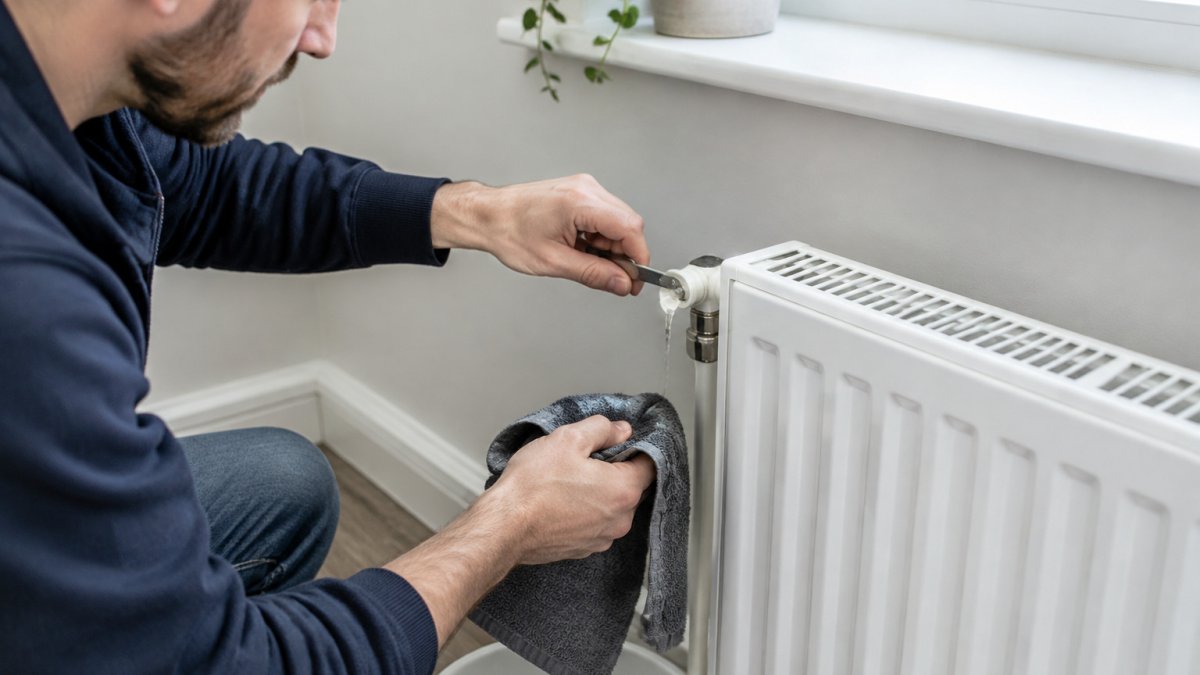
Last Updated: November 4, 2026
Quick Summary
To bleed radiators, turn the heating off and let them cool, then open the square bleed valve with a bleed key until air hisses out and steady water appears. Close the valve, wipe up drips, and check the boiler pressure afterwards, since bleeding can lower it.
- Cold spots at the top of a radiator usually mean trapped air.
- Wait at least 30 to 60 minutes for radiators to cool before bleeding.
- Turn the bleed key anticlockwise slowly and close it once water flows steadily.
- Check the boiler pressure gauge after bleeding and top it up if it has dropped.
- Bleeding will not fix a radiator that is cold at the bottom, which points to sludge.
Table of Contents
- Signs Your Radiators Need Bleeding
- Tools You Need and a Radiator Bleeding Key
- Preparing Your Heating System Before You Start
- How to Bleed a Radiator Step by Step
- Boiler Pressure After Bleeding Radiators
- What to Do When a Radiator Stays Cold or the Valve Is Stuck
- When to Call a Plumber for Heating Repairs
- Frequently Asked Questions
Cold spots at the top of a radiator are one of the most common signs your heating system needs attention, and learning how to bleed radiators often makes the fix simpler than people expect. Trapped air rises to the highest point of a radiator and stops hot water circulating properly. Bleeding the radiator releases that air, and it is one of the few heating jobs a homeowner can safely do without calling an engineer. This guide walks you through the process step by step, from spotting the warning signs to checking boiler pressure afterwards.
Signs Your Radiators Need Bleeding
Most radiators need bleeding when they heat unevenly or make a gurgling noise. The telltale sign is a radiator that is hot at the bottom and cold at the top. That gap is almost always trapped air.
Watch for these common symptoms:
- Cold spots near the top of one or more radiators
- Gurgling or banging sounds when the heating comes on
- Radiators heating slowly, even with the thermostat turned up
- Only some rooms reaching the set temperature
Watch out: If every radiator in the house is cold, the problem is probably not air. Check the boiler pressure and controls before bleeding anything.
Tools You Need and a Radiator Bleeding Key
You need very little to bleed a radiator. The main item is a radiator bleed key, a small square-headed tool sold cheaply at most hardware shops. A flat-head screwdriver can also work on some valves, though a bleed key is safer and easier to turn.
Gather these before you start:
- A radiator bleed key or flat-head screwdriver
- An old towel or cloth to protect the floor
- A small container or cup to catch water
- A jug of water to check the pressure afterwards, if needed
Preparing Your Heating System Before You Start
Turn the heating off and give the radiators time to cool. Wait at least 30 to 60 minutes, because hot water and metal can cause burns. Check the boiler pressure gauge while the system is off, so you know where to start. Our guide to common causes of low water pressure in Maidstone explains why the reading may be low before you begin.
Check your boiler manual for the correct cold-fill pressure. If the reading is very low, bleeding will drop the pressure further, so top it up first. Low water pressure has several causes, so it is worth understanding them before you go on.
How to Bleed a Radiator Step by Step
Follow these steps for each radiator in turn:
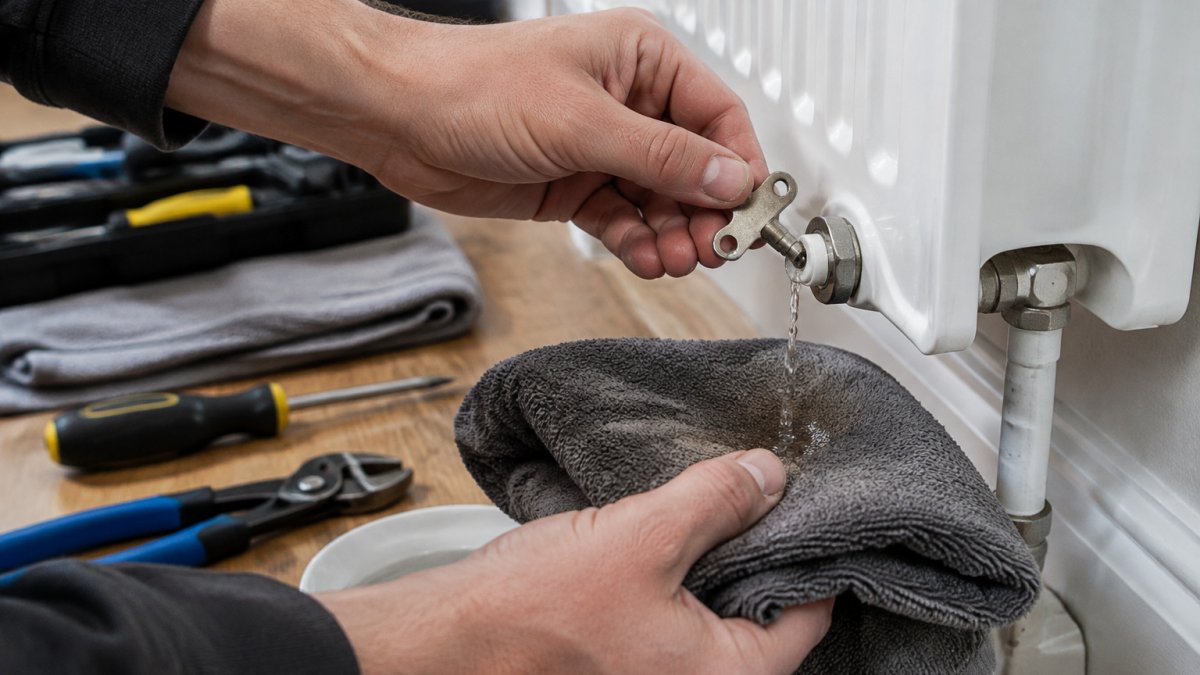
- Turn the heating off and let the radiator cool completely.
- Place the towel on the floor below the bleed valve.
- Locate the bleed valve, usually a small square nut at the top of one side.
- Hold the cup or cloth under the valve to catch any water.
- Insert the bleed key and turn it anticlockwise slowly.
- Listen for hissing, which means air is escaping.
- Close the valve as soon as a steady stream of water appears.
- Wipe up any drips and repeat for the next radiator.
Many guides suggest starting with the top floor, but some recommend starting with the radiator closest to the boiler and working outwards. Either order works, so pick one and stick to it.
Watch out: Keep your face away from the valve when you open it. Air and water can spray out under pressure.
The article sets out the bleeding process in eight steps, with the timings and cautions it gives for each.
| Step | What to do | Time or frequency |
|---|---|---|
| 1 | Turn heating off, let radiator cool | Wait at least 30 to 60 minutes |
| 2 | Place towel on floor below valve | Before opening the valve |
| 3 | Locate the square bleed valve | Usually at top of one side |
| 4 | Hold cup or cloth under valve | Before turning the key |
| 5 | Turn bleed key anticlockwise slowly | Until air escapes |
| 6 | Listen for hissing | Hissing means air is escaping |
| 7 | Close valve at steady water stream | As soon as water appears |
| 8 | Wipe drips and repeat next radiator | Once per radiator |
Boiler Pressure After Bleeding Radiators
Bleeding releases air from the system, and that can lower the boiler pressure. Check the gauge once you have finished, and top it up if it has dropped. The correct figure is not universal, so treat any single number with caution.
What to check, by boiler type:
- Combi boilers usually have a filling loop, a braided hose with two valves, or a single key-operated valve, beneath the boiler. Open both ends slowly, watch the gauge rise, and close them firmly as soon as you reach the target. Confirm the correct cold-fill figure for your boiler in its manual.
- System boilers may have a filling loop or a separate filling point, and some have an expansion vessel that affects how pressure behaves when hot. Again, the manual is the authority on the cold-fill figure.
- Conventional (open-vented) systems with a feed-and-expansion tank in the loft do not rely on a pressurised gauge in the same way. If you have this setup, bleeding is unlikely to move a gauge reading, and persistent cold radiators point to other causes such as a blocked cold feed or air drawn in elsewhere.
Watch out: Do not overfill. Taking pressure well above the manufacturer’s cold-fill figure stresses seals and can trigger the pressure relief valve, which then may not reseat cleanly. If you overshoot, drain a little water from a radiator drain-off point rather than leaving it high.
A small drop after bleeding is normal. A pressure that keeps falling over days, or that sits at zero, suggests a leak or a failed component rather than trapped air. Our guide to the warning signs of a leaking boiler lists what to look for, such as damp patches or drips near the boiler. Our boiler servicing visits check the system for leaks and pressure faults. A repeat drop is worth taking seriously, because it can point to a fault that bleeding alone will not fix.
What to Do When a Radiator Stays Cold or the Valve Is Stuck
Sometimes a radiator still will not heat after bleeding. Work through the likely causes in order before assuming the worst.
If the bleed valve is stuck: do not force it. A seized valve can shear or strip, turning a small job into a leak. Try a small amount of penetrating oil around the base, wait a few minutes, then turn it gently with the correct bleed key rather than pliers. If the valve is damaged or leaks when opened, close it and call an engineer.
If the radiator stays cold after bleeding, check these in turn:
- The thermostatic valve at the other end. It may be set low, stuck closed, or fitted with a pin that has seized. Remove the head and check whether the pin moves freely.
- The lockshield valve. This balancing valve may be nearly closed. Note its position before adjusting, so you can restore it.
- Balancing. If one radiator is cold while others are hot, the system may be unbalanced, with flow favouring the easiest path. Balancing distributes flow across radiators and is a separate job from bleeding.
- Sludge and magnetite. Cold spots at the bottom, or a radiator that heats partially, often point to a build-up of sludge. A chemical flush or power flush may be needed.
- A faulty valve or blockage. A radiator that stays cold at both ends may have a stuck valve or a blocked pipe run.
Watch out: If a radiator is cold at the bottom and hot at the top, that is usually sludge rather than air, and bleeding will not fix it.
If you have checked the valves and the radiator still will not heat, the next step is professional diagnosis rather than repeated bleeding. Our heating systems service covers repairs and replacements.
When to Call a Plumber for Heating Repairs
Bleeding is a simple job, but it is not the answer to every heating fault. Call a qualified heating engineer if you see water leaking from a valve or joint, if the pressure keeps dropping, or if several radiators stay cold. For boiler-related faults, our boiler installation team and heating systems service can help with repairs and replacements.
Bleeding your radiators once a year, ideally in early autumn before the cold months, keeps your system running efficiently and makes it easier to bleed radiators before the heating season begins.
Frequently Asked Questions
How do I know if my radiators need bleeding?
The most common sign is a radiator that is cold at the top but warm at the bottom, which usually means trapped air is blocking hot water from circulating. Other signs include gurgling or banging noises from the heating system, and rooms that take much longer to warm up than they used to. Bleeding a radiator releases that trapped air and allows hot water to reach the full height of the panel. If the problem persists after bleeding several radiators, the cause may lie elsewhere in the system, and a Gas Safe registered engineer should inspect it.
What tools do I need to bleed a radiator?
You will need a radiator bleed key, which is a small inexpensive tool that fits the square bleed valve, usually found at one end of the radiator. A cloth or towel to protect the floor and catch drips is also essential, along with a small container to hold any water released. Some people use a flat-head screwdriver, but a proper radiator key is safer and easier to control. Keep a spare key in the house so you can bleed every radiator in one session.
Does bleeding a radiator affect boiler pressure?
Yes. When you release air from a radiator, some water is also released, which can lower the pressure in the central heating system. Check your boiler manual for the correct pressure range, and locate the pressure gauge on the front of the boiler. If the reading falls below the manufacturer’s recommended cold-fill figure after bleeding, you will need to top up the system using the filling loop, following your boiler manufacturer’s instructions. Repeated pressure loss can indicate a leak, which should be investigated by a qualified engineer.
Is it safe to bleed radiators myself?
Bleeding a radiator is a straightforward task for most homeowners, provided you wait for the heating to switch off and the radiator to cool, which typically takes 30 to 60 minutes. Always protect the floor, keep your face away from the valve, and close it as soon as water begins to flow steadily. However, if the valve is damaged, leaking or seized, or if you are unsure about the boiler pressure, it is wise to contact a qualified heating engineer rather than attempting repairs yourself.
