Table of Contents
- Why You Need to Bleed Radiators After Boiler Installation
- What Tools You’ll Need to Bleed Radiators
- Step-by-Step: How to Bleed Your Radiators
- How to Repressurise a Boiler After Bleeding
- Why Are My Radiators Cold After Boiler Replacement
- Common Mistakes to Avoid When Bleeding Radiators
- When to Call a Professional Engineer
- Conclusion
- Frequently Asked Questions
Last Updated: October 15, 2026
Why You Need to Bleed Radiators After Boiler Installation
When you install a new boiler, air gets trapped inside your heating system. This air prevents hot water from flowing properly through your radiators. The result is cold spots, weak heating, and wasted energy. Learning how to bleed radiators after boiler installation removes that trapped air and restores full heating performance.
How to bleed radiators after boiler installation is one of the most important steps after a new system goes in. Without it, your radiators won’t heat evenly. Some parts stay cold while others work fine. This uneven heating means your boiler works harder than it needs to, pushing up your energy bills.
The process is straightforward and takes about an hour for most homes. You don’t need special training or expensive tools. Most homeowners can do this themselves and save the cost of a service call.
Bleed your radiators as soon as possible after boiler installation. The sooner you remove the air, the sooner your heating system reaches full efficiency. Don’t wait weeks, do it within the first few days.
What Tools You’ll Need to Bleed Radiators
You need very few tools to bleed radiators. Most homeowners already have what’s needed at home.
Essential tools:
- A radiator bleeding key (also called a bleed valve key)
- A container or small bowl
- An old towel or cloth
- A flathead screwdriver (optional, for some valve types)
The radiator bleeding key is the most important item. It’s a small metal tool that fits the bleed valve on top of your radiator. You can buy one for a few pounds at any DIY store or online. Some newer radiators use a flathead screwdriver instead of a special key.
A small container catches water that drips when you open the valve. Use any bowl or cup you don’t mind getting wet. The towel absorbs spills and protects your carpet or flooring.
That’s really all you need. No special equipment. No expensive tools. Just these basics and about 30 minutes of your time.
A radiator bleeding key costs less than £5 and lasts for years. It’s a one-time purchase that solves heating problems quickly.
Step-by-Step: How to Bleed Your Radiators
Follow these steps to bleed your radiators properly after boiler installation. Work through them carefully and you’ll restore full heating to every radiator in your home.
Step 1: Turn Off Your Heating System
Before you start, turn off your boiler completely. Switch it off at the control panel or use the main power switch. Wait 15 to 20 minutes for the system to cool down. Never bleed radiators while the heating is running. Hot water can scald your skin and the pressure inside the system makes the process harder.
Check that your boiler has cooled by touching a radiator gently. If it’s warm but not hot, you’re ready to proceed.
Step 2: Locate the Bleed Valve
Every radiator has a small bleed valve. It’s usually on the top corner of the radiator, opposite the inlet pipe. Look for a small square or hexagonal fitting. This is the bleed valve.
On most radiators, the valve is at the top right or top left corner. Some older radiators have the valve at the bottom. Check your radiator carefully. If you can’t find it, look at the manufacturer’s instructions or ask your installer where it is.
Step 3: Attach a Container and Open the Valve
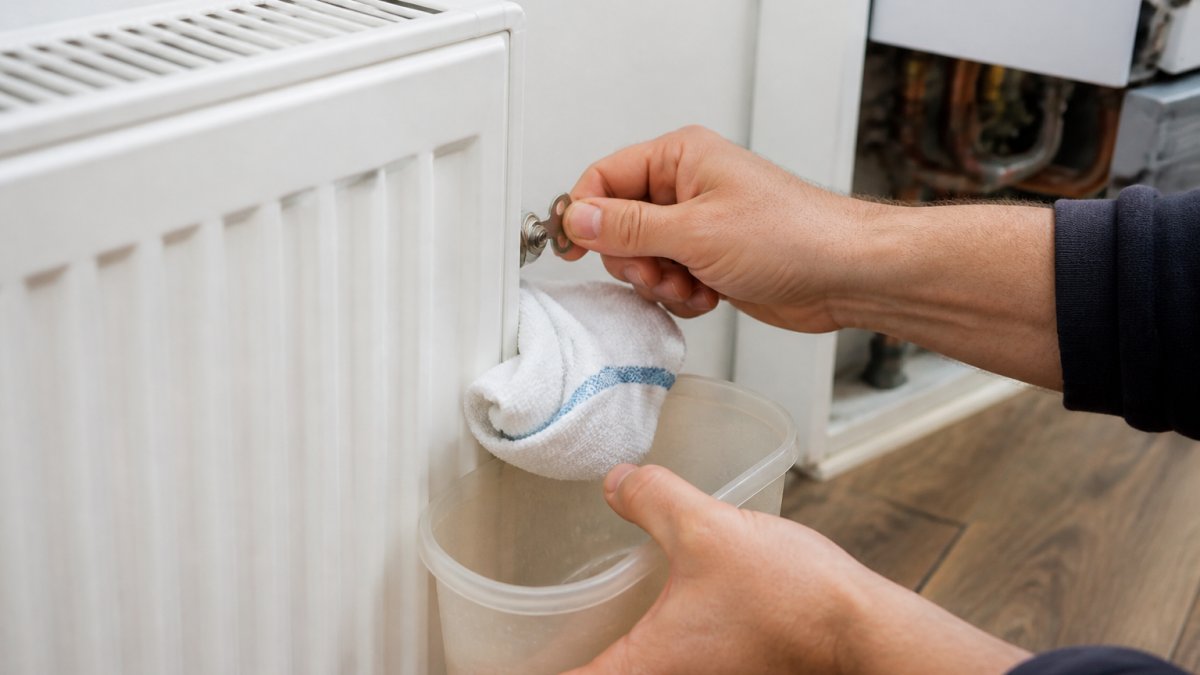
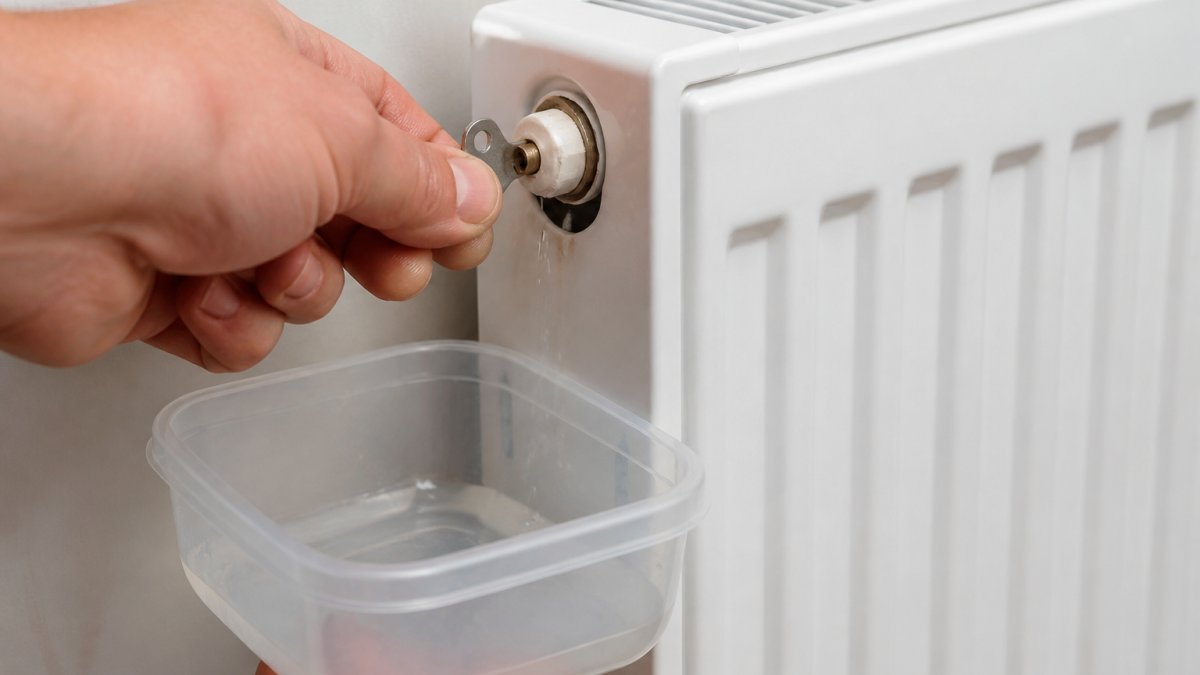
Place your container under the bleed valve to catch any water. Position it close to the valve so water doesn’t spill on your floor.
Insert your bleeding key into the valve slot. Turn it anticlockwise slowly. You’ll hear a slight hissing sound as air escapes. This is exactly what you want. Keep turning until water starts to drip out. Don’t turn it too fast, you want to control the flow.
Step 4: Listen and Watch for Air Release
As you open the valve, listen for air hissing out. You’ll hear a clear, sharp sound. This means air is escaping. Watch the container below. At first, you’ll see air bubbles in the water. Keep the valve open until the hissing stops and only water comes out.
This usually takes 20 to 30 seconds per radiator. Don’t rush. Let all the air out completely. Once the hissing stops and water flows smoothly, close the valve by turning it clockwise. Tighten it firmly but don’t force it.
Step 5: Close the Valve and Check Pressure
After closing the valve, wipe away any spilled water with your towel. Move to the next radiator and repeat steps 3 and 4.
Bleed all your radiators, starting with the one closest to the boiler and working your way to the furthest one. This helps air escape more efficiently.
Once you’ve bled all radiators, turn your boiler back on. Check that all radiators heat up evenly. Feel the top and bottom of each one. They should both be warm. If any radiator stays cold, you may need to bleed it again.
How to Repressurise a Boiler After Bleeding
After bleeding radiators, your boiler pressure may drop slightly. This is normal. You’ll need to repressurise the system to get it back to the correct level.
How to repressurise a boiler depends on your boiler model. Most modern boilers have a filling loop, a small pipe with a valve underneath or at the side of the unit. Check your boiler manual to find it.
Locate the filling loop valve. It usually looks like a small tap with a handle. You may need a wrench or key to open it. Turn it slowly anticlockwise. You’ll hear water flowing into the system. Watch the pressure gauge on your boiler. It should rise as water fills the system.
Stop when the gauge reaches the target pressure. For most boilers, this is between 1.0 and 1.5 bar. Check your manual for the exact figure. Once you reach the right pressure, close the valve by turning it clockwise.
Your boiler is now repressurised and ready to heat your home properly.
Never leave the filling loop open. Close it firmly after repressurising. An open filling loop can cause water leaks and damage your boiler.
Why Are My Radiators Cold After Boiler Replacement
Sometimes radiators stay cold even after you’ve bled them. This usually means one of a few things has gone wrong.
Common reasons radiators stay cold:
- Air is still trapped inside the radiator
- The bleed valve is stuck or broken
- A thermostatic radiator valve is closed
- The boiler pressure is too low
- The radiator itself is blocked
If a radiator stays cold after bleeding, try bleeding it again. Sometimes a second attempt removes air that the first attempt missed. Open the valve slowly and listen for hissing. If you hear nothing and only water comes out, the radiator may be blocked.
Check all thermostatic radiator valves in your home. These are small valves with numbered dials on the side of radiators. If one is turned all the way down, that radiator won’t heat. Turn it up to the middle setting and try again.
If your boiler pressure has dropped below 1.0 bar, repressurise it. Low pressure prevents water from flowing properly through radiators.
When radiators stay cold after boiler replacement despite these steps, call a professional engineer. The system may have a blockage or a faulty valve that needs professional attention.
Common Mistakes to Avoid When Bleeding Radiators
Most mistakes happen because people rush the process or skip important steps. Here’s what to avoid.
Don’t bleed radiators with the heating on. Many people make this mistake. They think it’s faster or easier. It’s not. Hot water can burn you. The pressure inside the system makes air escape unevenly. Always turn off the boiler first and wait for it to cool.
Don’t forget to repressurise after bleeding. Your boiler needs the right pressure to work efficiently. If you skip this step, your heating will be weak and your boiler will work harder than it should.
Don’t open the valve too fast. If you turn the bleeding key too quickly, water spurts everywhere. You lose control and make a mess. Turn it slowly and steadily. You’ll have better control and less spillage.
Don’t bleed radiators in random order. Start with the radiator closest to the boiler. Work outward to the furthest radiator. This helps air escape in the right direction and makes the job more effective.
Don’t ignore cold spots after bleeding. If part of a radiator stays cold, bleed it again. Sometimes the first attempt doesn’t remove all the air. A second bleeding usually solves the problem.
Don’t force the bleed valve. If it won’t open with gentle pressure, stop. Forcing it can break the valve. Call a professional instead.
When to Call a Professional Engineer
Most homeowners can bleed radiators themselves. But some situations need professional help.
Call a professional engineer if:
- Your boiler pressure keeps dropping after repressurising
- You can’t find the bleed valve on your radiator
- The bleed valve is stuck and won’t open
- Radiators stay cold even after bleeding twice
- Your boiler makes strange noises after you bleed the radiators
- You’re unsure about your boiler model or how to repressurise it
Professional engineers have specialist tools and training. They can diagnose problems you can’t see. They can also check that your entire heating system is working safely and efficiently.
At Major Heat, our Gas Safe registered engineers handle boiler problems regularly. We can bleed radiators, repressurise your system, and identify any underlying issues. If you’re not confident doing this yourself, a professional visit can provide peace of mind and a properly functioning heating system.
Homeowners who want professional support after boiler installation. Our engineers ensure your system works perfectly from day one.
Conclusion
Bleeding radiators after boiler installation is essential for proper heating. Air trapped in your system prevents hot water from reaching all parts of your radiators. The process takes less than an hour and costs almost nothing in tools.
Follow the steps in this guide: turn off your boiler, locate the bleed valves, open them one by one, and listen for air escaping. Once all air is out, repressurise your boiler to the correct pressure. Your radiators will heat evenly and your system will work at full efficiency.
If you encounter problems or feel unsure at any stage, Major Heat’s Gas Safe registered engineers are here to help. We offer free quotes and transparent pricing. Contact us for professional support with your boiler system, and we’ll ensure your heating works reliably all year round.
Frequently Asked Questions
Do I need to bleed radiators after a new boiler installation?
Yes. When a new boiler is installed, air enters the heating system during the work. This trapped air prevents hot water from circulating properly through your radiators, leaving them cold at the top. Bleeding radiators removes this air and restores full heating performance. It’s a straightforward task that most homeowners can do themselves with a radiator bleeding key.
What is a radiator bleeding key and where can I get one?
A radiator bleeding key is a small, flat metal tool that fits into the bleed valve at the end of your radiator. It costs between £2 and £8 and is available from most hardware shops, plumbing suppliers, and online retailers. Some boiler manufacturers include one with the installation paperwork. If you don’t have one, it’s worth purchasing before you attempt to bleed your radiators.
Why are my radiators cold after boiler replacement?
Cold radiators after boiler replacement usually indicate trapped air in the system. During installation, engineers disturb the heating pipework, allowing air to enter. This air rises to the top of radiators, blocking hot water flow and creating cold spots. Bleeding the radiators releases this air. If radiators remain cold after bleeding and the boiler pressure is correct, contact a Gas Safe registered engineer to check for other issues such as pump failure or blockages.
How do I know if my boiler pressure is correct after bleeding radiators?
Most boilers display pressure on a gauge at the front. The correct pressure is typically between 1.0 and 2.0 bar when the system is cold. If pressure drops below 1.0 bar after bleeding, you’ll need to repressurise the boiler using the filling loop (a flexible hose usually located under the boiler). Follow your boiler’s manual for specific instructions, or contact a qualified engineer if you’re unsure.