
Last Updated: November 19, 2026
Quick Summary
Common boiler faults after 10 years cluster around seals and gaskets that harden and weep, heat exchangers that corrode, and pumps and valves that seize, with pressure loss becoming more likely as components degrade. A gas boiler typically lasts around 10 to 15 years, so at ten years old expect more frequent repairs and watch the pressure and noise.
- A 2025 analysis found 26% of boilers bought between 2009 and 2025 broke within ten years.
- Top up cold pressure slowly to about 1.2 bar and confirm it rises no higher than around 2 bar.
- Two or more separate repairs in the last two years suggests the boiler is entering a failure cycle.
- If a single repair is quoted at more than about half the cost of a like-for-like replacement, replacement is usually better value.
- An annual service is the single best defence for an older boiler, catching small faults before breakdowns.
Table of Contents
- Common Boiler Faults After 10 Years: What Changes with Age
- Boiler Losing Pressure: Causes and What to Check
- When Your Boiler Keeps Breaking Down: Repair or Replace?
- How Long Does a Boiler Last? Lifespan and Age-Related Faults
- Signs a Boiler Needs Replacing: A Decision Framework
- Preventive Maintenance and Records for an Ageing Boiler
- Book a Gas Safe Engineer to Assess Your Boiler
- Frequently Asked Questions
Common Boiler Faults After 10 Years: What Changes with Age
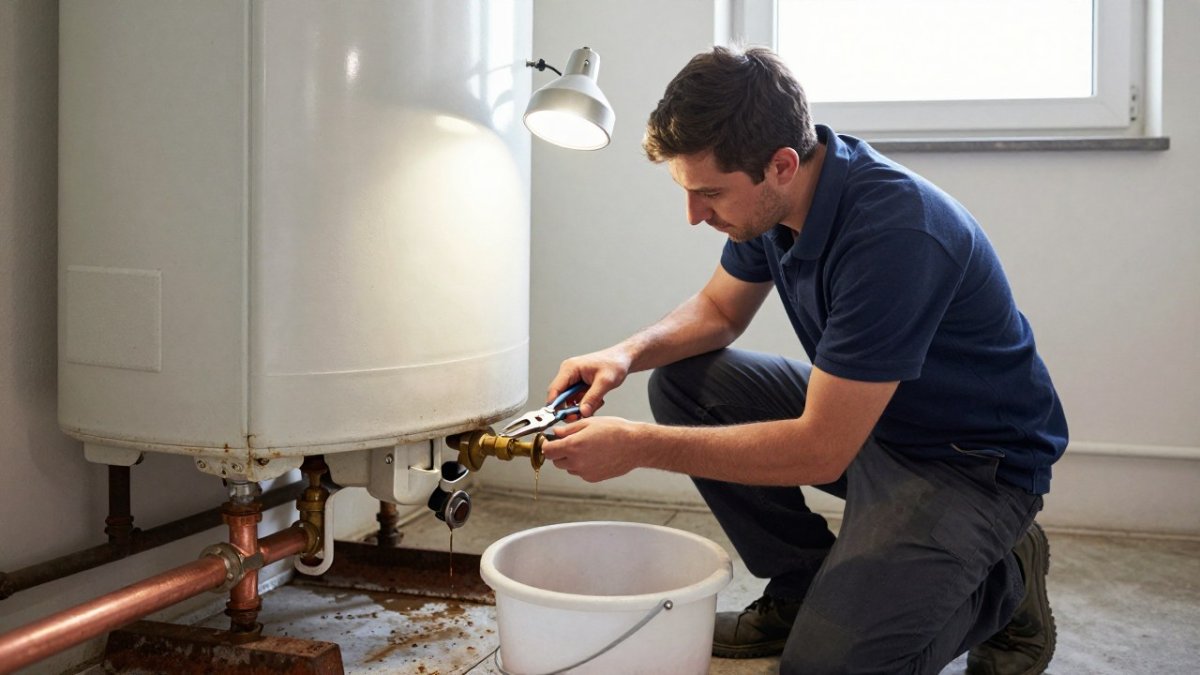
A 2025 analysis found that 26% of boilers bought between 2009 and 2025 broke within ten years of ownership, according to Consumer Reports’ boiler reliability analysis. That figure matters if your boiler is around a decade old. Common boiler faults after 10 years tend to cluster around a handful of components, and knowing which ones fail first helps you decide whether to repair or replace. Gas Safe registered engineers commonly see the same pattern in older boilers: the boiler still works, but it needs more attention than it did at five years old.
Why older boilers fail differently
Wear builds up quietly. Seals harden, parts corrode, and components run closer to their limits.
- Seals and gaskets harden and start to weep
- Heat exchangers corrode and lose efficiency
- Pumps and valves seize or get noisy
- Pressure problems appear more often
- Parts availability gets harder for older models
The faults are rarely dramatic at first. They are small, repeated, and expensive to ignore.
Boiler Losing Pressure: Causes and What to Check
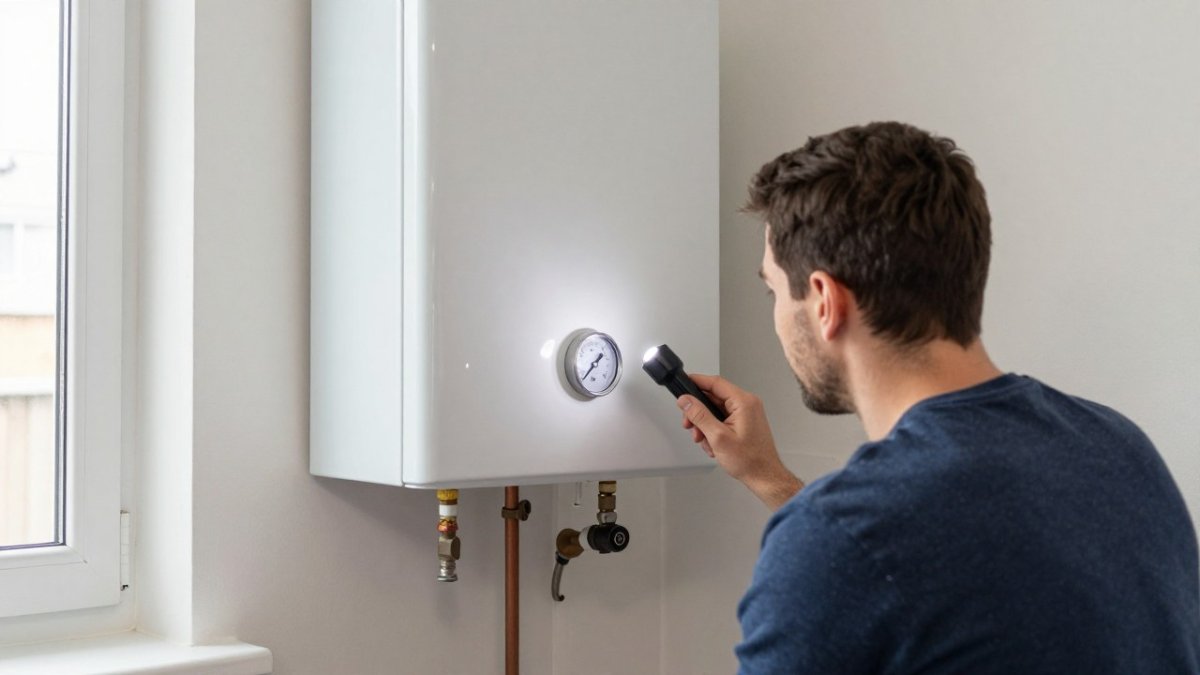
Boiler losing pressure is one of the most common boiler faults on an older system, and it becomes more likely as a boiler approaches ten years because the components that hold pressure together begin to degrade. On a sealed system, pressure should stay stable for months at a time; if you are topping up more than once or twice a year, something is changing.
Why pressure loss becomes more common with age
A sealed heating system is held together by seals, valves, and a pressure vessel. After a decade of heating and cooling cycles, those parts are past their design life in many cases:
- Seals and gaskets harden and weep, allowing water to escape slowly
- The expansion vessel loses its internal charge or its diaphragm fails, so pressure swings widely between cold and hot
- The pressure relief valve can pass water once it has lifted, leaving the system short of water
- Automatic air vents clog or stick, causing air to remain in the system and pressure to behave erratically
- Corrosion inside radiators produces pin-hole leaks that are invisible until they stain a ceiling
A common pattern on older boilers is pressure that reads correctly when cold but climbs sharply when the heating runs, then drops again overnight. That points to a failed expansion vessel rather than a leak, and it is a repair a Gas Safe engineer should confirm.
Safe homeowner checks
You can check the gauge and top up pressure yourself using the filling loop. That is a safe homeowner check. Read the gauge when the system is cold, top up slowly to about 1.2 bar, then run the heating and confirm the pressure rises no higher than around 2 bar.
Watch out: if pressure drops again within days, stop topping up and call a Gas Safe engineer. Repeated pressure loss usually means a leak or a failed component, not a topping-up problem, and continually adding fresh water introduces oxygen that accelerates corrosion inside the system.
Other symptoms to note before you call anyone:
- Dripping from the boiler casing or from the pressure relief pipe outside
- Radiators that need bleeding often, or that are cold at the top
- Gurgling or rushing sounds in the pipes when the boiler starts
- Green or white staining around radiator valves and pipe joints
- A pressure gauge that reads zero when cold but rises when the heating is on
For help reading fault codes on the display, see our guide on how to troubleshoot common boiler error codes.
When Your Boiler Keeps Breaking Down: Repair or Replace?
A boiler keeps breaking down when the cost of repairs starts to outweigh the value of the unit. The decision is rarely about one fault. It is about the pattern, and on a boiler around ten years old the pattern matters more than the age on the data plate.
Centrica’s 2026 survey found that 22% of respondents had a boiler breakdown after postponing or skipping a service, and 11% were left without hot water (Centrica’s Great Big Boiler Test findings). Skipped servicing and breakdowns go together, and the effect compounds on an older boiler where wear parts are already near the end of their life.
A practical repair-versus-replacement framework
Work through these criteria in order. Each one is a signal, not a rule on its own.
- Repair frequency. Two or more separate repairs in the last two years, or three or more in three years, suggests the boiler is entering a failure cycle rather than suffering bad luck.
- Repeat faults. The same component failing twice, a diverter valve, a pump, a fan, usually means the underlying cause was not fixed or the surrounding parts are also worn.
- Repair cost against replacement. As a working guide, if a single repair is quoted at more than about half the cost of a like-for-like replacement, replacement is usually the better value on a boiler over ten years old. Get both figures in writing before deciding.
- Parts availability. Some manufacturers stop supplying certain parts for older models. If your engineer has to source refurbished or pattern parts, reliability falls and future repairs get harder.
- Efficiency. An ageing boiler may still meet its original rating on paper but lose efficiency through corrosion and scale. If your gas use has risen with no change in how you heat the home, that is a signal.
- Warranty. Weigh the warranty cover of a new boiler against the repair price, since a repair on an older unit is unlikely to carry the same cover.
- Expected remaining life. A boiler at ten years old with a typical 10 to 15 year life has perhaps five years left. Divide the repair cost by the years you expect to keep the boiler to compare it fairly against replacement.
How to read your own answers
- No criteria ticked: repair the fault and keep servicing annually.
- One or two ticked: repair is usually still sensible, but start budgeting for replacement and get an installation quote so you know the figure.
- Three or more ticked: replacement is usually the better long-term value, particularly if the boiler is over 12 years old or parts are hard to source.
Watch out: a cheap repair that fixes the symptom but not the cause, for example, replacing a pressure relief valve without addressing the expansion vessel, often leads to the same fault returning within a year. Ask your engineer what caused the failure, not just what was replaced.
For a deeper look at the age question, read our guide on whether a 12 year old boiler is worth repairing.
How Long Does a Boiler Last? Lifespan and Age-Related Faults
A gas boiler typically lasts around 10 to 15 years, according to N K Gas Service’s boiler statistics. Some manufacturers, including Ideal Heating, quote a similar range for combi boilers.
Ten years is not a deadline. It is a warning zone.
| Boiler age | Typical pattern | What to do |
|---|---|---|
| 0-5 years | Few faults, under warranty | Annual service |
| 5-10 years | Wear parts start to fail | Service plus checks |
| 10-15 years | Repeat faults, rising costs | Plan replacement |
| 15+ years | Parts harder to source | Replace soon |
A boiler at ten years old can still run well. But expect more frequent repairs and watch the pressure and noise.
Signs a Boiler Needs Replacing: A Decision Framework
Signs a boiler needs replacing show up before a full breakdown. Use this framework to judge your own boiler.
Repair-versus-replacement criteria
- Three or more repairs in two years
- Repair cost approaching half a new boiler
- Yellow flame instead of blue
- Leaks from the heat exchanger
- Boiler over 12 years old with repeat faults
- Energy bills rising with no change in use
- Parts no longer made
Two ticks means watch. Four or more means get a quote. Our article on signs your gas boiler needs replacing lists each warning sign in detail.
Preventive Maintenance and Records for an Ageing Boiler
An annual service is the single best defence for an older boiler. It catches small faults before they become breakdowns.
Keep a simple record:
- Service dates and engineer name
- Any parts replaced
- Pressure readings you have topped up
- Error codes you have seen
That record helps any engineer diagnose faults more quickly. To keep an ageing boiler safe and reliable, book boiler servicing with a Gas Safe registered engineer.
Book a Gas Safe Engineer to Assess Your Boiler
You can check an engineer’s Gas Safe registration on the official Gas Safe Register before any work starts. Ask for the Gas Safe licence card and check the number.
Watch out: never let anyone without Gas Safe registration work on a gas boiler. It is illegal and unsafe.
Major Heat offers free quotes for boiler installation and repairs. If your boiler is showing repeated faults, arrange a boiler installation quote and we will assess whether repair or replacement makes sense.
If your boiler is over ten years old and faults are stacking up, guessing gets expensive. Major Heat provides Gas Safe registered engineers, expert boiler repairs and installations, and transparent pricing with free quotes. Get started with Major Heat and get a clear answer on repair or replacement for your home.
Frequently Asked Questions
What are the most common boiler faults after 10 years?
After a decade, boiler faults often involve component wear rather than simple fixes. Common issues include pressure loss from sealed system leaks, diverter valve failure causing no hot water, heat exchanger corrosion, circulation pump breakdown, and ignition or flame failure. Kettling, banging, and whistling noises become more frequent as limescale builds up. A Gas Safe registered engineer can confirm which fault applies to your boiler.
Is a 10-year-old boiler too old to repair?
Not automatically. Age alone does not condemn a boiler. Typical boiler lifespans are often quoted at around 10 to 15 years, though this varies by model and servicing history. Repair makes sense if the fault is isolated, parts are available, and the boiler has a good service history. Repeated breakdowns or unavailable parts shift the balance towards replacement.
How do I know if my boiler needs replacing?
Watch for frequent repairs, rising energy bills without extra use, uneven heating across radiators, and a boiler that keeps breaking down. Corrosion, yellow flames instead of blue, and parts that are hard to source also point towards replacement. A repair-versus-replacement assessment from a Gas Safe engineer will weigh the fault cost against the boiler’s remaining lifespan.
Why does an older boiler keep losing pressure?
Pressure loss in an older boiler usually comes from a leak in the sealed system, a faulty pressure relief valve, or a failed expansion vessel. Corrosion inside the system can open pinhole leaks as pipes age. Check the pressure gauge when the heating is off and note whether it drops repeatedly. Persistent pressure loss needs a professional leak investigation rather than repeated topping up.
