
Last Updated: November 25, 2026
Quick Summary
For most older homes, is a heat pump worth it for older homes only when the fabric is upgraded first and the system is designed around the building’s actual heat loss. Skip either step and you may spend more to stay colder than you were with a gas boiler.
- Solid walls, sash windows and uninsulated lofts leak heat fast, so fabric improvements belong in the heat pump budget.
- A heat pump runs most efficiently at a flow temperature of 45°C or lower, so radiators often need upsizing.
- A heat pump with a coefficient of performance of 3 can still cost more than gas on a standard tariff.
- The Boiler Upgrade Scheme reduces upfront cost in England and Wales and is claimed by your installer, not you.
- Ask each installer to split quotes into the five cost blocks and state the design flow temperature.
Table of Contents
- Is a heat pump worth it for older homes?
- The honest answer depends on three things
- How air-source heat pumps work in a period home
- Running a heat pump in a poorly insulated house
- Radiators for heat pumps in older homes
- Heat pump running costs compared with a gas boiler
- Property suitability checklist and where hybrid systems fit
- Booking a heat-loss survey and system design with Major Heat
- Frequently Asked Questions
Is a heat pump worth it for older homes?
For most older homes, a heat pump is worth it only when the fabric is upgraded first and the system is designed around the building’s actual heat loss.
That is the verdict, and it is not the one most homeowners want. Period properties are often where a heat pump is fitted into an unimproved Victorian semi and then runs constantly through January.
Three things decide whether a heat pump is worth it for older homes in your case:
- How much heat the building loses. Solid walls, sash windows and uninsulated lofts leak heat fast.
- Whether the emitters can run at low flow temperature. Small radiators sized for a 70°C boiler will not heat a room at 45°C.
- What you pay for electricity against gas. The efficiency gain has to beat the price gap.
The honest answer depends on three things
The first is heat loss. Period homes with solid walls can lose heat considerably faster than modern equivalents, so the heat pump must work harder for longer.
The second is emitter capacity. Heat pumps run most efficiently at low flow temperatures, so radiators often need to be larger or underfloor heating installed.
The third is your tariff. A heat pump with a coefficient of performance of 3 produces three units of heat per unit of electricity.
If you want the full picture before deciding, our guide to weighing the pros and cons of air source heat pumps sets out both sides without the sales gloss.
How air-source heat pumps work in a period home
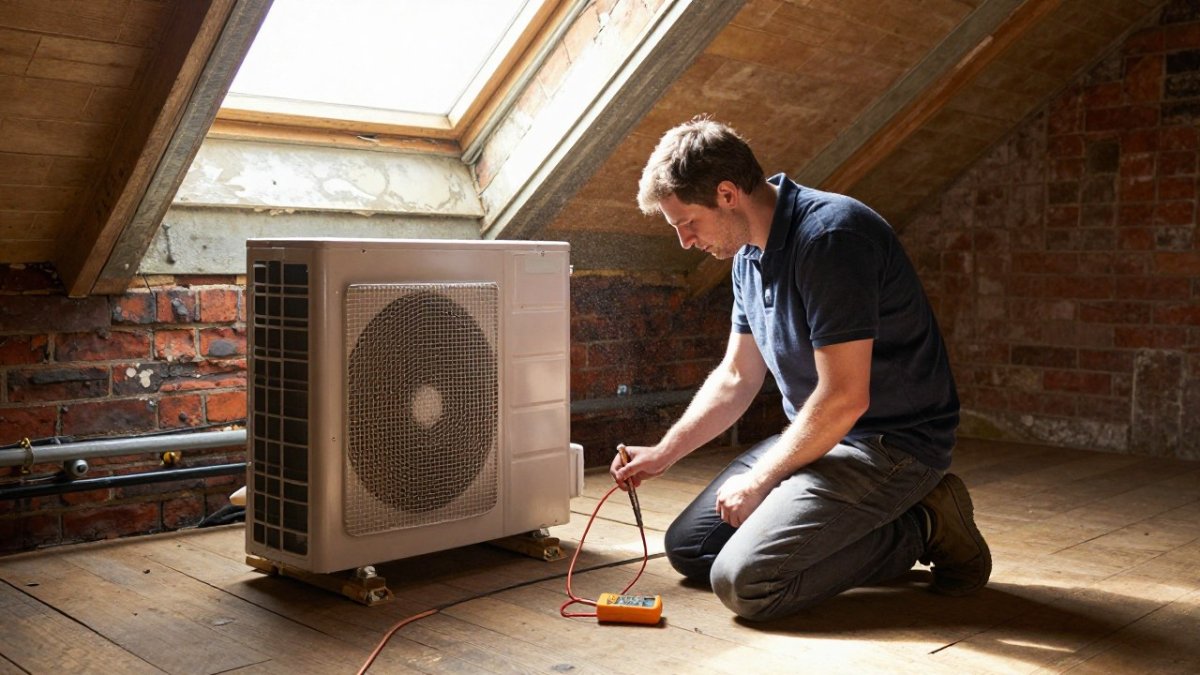
An air-source heat pump moves heat from outside air into your home using a compressor and refrigerant, rather than generating heat by burning fuel. It works like a fridge, just in reverse.
The outdoor unit absorbs low-grade heat from the air, including on cold days. The compressor raises the temperature, and the heat transfers to water circulating through your radiators or underfloor heating.
Flow temperature: the number that decides everything
Flow temperature is the temperature of the water leaving the heat pump. A gas boiler typically runs at 70°C or higher. A heat pump wants to run at 45°C or lower for peak efficiency.
Every degree you drop the flow temperature improves the seasonal performance factor. But lower water temperature means each radiator gives off less heat. In a period home with original radiators, that gap has to be closed with bigger emitters or better insulation.
Running a heat pump in a poorly insulated house
A heat pump in a poorly insulated house will run, but it will run long and hard, and the savings evaporate. The building leaks heat faster than the pump can replace it at low temperature, so the system defaults to a higher flow temperature and lower efficiency.
Fabric-first upgrades worth doing before you commit
Treat insulation and draught-proofing as part of the heat pump budget, not an optional extra. The order we recommend:
- Draught-proof windows, doors and loft hatches
- Top up loft insulation to current recommended depth
- Fill cavity walls where the property has them
For period properties, our guide to stopping draughts in older homes covers the low-cost steps that make the biggest difference before you spend on plant.
Radiators for heat pumps in older homes
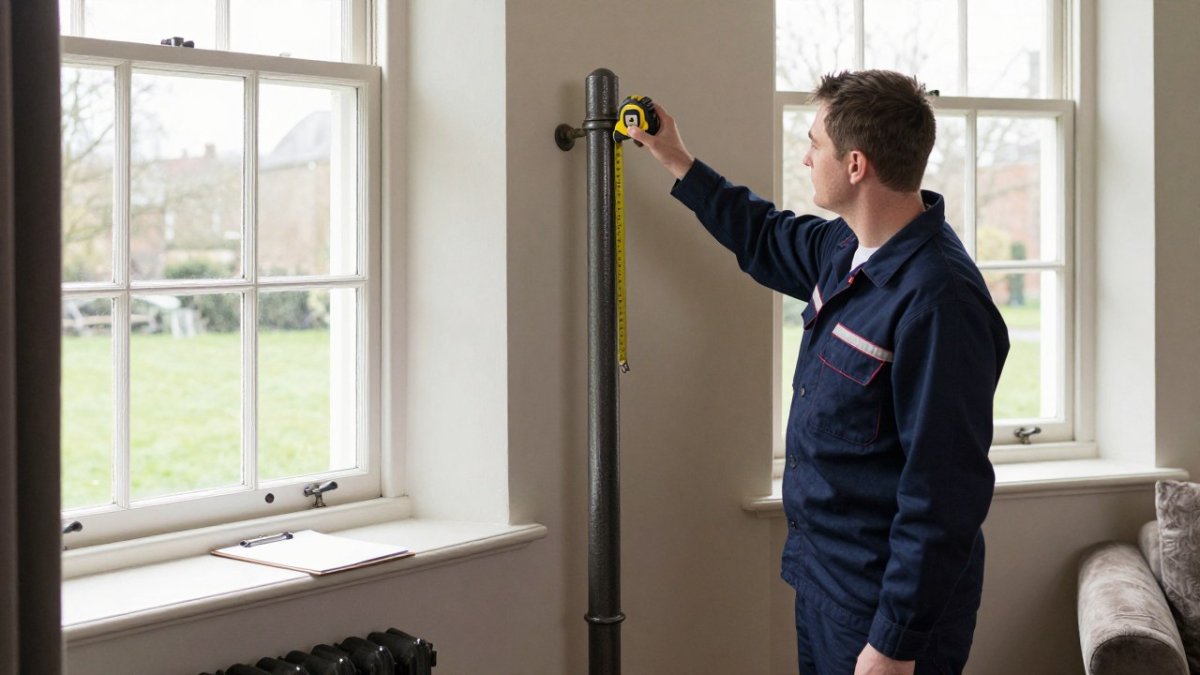
Radiators for heat pumps in older homes often need to be larger than what is there now. Correctly sizing the radiators is therefore central to making a heat pump for old houses work efficiently, as the wider suitability of the system depends on more than the heat source alone.
}]}” style=”margin:2rem 0; padding:20px 20px 10px; border:1px solid #e5e7eb; border-radius:12px; background-color:#ffffff;”>
Indicative range (GBP)
What drives the number up in a period property:
- Larger radiators or underfloor heating, especially where cast-iron columns have to be replaced rather than retained
- New pipework where the existing bore is too small for the flow rate the heat pump needs
- A hot-water cylinder and buffer tank, plus the space and structural work to house them
What the Boiler Upgrade Scheme covers
The Boiler Upgrade Scheme is a government grant that reduces the upfront cost of installing a heat pump in England and Wales (Apply for the Boiler Upgrade Scheme: Overview). It is administered by Ofgem on behalf of the Department for Energy Security and Net Zero, and it is claimed by your installer, not by you (Boiler Upgrade Scheme (BUS)).
Our guide to who qualifies for the Boiler Upgrade Scheme walks through the property and installer conditions so you know whether your older home is likely to qualify.
How to compare quotes like a surveyor
When quotes arrive, ask each installer to split the price into the five blocks above. A quote that bundles everything into one line is hard to compare and easy to inflate. Ask specifically for the design flow temperature, the modelled seasonal performance factor, the radiator schedule room by room, and the cylinder volume. Two quotes at the same headline price can hide very different amounts of emitter work, and the cheaper one is often the one that will run at a higher flow temperature and cost more to run.
For a fuller line-by-line breakdown, our guide to the cost of switching from gas to a heat pump explains what each item covers and where older homes typically spend more.
Heat pump running costs compared with a gas boiler
Heat pump running costs compared with a gas boiler depend on two numbers: the efficiency of the pump and the price you pay per unit of electricity versus gas. Electricity often costs more per unit than gas, even though a heat pump can deliver more heat per unit of electricity used. The only honest way to compare is to put both on the same footing, state the assumptions, and work through an annual bill.
The assumptions behind any comparison
Any running-cost figure is only as good as its inputs.
| Heating system | Efficiency assumed | Delivered heat needed | Fuel used | Annual fuel cost (GBP) |
|---|---|---|---|---|
| Gas boiler | 90% | 12,000 kWh | 13,333 kWh gas | £867 |
| Oil boiler | 85% | 12,000 kWh | 14,118 kWh oil | £1,180 |
| LPG boiler | 90% | 12,000 kWh | 13,333 kWh LPG | £1,560 |
| Direct electric panels | 100% | 12,000 kWh | 12,000 kWh electricity | £2,940 |
| Air-source heat pump (standard tariff, SPF 2.8) | 280% | 12,000 kWh | 4,286 kWh electricity | £1,050 |
| Air-source heat pump (heat pump tariff, SPF 3.5) | 350% | 12,000 kWh | 3,429 kWh electricity | £549 |
Tariffs, controls and real-world performance
Real-world performance is influenced by controls as well as hardware. Weather compensation, zoned heating controls and a well-set heating curve can help the pump run at the lowest temperature that still keeps the house warm. A heat pump tariff with a cheap overnight window lets you run the cylinder and buffer up when electricity is cheapest, and a well-insulated cylinder will hold that heat through the day.
What actually moves your bill
Four levers decide whether your heat pump bill lands nearer the top or bottom of the range above:
-
Flow temperature. Every degree you drop improves the seasonal performance factor. Running at 45°C instead of 55°C is worth more than most hardware upgrades.
-
Hot-water setpoint and cylinder losses. A cylinder set to 48°C with good insulation loses less than one held at 60°C, though you need a periodic legionella cycle.
-
Fabric and draught-proofing. The same pump in a draught-proofed, insulated house needs less delivered heat, which cuts the bill at every tariff.
If you want to see how these levers play out in a property like yours, our guide to weighing the pros and cons of air source heat pumps sets out the trade-offs without the sales gloss.
Property suitability checklist and where hybrid systems fit
Use this checklist before you commit. If you tick most boxes, a heat pump is likely to work well.
- Loft insulated to current recommended depth
- Cavity walls filled, or a plan for solid-wall insulation
- Draught-proofing completed
A hybrid system, where a heat pump works alongside an existing gas boiler, may suit some properties where fabric upgrades are impractical or heritage constraints limit what can be changed.
Booking a heat-loss survey and system design with Major Heat
A heat-loss survey is the step that turns guesswork into a design.
Our Gas Safe registered engineers provide expert boiler installation, servicing and repairs, and emergency plumbing services, and we offer free quotes so you know the scope before you commit.
If you are ready to find out whether a heat pump suits your property, book a heating system survey with our team and get a design based on your home, not a template.
The decision is rarely about the heat pump itself. It is about whether your older home is ready for one.
Frequently Asked Questions
Are heat pumps suitable for older homes?
Yes, in most cases, but suitability depends on heat loss rather than age. Solid-wall Victorian and Edwardian properties can work well once draught-proofing, loft insulation and larger radiators are in place. A heat-loss survey and room-by-room heat demand calculation are generally advisable before any decision, because they establish the flow temperature and emitter sizes the system needs. Homes with very high heat loss or no space for an outdoor unit may need fabric upgrades first or a hybrid approach.
Do heat pumps work in poorly insulated houses?
They will run, but efficiency drops as heat loss rises. A heat pump in a poorly insulated house has to work harder to hold temperature, which pushes up running costs and can shorten compressor life. Practical steps include draught-proofing, topping up loft insulation to around 270mm, and cavity-wall insulation where the walls allow it. Solid-wall properties can use internal or external insulation, though heritage constraints may limit options. Fix the fabric first, then size the heat pump to the improved heat demand.
Does an older home need new radiators for a heat pump?
Often yes, or at least larger ones. Heat pumps run most efficiently at lower flow temperatures than gas boilers, so radiators must emit the same heat output at a lower temperature. That usually means upsizing radiators in the main living rooms and checking every emitter room by room. Some existing radiators can stay if they are already oversized. Underfloor heating is an option where floors are being replaced, and a buffer tank may be needed to keep the system stable.
How much does it cost to install a heat pump in an older home?
There is no single figure, because heat pump installation cost for an older home depends on emitter upgrades, pipework changes, cylinder position and any fabric work. The Boiler Upgrade Scheme grant reduces the upfront cost for eligible properties, and an MCS-certified installer must carry out the work. Major Heat offers free quotes, so you can check the scope and cost for your own home before you commit. Ask for the quote to separate equipment, labour and any radiator or cylinder work.
