
Table of Contents
- Is Loft Insulation Worth the Investment? The Short Answer
- How Much Energy Does Loft Insulation Save?
- Loft Insulation Cost per Square Metre Explained
- Recommended Loft Insulation Thickness UK Standards
- Comparing Insulation Types: Blanket, Board and Blown
- Installation Routes: DIY vs. Professional Fitting
- Boosting Efficiency: Combining Insulation with a Modern Boiler
- Common Concerns: Condensation and Summer Heat
- Frequently Asked Questions
Last Updated: September 7, 2026
Is Loft Insulation Worth the Investment? The Short Answer
Few home improvements deliver returns as quietly as loft insulation. For most detached and semi-detached homes, adding or upgrading loft insulation is one of the most cost-effective energy efficiency measures available, paying for itself through lower heating bills within a few years. The question of whether loft insulation is worth the investment is not really about whether it works, it is about the current state of your existing insulation and how your home loses heat.
We spend our working days inside the heating systems of homes across Kent, and we see the same pattern repeatedly. Homeowners spend considerable sums on new boilers and smart thermostats while their loft sits with a thin, compressed layer of insulation that has settled over decades. Loft insulation is the thermal barrier that keeps the heat your boiler generates inside your living space. Without adequate depth, you are paying to heat the sky above your roof.
How Much Energy Does Loft Insulation Save?
Heat rises, and in an uninsulated home, a substantial portion of warmth escapes through the roof. Installing insulation to the recommended depth creates a thermal blanket that slows this escape, meaning your heating system runs less frequently to maintain a comfortable temperature. The potential savings are significant enough that energy efficiency bodies consistently rank loft insulation among the first measures to take.
The exact savings depend on your home’s size, construction, and current insulation levels. A home with no loft insulation will see the largest reduction in heat loss, while a home with a thin, older layer will still benefit from topping up to current standards. The Energy Saving Trust guidance on loft insulation explains that the right thickness can save a typical semi-detached home a meaningful portion of its annual heating costs, though the precise figure varies with fuel prices and usage patterns.
For most households, the energy saved translates directly into lower gas or electric bills each month. When you consider that insulation requires no maintenance and lasts for decades, the cumulative effect on household finances is substantial.
Loft Insulation Cost per Square Metre Explained
The loft insulation cost per square metre varies depending on the material you choose and whether you install it yourself or hire a professional. Blanket insulation, the familiar rolls of mineral wool, is generally the most affordable option per square metre. Board insulation, often used for loft conversions or boarding over, costs more. Blown insulation, installed with specialist equipment, sits between the two on price.
Rather than focusing on the price of materials alone, consider the total cost of the job. A professional installation includes the labour of measuring, cutting, and laying the material correctly, plus the safe handling of any existing insulation. For many homeowners, the convenience of a guaranteed, correct installation justifies the additional expense over a DIY approach.
Because material and labour costs fluctuate with market conditions, the most reliable way to understand your specific costs is to request a quote for your property. The total price will depend on the square footage of your loft space and the depth of insulation required to meet current building regulations.
Recommended Loft Insulation Thickness UK Standards
The recommended loft insulation thickness UK standards have increased over the years as building regulations have tightened. Current best practice for a cold loft, where the insulation sits in the floor of the loft space, is a depth of 270mm for mineral wool. This depth is designed to achieve the target U-value, a measure of how effectively the material prevents heat transfer.
Guidance on loft insulation from the UK government outlines the standards for new homes and renovations, and it remains the benchmark for retrofitting older properties. Homes built before these standards were introduced are likely to have significantly less insulation, often just 100mm or even less, which falls well short of what is needed for efficient heat retention.
When topping up existing insulation, the new layer is laid perpendicular to the old one to avoid compressing it. Compression reduces the effectiveness of insulation by trapping less air, so it is important not to simply lay new rolls on top without thought. A Gas Safe registered heating engineer can advise on whether your home’s insulation is adequate during a routine boiler service, as the two systems work together to keep your home warm.
Comparing Insulation Types: Blanket, Board and Blown
Choosing the right material matters as much as the depth. The three main options for insulating a loft floor each have distinct characteristics that suit different situations.
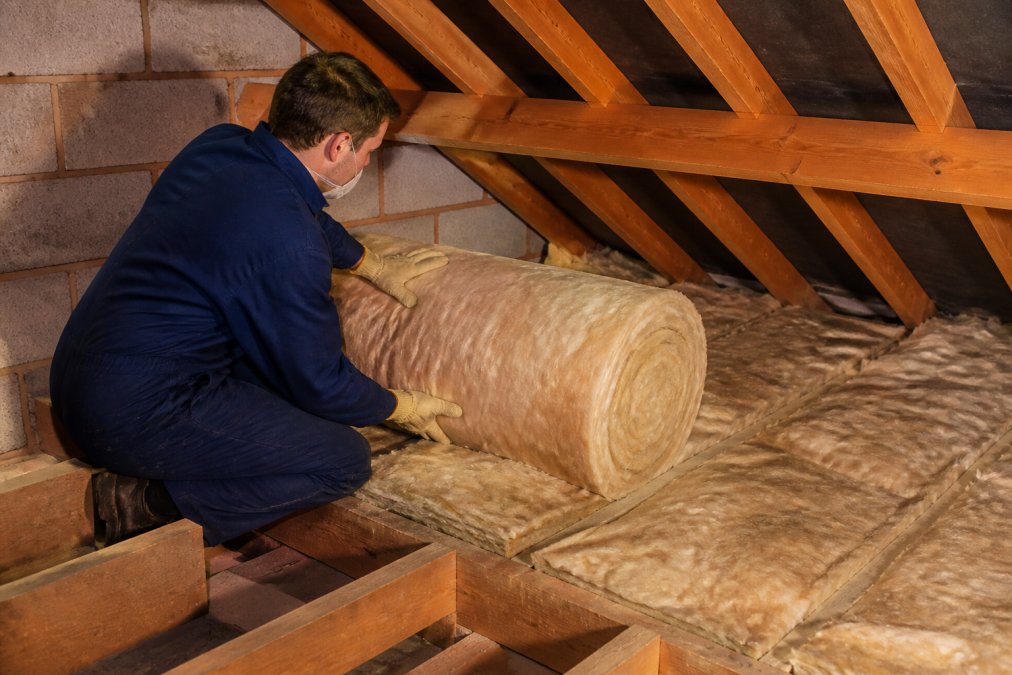
Blanket insulation, typically mineral wool or sheep’s wool, is the most common choice for DIY and professional installations. It is flexible, easy to cut around obstacles, and relatively inexpensive, making it the standard for topping up existing insulation. Its main drawback is that it must be laid carefully to achieve an even depth without gaps.
Board insulation, such as rigid PIR foam, offers a higher thermal performance per millimetre of thickness. This makes it ideal where space is limited, or where you plan to board over the loft for storage. It costs more per square metre than blanket insulation but provides a firmer surface for walking on.
Blown insulation, usually cellulose or mineral fibre, is installed using a machine that blows the material into the loft space. It is excellent for covering irregular areas and reaching awkward corners that are difficult to access with rolls. It requires professional equipment and is often the preferred choice for large or complex loft spaces.
Installation Routes: DIY vs. Professional Fitting
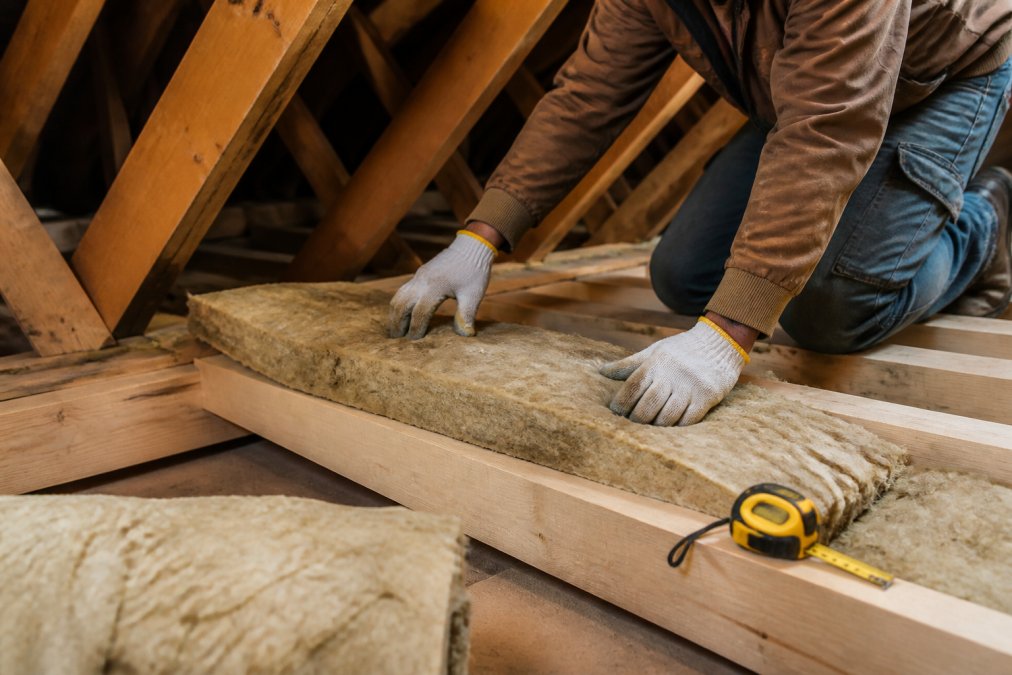
Some homeowners choose to lay blanket insulation themselves, and for a straightforward, accessible loft, this is a viable weekend project. The work involves measuring the space between joists, unrolling the insulation, and ensuring it fits snugly without gaps. Safety is a primary concern, as you must avoid stepping between the joists and falling through the ceiling below.
Professional installation offers several advantages beyond safety. A trained installer will assess the existing insulation, identify any gaps or damp issues, and ensure the new layer meets the recommended depth across the entire loft floor. They will also know how to work around electrical cables, light fittings, and pipework safely, which is where many DIY installations go wrong.
The choice between DIY and professional fitting often comes down to the complexity of your loft space. A simple, empty loft with regular joist spacing is a reasonable DIY task. A loft with a water tank, ducting, or awkward angles is better left to someone who does this work daily. For those considering a full energy efficiency upgrade, it makes sense to have the insulation checked alongside any heating system work.
Boosting Efficiency: Combining Insulation with a Modern Boiler
Loft insulation and a modern, efficient boiler are two halves of the same equation. Insulation reduces the amount of heat you need, while an efficient boiler produces that heat with less fuel. Addressing one without the other leaves money on the table. An oversized or ageing boiler will still waste fuel even in a well-insulated home, and a new boiler in a draughty home will struggle to keep it warm.
A modern condensing boiler, particularly one that is correctly sized for your home, operates at a much higher efficiency than older models. When your home retains heat effectively, that efficiency translates into lower bills and a smaller carbon footprint. The Energy Saving Trust advice on boiler efficiency notes that replacing an old boiler with a new A-rated model can make a considerable difference to annual heating costs.
The most practical approach is to treat insulation and heating as a single system. When engineers visit homes for boiler installations, they routinely discuss the home’s insulation levels as part of the overall heating strategy. A free quote for a new boiler should always consider whether the property is losing heat faster than the new system can replace it.
Common Concerns: Condensation and Summer Heat
Homeowners often worry that thicker loft insulation will trap moisture and cause condensation. This concern is valid, but the solution lies in proper ventilation rather than skimping on insulation. Insulation keeps the living space warm, while adequate airflow through the loft space prevents moisture from building up in the roof structure. Keeping vents clear and ensuring the insulation does not block the eaves is essential.
A related worry is that insulation makes the upstairs rooms too hot in summer. While insulation does slow heat transfer in both directions, its primary benefit in summer is preventing the roof space from baking the bedrooms below. The loft space itself may get warmer, but the living areas beneath stay cooler than they would without insulation.
Both concerns are manageable with correct installation techniques. Insulation should never be pushed tight against the roof felt, as this blocks the ventilation pathway. By maintaining a clear air gap and using the recommended depth, you get year-round comfort without the moisture problems that arise from poor installation practice.
Deciding whether loft insulation is worth the investment comes down to the specific condition of your home. For the vast majority of properties with outdated or insufficient insulation, the answer is a clear yes, delivering lower energy bills and improved comfort for decades. The most effective route to a warmer home pairs proper insulation with a modern, efficient heating system. If you are considering a boiler upgrade or simply want to know whether your home is losing heat through the roof, Gas Safe registered engineers can provide expert advice and a free quote tailored to your property.
Frequently Asked Questions
How long does loft insulation take to pay for itself?
The payback period depends on your home’s heat loss and energy usage. Most households find that installing insulation to the recommended loft insulation thickness UK standard pays for itself within a few years through reduced heating bills. Topping up existing insulation to the correct depth typically has a shorter payback than a first-time installation. For a precise figure based on your property, request a survey from a local heating specialist.
Is it worth topping up existing loft insulation?
If your current insulation is below the recommended thickness, topping it up is often the most cost-effective improvement you can make. Older homes may have as little as 50mm, far short of the 270mm target. Adding another layer to reach the required depth reduces heat loss significantly. The loft insulation cost per square metre for a top-up is lower than a full installation because the base layer is already in place.
Does loft insulation help keep a house cool in summer?
Yes, insulation works in both directions. The same layer that slows heat escaping in winter also acts as a barrier against intense summer heat entering through the roof. This means your home stays cooler on hot days, reducing the need for fans or air conditioning. While the primary motivation is often winter savings, the summer comfort benefit adds to the overall value of the investment.
Are there government grants available for loft insulation?
Eligibility for grants changes frequently, but schemes have existed to help homeowners with the cost of insulation. The Energy Company Obligation (ECO) scheme has provided support for low-income households and those in certain benefits brackets. The best approach is to check the current government website for the latest guidance. A local installer can advise on whether your property qualifies under any active programme.