
Last Updated: November 14, 2026
Quick Summary
To reduce electricity usage at home, start with your smart meter’s in-home display to see which appliances draw the most power, then target the biggest loads. Air-dry laundry instead of tumble drying, boil only the water you need, run full loads at 30°C and switch off at the wall.
- A tumble dryer can use more electricity in one cycle than a week of kettle boils.
- Estimate running costs with power in kW multiplied by hours and your pence-per-kWh unit rate.
- An 8.5 kW electric shower used for eight minutes costs about 28p at 25p per kWh.
- Set your immersion heater cylinder thermostat to around 60°C and use a timer rather than constant heating.
- Renters should start with free actions such as boiling only what you need and air-drying clothes.
Table of Contents
- Start With Your Smart Meter to See Where Electricity Usage Goes
- What Uses the Most Electricity in a Home
- Appliance Electricity Usage: Running Costs You Can Actually Calculate
- Kitchen and Laundry Habits That Cut Electricity Usage
- Reduce Heating Electricity Use Without Losing Comfort
- Lighting, Standby and the Smart Device Exceptions
- A Prioritised Plan for Renters and Tight Budgets
- Book a Boiler Service to Keep Heating Costs Under Control
- Frequently Asked Questions
Start With Your Smart Meter to See Where Electricity Usage Goes
Most homes waste electricity in the same handful of places, and you can spot them in minutes.
Here is the key point before we start: you cannot manage what you cannot see. An in-home display shows your electricity usage in near real time and in pounds and pence (Smart meter In-Home Display: voluntary replacement principles).
Electricity usage is the amount of power your home draws over time, measured in kilowatt-hours (kWh). Your meter records it, your supplier bills you for it, and every appliance adds to it.
Try this tonight:
- Note the display reading with everything switched off at the wall.
- Switch on one appliance at a time and note the jump.
- Write down the biggest movers.
That five-minute audit is your baseline. For official guidance on reading your meter and understanding your bill, see Ofgem’s advice for households.
What Uses the Most Electricity in a Home
Heating and hot water usually top the list, but the electricity hogs are more specific than most people expect. In most homes, the biggest electricity draws are wet appliances (washing machines, dishwashers, tumble dryers), followed by cooking, then lighting and standby.
Here is the honest ranking, in practice:
- Tumble dryer: the single biggest appliance load in most homes.
- Washing machine and dishwasher: heavy on heating water.
- Electric showers: very high draw for a short time.
- Kettle: high draw, but brief.
- Fridge freezer: constant, modest, unavoidable.
- Lighting and standby: small individually, noticeable added up.
What most guides miss is that a tumble dryer can use more electricity in one cycle than a week of kettle boils. That single fact reshapes your priorities. If you dry laundry on a rack or line instead, you cut a large slice of your appliance electricity usage without touching anything else.
Appliance Electricity Usage: Running Costs You Can Actually Calculate
You can estimate any appliance’s running cost with one simple formula, but the value comes from using your own figures rather than a generic table. Appliance electricity usage comes down to two numbers: the power rating in kilowatts and the time it runs.
Formula: power (kW) × time (hours) × your unit rate (p per kWh) = cost.
Where to find the numbers:
- Power rating: check the rating plate or sticker on the appliance, usually on the back, base or inside the door. It is given in watts (W) or kilowatts (kW); divide watts by 1,000 to get kW.
- Time: estimate honestly from your own habits, not the programme’s maximum. A 60°C cotton cycle may run for over two hours, while a 30°C quick wash may finish in 30 minutes.
- Unit rate: check your bill or your in-home display. Rates vary by tariff, region and time of day, so use your own pence-per-kWh figure.
Worked example at a unit rate of 25p per kWh:
- A 2 kW tumble dryer run for 1 hour costs about 50p.
- A 3 kW kettle boiled for 5 minutes costs about 6p.
- A 0.1 kW fridge freezer running 24 hours costs about 60p a day.
- An 8.5 kW electric shower used for 8 minutes costs about 28p.
| Appliance | Typical Power | Typical Use | Rough Cost at 25p/kWh |
|---|---|---|---|
| Tumble dryer | 2-3 kW | 1 hour | 50-75p |
| Washing machine | 2 kW | 1 hour | 50p |
| Dishwasher | 1.5 kW | 1 hour | 38p |
| Kettle | 3 kW | 5 minutes | 6p |
| Electric shower | 8-9 kW | 8 minutes | 27-30p |
| Fridge freezer | 0.1 kW | 24 hours | 60p |
Typical Power
These are rough guides only. Your unit rate and appliance ratings will differ, so use the formula with your own figures.
Watch out: standby and connected modes can add to the figure on the rating plate.
Once you have your figures, compare them with the jumps you saw on your in-home display during the five-minute audit.
Kitchen and Laundry Habits That Cut Electricity Usage
Small habit changes in the kitchen and laundry add up faster than most people realise. Cutting electricity usage here means targeting the heating of water and air, because that is where the power goes.
Start with the kettle: boil only what you need. Filling to the top for one cup wastes both electricity and time. Next, wash full loads, not half loads.
Then use eco settings. Eco programmes run longer but at lower temperatures, and they usually use less electricity overall. Lower the wash temperature to 30°C where fabrics allow.
The biggest win is the tumble dryer. Air-dry clothes on a rack or line whenever you can. When you must tumble dry, spin clothes first to remove excess water.
Quick checklist:
- Boil only the water you need
- Run full loads only
- Use eco settings and 30°C washes
- Air-dry clothes instead of tumble drying
- Skip the pre-rinse cycle on the dishwasher
Reduce Heating Electricity Use Without Losing Comfort
Most energy-saving guides blur electricity and gas together, which makes it hard to know which actions actually move your electricity bill. This section separates the two. Understanding these distinctions is essential when you aim to lower energy bills by prioritising the most impactful changes across your entire household infrastructure.
Actions that mainly reduce electricity use:
- Electric showers: shorten shower time and lower the flow temperature if your unit allows it. An 8.5 kW shower is one of the highest-draw appliances in the home, so five minutes instead of ten roughly halves its cost.
- Immersion heaters: set the cylinder thermostat to around 60°C and use a timer rather than leaving it on constant. If your cylinder is well insulated, you may be able to heat it once a day.
- Electric panel heaters and fan heaters: use room-by-room timing and lower the set temperature by a degree or two. A fan heater is expensive to run for long periods because of its high wattage.
- Heat pumps: keep the flow temperature low and the system running steadily rather than switching it on and off.
- Underfloor electric heating: use a timer and zone controls, and do not leave it on in unused rooms.
Actions that mainly reduce heat loss (and therefore gas or electric heating demand):
- Draught-proof windows and doors, and block chimney draughts when the fire is not in use.
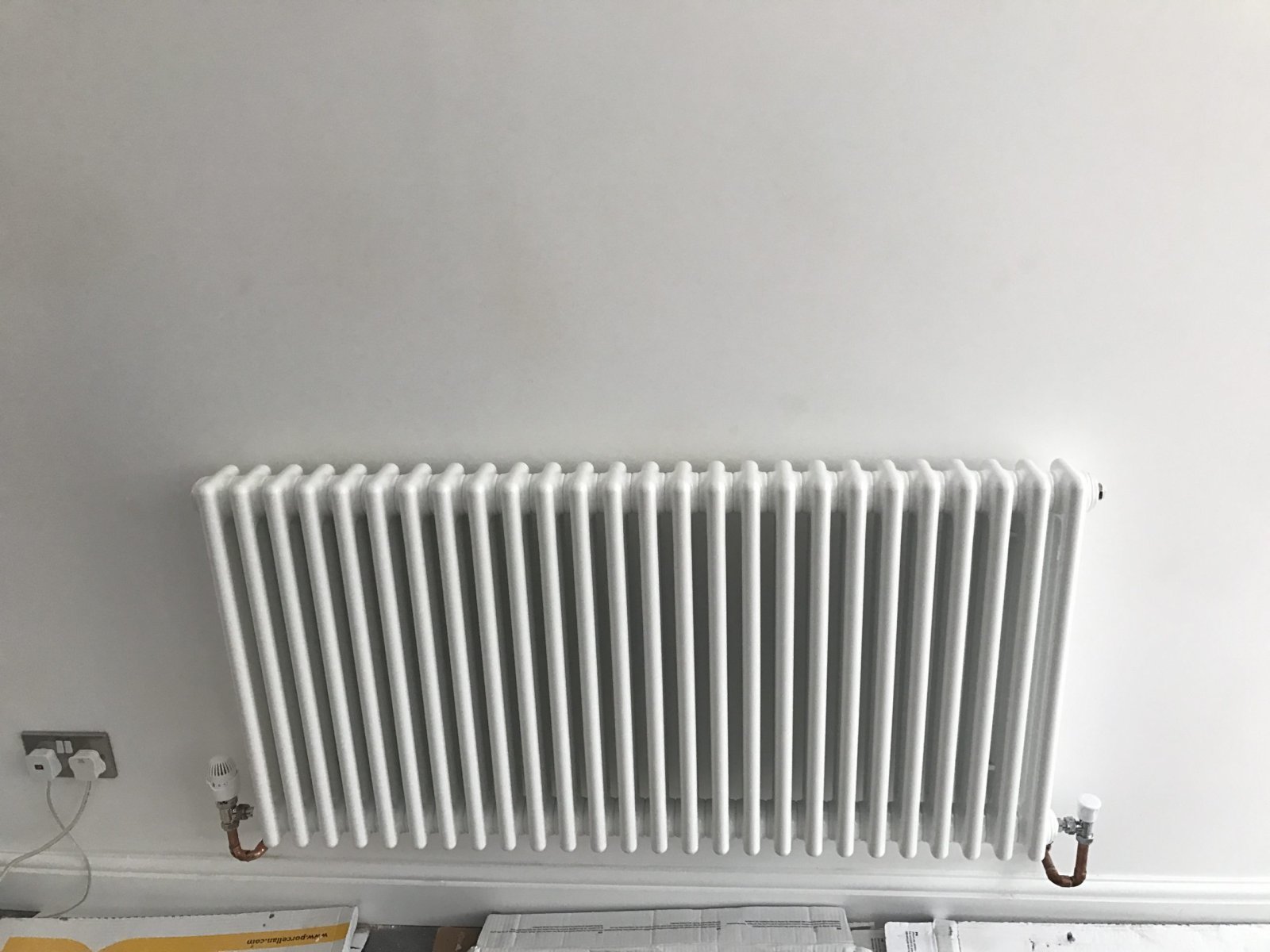
- Bleed radiators so the system heats evenly.
- Add loft or cavity wall insulation where it is missing.
- Use curtains and blinds to keep heat in after dark.
Set your thermostat a degree or two lower and add a layer instead. Each degree matters over a full winter, but the saving depends on your heating source: a degree lower on a gas boiler saves gas, while a degree lower on a heat pump or electric heater saves electricity. Use heating controls properly: set a schedule that matches when you are actually home, and use room-by-room heating so you warm the rooms you use.
Watch out: do not block ventilation to save heat. Kitchens and bathrooms need extraction to control damp and condensation, and sealing a room too tightly can cause mould. If you draught-proof, leave trickle vents open where they exist and keep extractor fans working.
If you are weighing up smart controls, our guide on whether smart heating controls are worth it for energy savings breaks down the trade-offs. For a quick win, learn how to bleed radiators for better efficiency, and if you live in an older property, these ways to stop draughts in older homes make a real difference.
Lighting, Standby and the Smart Device Exceptions
Lighting and standby are the small leaks that quietly add up across a year. Switching to LED bulbs can reduce lighting electricity usage, because LEDs use less power than older bulbs for the same brightness.
Standby mode is the next target. Many appliances keep drawing power when switched off with the remote. This is sometimes called vampire power. Unplug chargers when not in use, and switch appliances off at the wall where practical.
But there is an exception worth knowing. Some smart devices, routers, and set-top boxes need to stay powered to work. Do not unplug your router to save pennies and lose your connection.
A simple rule: if it has a clock, a light, or a remote, check whether it truly needs to stay on.
A Prioritised Plan for Renters and Tight Budgets
Not everyone can fit insulation or replace appliances, and that is fine. If you rent or you are watching every pound, prioritise the free and cheap actions first, then work upward.
Do these first, at no cost:
- Boil only what you need.
- Wash full loads at 30°C.
- Air-dry clothes instead of tumble drying.
- Switch off at the wall and unplug chargers.
- Shower instead of bathing, and keep shower time short.
Then the low-cost steps:
- Swap to LED bulbs.
- Fit draught excluders on doors and windows.
- Bleed your radiators.
For renters, draught-proofing and LED bulbs are usually fine to do yourself, but check your tenancy agreement before any bigger changes. For a broader, prioritised approach, see this guide to improving home energy efficiency. Measure before and after with your smart meter so you can see what is actually working, not just what sounds good.
Book a Boiler Service to Keep Heating Costs Under Control
Your boiler and heating system work hardest in winter, and a poorly maintained system can waste energy all season. A routine service keeps it running safely and efficiently, which is money well spent before the cold arrives.
At Major Heat, our Gas Safe registered engineers handle boiler servicing, repairs, and installations. If your heating is overdue a check, book a boiler service with a Gas Safe registered engineer and keep your system running efficiently.
Cutting electricity usage is a series of small, deliberate choices. Start with your meter, target the big draws, and let the savings follow. Get started with Major Heat and keep your home warm, safe, and efficient all year.
Frequently Asked Questions
Do appliances use electricity when they are switched off?
Yes. Many appliances keep drawing power in standby mode, which is sometimes called vampire power. Televisions, games consoles, set-top boxes and phone chargers can all pull a small amount around the clock. The exact figure varies by device, so check your smart meter with everything switched off at the wall and compare it with the reading when devices are left on standby. Unplugging chargers and using switched sockets makes this easy to manage.
How can I check which appliances use the most electricity?
Use your smart meter’s in-home display or a plug-in energy monitor. Switch everything off, note the baseline reading, then turn on one appliance at a time and watch how the figure changes. Kettles, tumble dryers, electric showers and immersion heaters usually show the biggest jumps. This gives you real appliance electricity usage figures for your home rather than averages, so you can target the changes that matter most.
Is it cheaper to use electricity at night?
It depends on your tariff. Some time-of-use tariffs charge less overnight, which suits washing machines, dishwashers and tumble dryers with delay timers. Standard single-rate tariffs charge the same whatever the hour. Check your unit rate and standing charge before shifting habits, and only run appliances overnight if it is safe and does not disturb anyone in the household.
How can I reduce heating electricity use if I have a boiler?
A gas boiler uses very little electricity itself, so most of the saving comes from the pump, controls and any electric heaters. Set the boiler flow temperature lower, use room-by-room heating controls and keep the hot water cylinder well insulated. If you have electric radiators or an immersion heater, these are the real drivers of heating electricity use, so time them carefully and do not leave them on in empty rooms.
